
(Credit: ©GloriaSanchez - stock.adobe.com)
In a Nutshell
- People with aphantasia can’t voluntarily picture things while awake, yet many still dream in vivid detail, and a new Scientific Reports study set out to explain the mismatch.
- On average, the senses a person couldn’t imagine awake tended to show up less in their dreams too, with the tightest links for inner speech, hearing, and taste.
- The pattern varied enormously from person to person: some had a close waking-to-dreaming match, while others were blank awake but flooded with sensation asleep (46% always dreamed in pictures, about 8% never did).
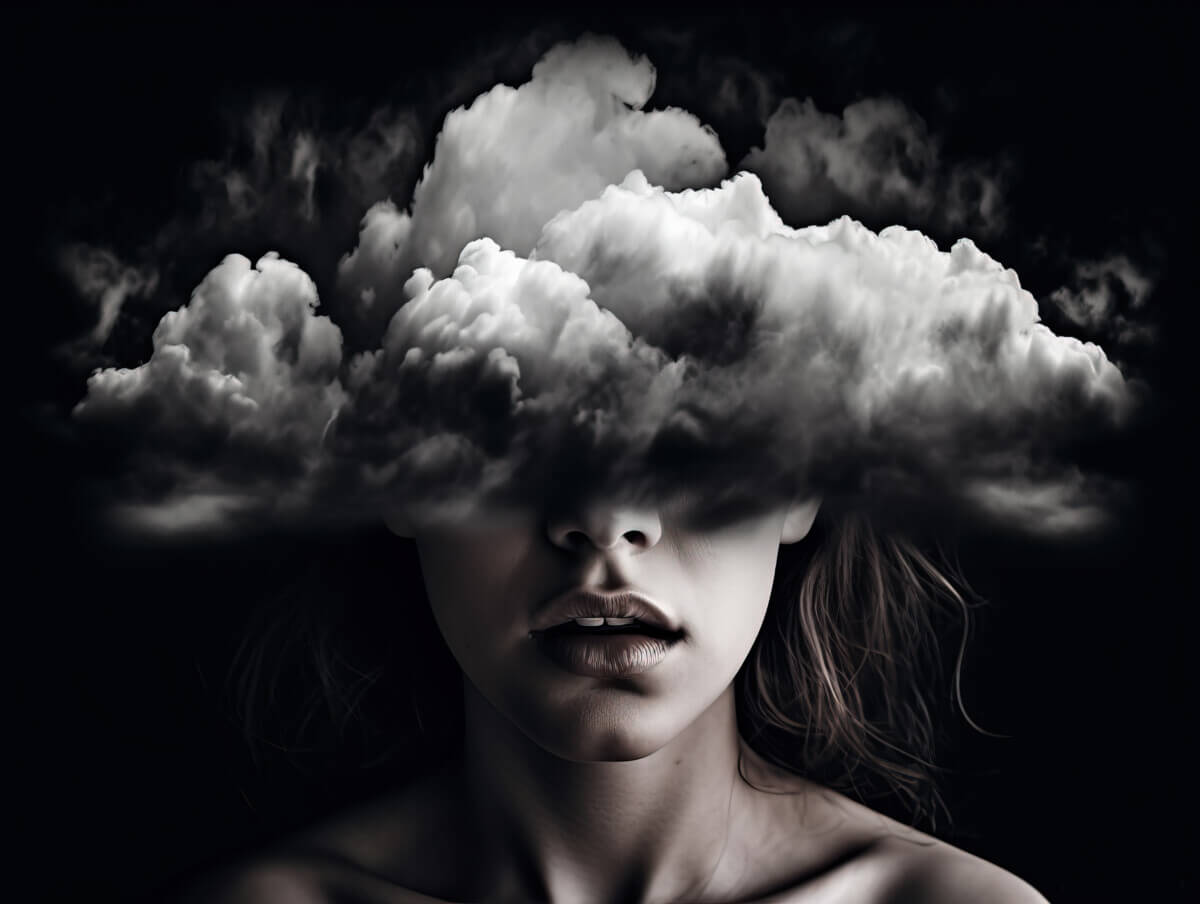
For most people, remembering a day at the beach comes with a picture: flat blue water, sun on wet sand, a gull overhead. For millions of others, nothing appears. Memory works, but the mental screen stays dark. That blank screen is called aphantasia, an inability to picture things on purpose. Its strangest twist? Many people who have it still dream in full color.
A new paper in the journal Scientific Reports dug into that contradiction, and the answer turned out to be far from tidy. Researchers found that, on average, there is some match between what a person with aphantasia cannot picture while awake and what stays dim in their dreams. But averages hide a lot. Some people with aphantasia dream richly across sight, sound, taste, and touch. Others report dreams as blank as their waking minds. One label, it seems, covers wildly different inner lives.
Aphantasia first caught public attention as an inability to see things in the mind’s eye. Calling it a vision problem, though, misses most of the story. Many people with the condition also cannot replay a song in their head, call up the smell of coffee, or feel the imagined texture of sandpaper. Which senses go quiet varies from person to person, and that same variation, the study reports, shows up at night.
Aphantasia Is More Than a Missing Mind’s Eye
Aphantasia looks different from one person to the next. In earlier studies, nearly a quarter reported no imagined sensations at all, in any sense. Others go blank only on vision, or on vision plus a sense or two more. Someone might lose the ability to picture a face yet still replay a song in their head, while someone else has no inner sensory world of any kind. That range sits at the center of the new research. Both lead authors have aphantasia themselves, which is what drew them to the question.
To test the link, the team ran an online survey. A total of 262 volunteers signed up, some recruited because they already identified as having unusually weak or unusually strong imaginations, others hired through a research platform for a small fee. After excluding people who failed attention checks or quit early, 205 remained: 84 were classified as visual aphantasics based on a standard imagery questionnaire, and 121 were in a comparison group. Both groups were skewed toward middle age, with average ages around 41 and 43. Women slightly outnumbered men in each group, and a handful of participants identified as neither. The entire study was conducted online via a standard survey platform, so no one was observed in a sleep lab.
Participants rated how vivid their waking imagination felt across six senses, then reported how often each sense appeared in their dreams. To pin things down further, the researchers also asked people to mentally revisit familiar scenes, a dinner party, a day home sick with a cough, a trip to the beach, and rank which senses came through strongest. Pairing the two sets of answers let the team check whether a person’s daytime imagination lined up with their nighttime one.
Why Two People With Aphantasia Can Dream So Differently
On average, a simple pattern held. Senses a person couldn’t call up while awake tended to be quieter in their dreams too. That link was strongest for inner speech, the silent voice in the head, then hearing and taste. Vision was the odd one out. Within this group, weak waking imagery didn’t predict how often people dreamed in pictures, but that’s likely because almost everyone in the study had little visual imagery to begin with. Broader studies find that strong waking imagery is associated with vivid visual dreams.
Then came the wide range. Some people showed a tight fit: no waking imagery, and matching blanks in their dreams. Others were the opposite. They couldn’t picture, hear, or feel anything on purpose while awake, yet those same sensations flooded back once they fell asleep. In this group, 46 percent of visual aphantasics said they always dream in pictures, and about 8 percent said they never do. People with aphantasia were also more likely than the control group to say they just weren’t sure what their dreams held, and that uncertainty showed up across nearly every sense.
What impressed the researchers was the consistency. A person who showed a loose fit between waking and dreaming on one measure showed that same loose fit on the others. Each individual, in other words, carried a stable personal signature, even though those signatures differed enormously from one person to the next. Researchers raise one possible explanation: differences in how certain brain regions coordinate might account for why one person’s sleeping mind mirrors their waking one while another’s runs free.
That last point changes how the condition looks. Aphantasia has long been treated as one thing, a switched-off mind’s eye. This study makes the case that it’s really a family of related conditions, each with its own link between waking imagination and dreaming. Two people can share the same diagnosis and, once night falls, live in completely different worlds.

Disclaimer: This article summarizes a peer-reviewed study for a general audience and is intended for informational purposes only. It is not medical or psychological advice. Aphantasia is an area of active research, and findings described here are based on self-reported data from a single study; they may not apply to every individual. Anyone with questions about their own imagination, memory, or mental health should consult a qualified professional.
Paper Notes
Limitations
Every number in this study came from what people said about themselves, and dream reports lean on memory after the fact, so they are open to error. The authors put it bluntly, writing that “These data are obviously fallible.” The design is also correlational, which means it can point to links between waking and dreaming imagination but cannot prove that shared brain wiring causes them. With 84 aphantasics, the group was too small to run the kind of statistical clustering that larger studies have used to sort aphantasia into subtypes. The authors describe the work as exploratory groundwork meant to steer future research, including lab studies that would wake sleepers and question them immediately, rather than relying on next-day recall.
Funding and Disclosures
This research was supported by a Discovery Project Grant funded by the Australian Research Council, awarded to Derek H. Arnold. The authors declare no competing financial interests. All data and analysis scripts are posted publicly through the University of Queensland’s UQ eSpace repository. As a relevant disclosure, the first two authors identify as congenital aphantasics, and their own experiences helped motivate the study.
Publication Details
Authors: Derek H. Arnold and Loren N. Bouyer (Perception Lab, School of Psychology, The University of Queensland, Australia) and Merlin Monzel (Department of Psychology, University of Bonn, Germany).
Journal: Scientific Reports
Paper Title: “Heterogeneous relationships between the multisensory content of aphantasics’ dreams and their volitional waking imagined experiences”
Timeline: Received 25 February 2026, accepted 31 May 2026, published online 12 June 2026.


