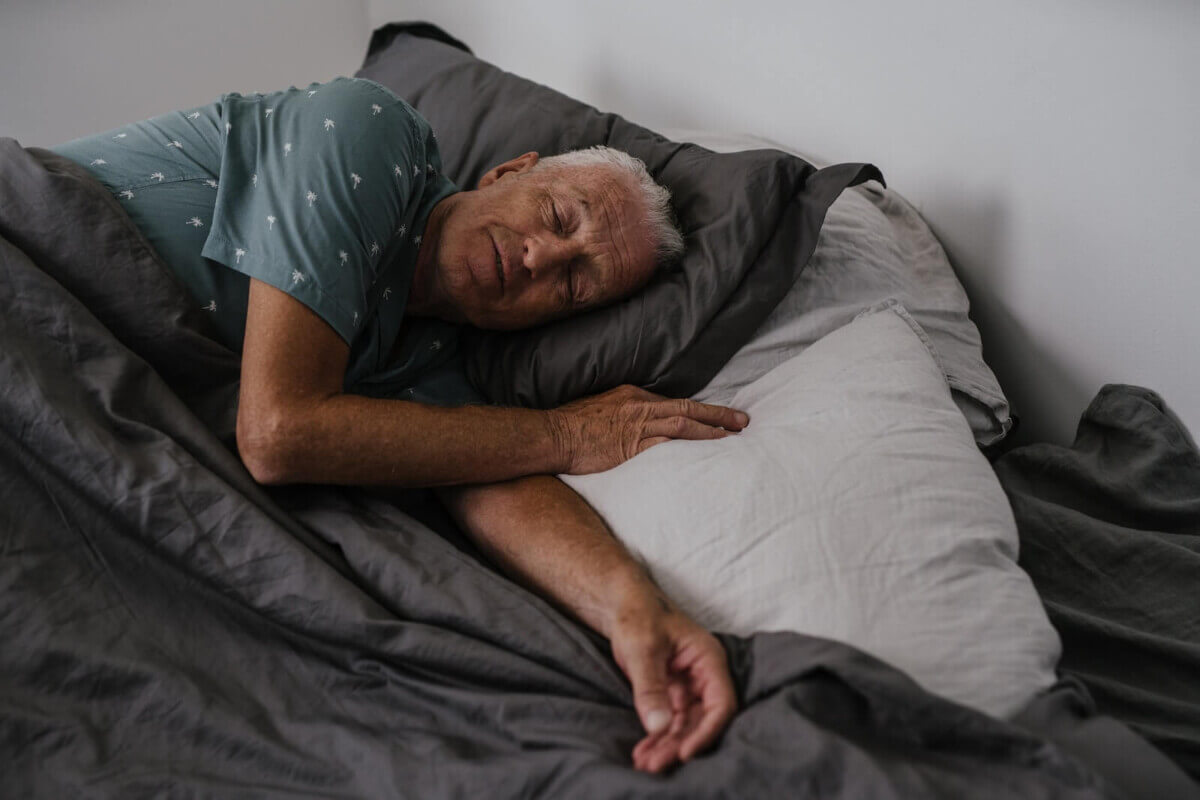
(Photo by SHVETS production from Pexels)
Scientists May Have Figured Out What Drives The Content Of Those Wild Adventures While We Sleep
In A Nutshell
- Researchers analyzed over 3,300 dream and waking reports from 207 adults over four years, finding that stable personal traits are linked to what people dream about.
- People who view dreams as meaningful and those prone to mind-wandering tended to have more vivid, bizarre, and content-rich dreams.
- Dreams recorded during Italy’s COVID-19 lockdown showed heightened emotional intensity and more references to limitations, effects that appeared to fade in the years that followed.
- The study used AI language models to score dream reports across 16 dimensions, with results that held up against independent human raters.
Every morning, billions of people wake up with fragments of bizarre, beautiful, or terrifying experiences rattling around in their heads. Dreams have long seemed like chaotic noise, random firings of a sleeping brain with no rhyme or reason. A sweeping new study points to the specific content of dreams as a link to who a person is and what they’ve been through, in ways that can now be measured and predicted.
Researchers in Italy analyzed more than 3,300 reports of dreams and waking experiences from 207 adults, collected over four years. They combined this with 351 dream reports gathered from 80 people during Italy’s strict COVID-19 lockdown in spring 2020. Using artificial intelligence tools to score the meaning and emotional texture of each report, the team found that stable personal traits, including a person’s attitude toward dreaming, their tendency to let their mind wander, and how well they sleep, were reliably linked to what showed up in their dreams. On top of that, the shared stress of the pandemic left a measurable imprint on dream content that gradually faded over time.
Published in Communications Psychology, the research ranks among the most ambitious attempts to map the forces shaping dream content, using a framework capable of detecting both deeply personal patterns and broad societal pressures embedded in the stories people tell about their sleeping lives.
How Researchers Captured What People Actually Dream About
Participants recorded voice memos each morning describing whatever was going through their minds just before waking up. They also recorded waking experiences at random times during the day, prompted by text messages. This gave researchers a direct comparison between dreaming and being awake, using the same people and the same methods.
Three AI language models then scored each report across 16 dimensions, including how vivid the imagery was, how emotionally intense the experience felt, how bizarre the events were, whether the narrator was active or passive, and the degree of social interaction involved. Agreement between AI scores and human raters was consistently high and comparable to agreement among independent human raters. The researchers also developed a separate system identifying recurring word clusters covering topics like food, animals, vehicles, family members, and dozens of others.
Compared to waking reports, dreams showed a dramatic shift. Waking reports tended to be self-focused and thought-heavy, describing internal reasoning and planning. Dreams were dominated by rich visual and spatial details, multiple characters, social interactions, and events that defied normal logic.

Your Mindset and Habits Are Linked to Your Dreams
Stable individual traits predicted specific features of dream content, even after accounting for age, sex, education, and natural talkativeness.
People who viewed dreams as meaningful, rather than dismissing them as “random nonsense from the brain,” a negative framing used in the study’s own questionnaire, tended to have dreams with richer content across multiple dimensions. Those with a stronger tendency toward mind-wandering during waking hours produced dream reports with more frequent shifts in settings, which the researchers link to a greater sense of bizarreness.
Sleep quality mattered, but narrowly. Self-reported sleep quality was linked to dream bizarreness, and lower perceived sleep quality was associated with certain appearance- and matter-related details in dreams. Overall, though, sleep patterns had a relatively weak relationship with dream content.
By including both dream and waking reports in their models and looking for interactions between personal traits and state of consciousness, researchers could isolate effects specific to sleep, rather than general tendencies in how someone describes any experience.
COVID-19 Stress Left a Mark on Dreams
The second dataset provided a natural experiment. During Italy’s COVID-19 lockdown in spring 2020, 80 participants kept dream diaries for two weeks, one week under full restrictions and one as they began to ease. Because this group was smaller and skewed younger and more female than the main sample, the researchers treated its results as exploratory rather than definitive.
Dreams recorded during lockdown showed increased references to limitations and heightened emotional intensity. The main dataset, spanning multiple years after the lockdown, allowed the researchers to track what happened next. In this sample, those shifts appeared to fade over time, suggesting that while major external stressors can reshape dreams at a population level, the effects may not be lasting.
Most people have had the experience of waking from a stress-soaked dream during a rough stretch of life and wondering whether their sleeping mind is processing something their waking mind hasn’t caught up to yet. This study suggests that intuition isn’t far off, and that the same brain navigating a difficult world by day is quietly working through it at night.
Disclaimer: This article is based on observational research and the findings reflect associations, not proven causes. Dream content is influenced by many individual and environmental factors. This article is not intended as medical or psychological advice.
Paper Notes
Limitations
Several constraints apply to this work. Dream structure was inferred from statistical patterns in the language of dream reports, not from direct evidence about how dreams are generated; participants may unconsciously apply narrative frameworks when recalling experiences upon waking. The analyses are observational and correlational, so no causal claims about what produces specific dream content can be made. The main sample was drawn from central and northern Italy among Italian-speaking adults recruited through word-of-mouth and flyers, limiting generalizability. The lockdown dataset was smaller, younger, and more female-skewed than the main sample and is treated as exploratory. No information on participants’ socioeconomic status, race, or ethnicity was collected, and the analysis plan was not preregistered.
Funding and Disclosures
Support came from the BIAL Foundation (#091/2020), the European Union’s Next Generation EU program (PRIN 2022, “The Language of Dreams,” CUP D53D23009580006), Italy’s Resilienza Economica e Digitale project funded by the Ministry of University and Research, and the TweakDreams ERC Starting Grant (#948891). Funders had no role in study design, data collection, analysis, the publication decision, or manuscript preparation. The authors declare no competing interests.
Publication Details
Authors: Valentina Elce, Giorgia Bontempi, Serena Scarpelli, Bianca Pedreschi, Pietro Pietrini, Luigi De Gennaro, Michele Bellesi, Giulio Bernardi, and Giacomo Handjaras (IMT School for Advanced Studies Lucca; Sapienza University of Rome; University of Camerino, Italy). Title: “Individual traits and experiences predict the content of dreams.” Journal: Communications Psychology (Nature Portfolio), Vol. 4, Article 69, published April 28, 2026. DOI: https://doi.org/10.1038/s44271-026-00447-2.


