
(Photo by megaflops on Shutterstock)
New tech by University of Maryland scientists monitors gut bacteria via flatulence
In A Nutshell
- Scientists developed a wearable sensor that clips onto underwear and monitors gut bacteria activity by measuring hydrogen gas in flatulence for up to a week on a single battery
- The device detected dietary changes with 94.7% accuracy in a study of 38 people, revealing that participants passed gas 32 times daily on average, far more than the 10-20 episodes people typically self-report
- Individual variation was dramatic, with daily gas counts ranging from 4 to 59 episodes, suggesting there may be no single “normal” when it comes to gut bacterial activity
- About one-third of participants reported digestive discomfort from plain sugar gumdrops that produced minimal bacterial fermentation, revealing how expectations can influence perceived symptoms
Scientists have created a wearable sensor that attaches to your underwear and tracks your gut bacteria in real time by measuring the hydrogen gas in your flatulence. And no, that’s not a setup for a joke.
Researchers at the University of Maryland developed the device to solve a problem that has plagued microbiome research for years: how to actually monitor what gut bacteria are doing hour by hour, not just which species are living in there. The answer, it turns out, involves a tiny sensor clipped near your bottom that passively records data while you go about your day.
In a study of 38 people, published in Biosensors and Bioelectronics: X, the device detected dietary changes with 94.7% accuracy and revealed something surprising about human bodies. Participants passed gas an average of 32 times per day, far more than the 10 to 20 episodes people typically report in studies. Either humans are terrible at counting their own farts, or we’re all walking around in collective denial.
Why Scientists Care About Flatulence
Hydrogen gas is produced exclusively by gut bacteria, not by human cells. When microbes feast on fiber or other carbohydrates we can’t digest ourselves, they pump out hydrogen as waste. That hydrogen then leaves the body through two routes: breath and flatulence.
While breath contains trace amounts of hydrogen, flatulence is loaded with it: hundreds of times more concentrated. Most people harbor hydrogen-producing bacteria from various microbial families that churn out this gas whenever they break down undigested food.
Current tools for studying gut bacteria are frustratingly limited. Stool samples only capture what’s happening when you have a bowel movement. Blood tests show some bacterial byproducts but require frequent needle sticks. Breath tests need hours in a clinic or complicated home protocols that most people struggle to follow correctly.
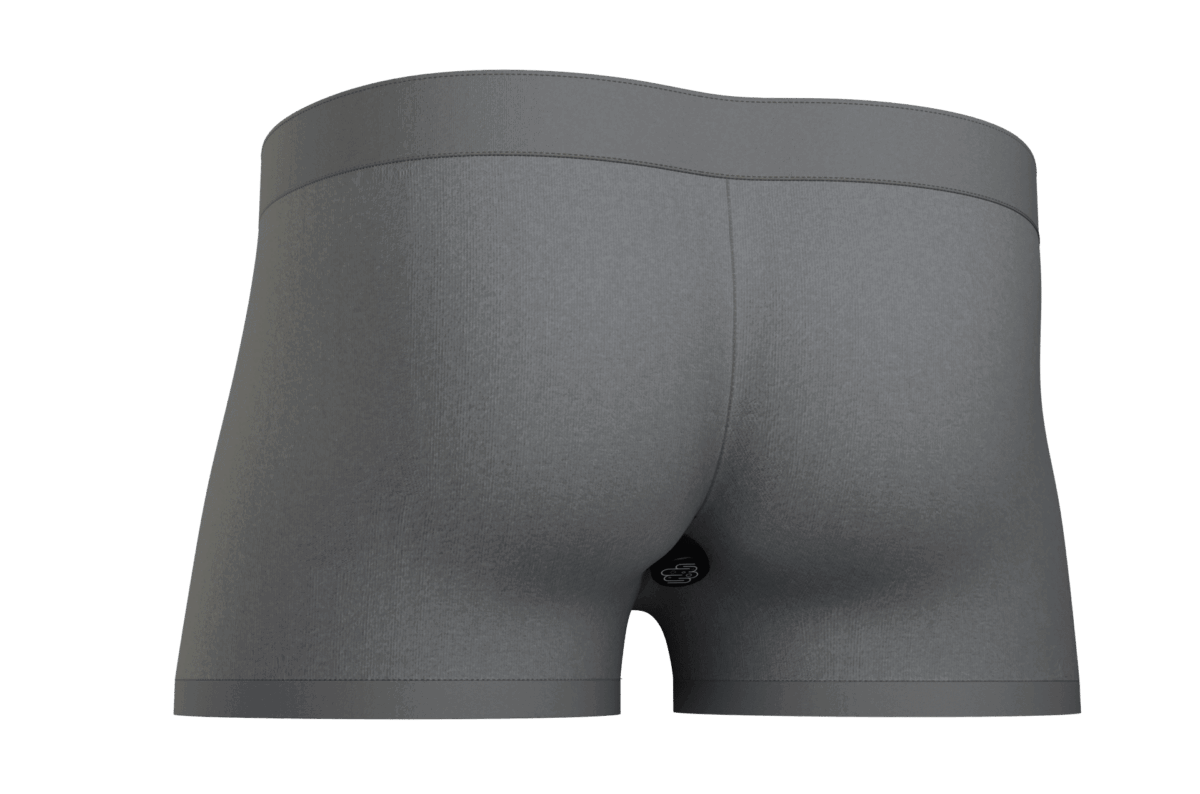
The Smart Underwear, as researchers dubbed it, continuously monitors for up to a week on a single set of batteries. The device is about an inch square and weighs next to nothing. It snaps onto regular underwear using a small plastic fastener.

Testing The Smart Underwear On Real People
Nineteen volunteers wore the Smart Underwear for seven days straight during normal activities. Post-study surveys found that 95% reported no discomfort. People wore it an average of 11 hours daily, with most keeping it on for at least six days.
But the individual variation was dramatic. Daily gas counts ranged from 4 episodes on the low end to 59 on the high end. That’s a 14-fold difference between people at the extremes, raising questions about whether there’s really such a thing as “normal” when it comes to gut bacteria activity.
To test whether the device could actually detect changes in bacterial metabolism, researchers ran a controlled experiment. They had 38 participants avoid fiber and other hard-to-digest carbohydrates for two days, essentially putting their gut bacteria on a starvation diet. Then came the gumdrops.
On day three, participants ate six regular gumdrops made with corn syrup and table sugar. These simple sugars get absorbed quickly in the small intestine, leaving almost nothing for gut bacteria to ferment. On day four, they ate six gumdrops containing 6 grams of inulin, a plant fiber that humans can’t break down but bacteria love.
The device picked up the difference in 36 out of 38 people. Most showed a spike in bacterial activity starting 3 to 4 hours after eating the fiber gumdrops, which matches how long it takes for food to reach the large intestine where most gut bacteria live.
Brantley Hall, University of Maryland)
When Symptoms Don’t Match Reality
One of the study’s more intriguing findings had nothing to do with the technology. About one-third of participants reported gastrointestinal discomfort after eating the control gumdrops containing only regular sugar. The device showed minimal bacterial fermentation on those days, meaning their symptoms likely had no physical cause.
This disconnect hints at how much expectation and belief can influence what people feel in their stomachs. It also suggests that some of the benefits people attribute to dietary changes might be placebo effects rather than actual shifts in gut bacteria behavior.
What Comes Next
The researchers have filed two patent applications and started a company called Ventoscity to commercialize the technology. For people with suspected food intolerances, the device could eventually help pinpoint which specific foods trigger bacterial fermentation rather than relying on guesswork and symptom diaries.
Beyond clinical applications, Hall’s lab is launching something more ambitious: the Human Flatus Atlas. The project aims to establish the first scientifically rigorous baseline for what counts as normal flatulence in humans.
“We don’t actually know what normal flatus production looks like,” Hall said in a statement. “Without that baseline, it’s hard to know when someone’s gas production is truly excessive.”

Normal ranges exist for blood glucose, cholesterol, and countless other physiological measures. But for flatulence, no such baseline exists. The Atlas will use Smart Underwear to objectively measure flatulence patterns day and night across hundreds of participants across the United States, correlating those patterns with diet and microbiome composition. Devices will be shipped directly to participants, allowing anyone in the country to join remotely.
Hall’s team is specifically recruiting three groups that emerged from their early studies. “Zen Digesters” consume high-fiber diets: 25 to 38 grams of fiber daily, yet produce minimal flatulence. These people may hold clues to understanding how some microbiomes adapt to fiber without generating excess gas. On the opposite end are “Hydrogen Hyperproducers,” people who simply fart a lot. Studying both extremes could reveal what drives gas production at its limits. The third group, “Normal People,” fall somewhere in between.
The team will collect stool samples from Zen Digesters and Hydrogen Hyperproducers for microbiome analysis, searching for the bacterial species or metabolic pathways that explain why some people produce so much more gas than others on similar diets.
“We’ve learned a tremendous amount about which microbes live in the gut, but less about what they’re actually doing at any given moment,” Hall said. “The Human Flatus Atlas will establish objective baselines for gut microbial fermentation, which is essential groundwork for evaluating how dietary, probiotic or prebiotic interventions change microbiome activity.”
Scientists could also use the device to answer basic questions that current methods can’t touch. How quickly do gut bacteria respond when someone adds fiber to their diet? Do bacterial communities follow daily rhythms? When microbes adapt to dietary changes, do they do it by changing which species dominate or by ramping up the activity of species already there?
“Think of it like a continuous glucose monitor, but for intestinal gas,” Hall said, noting the device successfully detected increased hydrogen production following consumption of inulin with 94.7% sensitivity.
Genomic sequencing can identify which bacteria live in your gut and what genes they carry, but it can’t tell you whether those bacteria are actively fermenting food at any given moment. Breath testing has been used for decades to diagnose conditions like lactose intolerance, but it only captures a few hours of data in controlled settings. The Smart Underwear extends that window to entire weeks during regular life.
For now, the device remains primarily a research tool, though the Human Flatus Atlas is open to volunteers. The project represents something genuinely new in microbiome science: a way to watch gut bacteria work in real time rather than inferring what they might be doing from indirect measurements. Sometimes the most useful scientific advances come from monitoring the outputs everyone else has been too squeamish to measure.
Paper Notes
Study Limitations
The study enrolled relatively small sample sizes (19 participants for the user experience study and 38 for the validation study). Both studies focused on healthy adults, so results may not generalize to people with gastrointestinal disorders or other health conditions. The validation study used a specific dietary fiber (inulin) at a single dose, so the device’s performance with other fermentable carbohydrates or different doses requires further testing. Electrochemical sensors showed some response to hydrogen sulfide, though researchers note this interference should be negligible given the relative concentrations of gases in flatus. Device performance during high-intensity physical activity was not fully evaluated after one participant reported discomfort during such activities. The study population included volunteers who were willing to wear the device and may not represent the general population’s comfort level with such monitoring.
Funding and Disclosures
This work was supported by University of Maryland Startup funds to Dr. Hall, the Maryland Technology Development Corporation (TEDCO) through the Maryland Innovation Initiative (MII), and the UM Ventures Medical Device Development Fund (MDDF). Santiago Botasini and Brantley Hall have submitted two patent applications related to the Smart Underwear device and co-founded Ventoscity LLC to commercialize the technology. Ventoscity LLC has licensed the patents from the University of Maryland. Santiago Botasini and Brantley Hall report equity stakes in Ventoscity LLC, and Brantley Hall serves on the company’s board. The other authors declared no competing interests.
Publication Details
Authors: Santiago Botasini, David Zhan, Norman Fischer, Charlotte T. Ravel, Ashley Tien, Maggie R. Grant, Glory Minabou Ndjite, Ty Sopko, Holly Childs, Maryann Greenfield, Christina X. Qian, Kara E. Gardiner, Nayantara M. Anders, Tasnim F. Ullah, Leah T. Redmond, Delaina A. Callaway, Eliya M. Behailu, Grace M. Sarkar, Nakati C. Sany, Margaret Slavin, and Brantley Hall | Affiliations: Department of Cell Biology and Molecular Genetics, University of Maryland, College Park; Shift Sight; Department of Nutrition and Food Science, University of Maryland, College Park; Center for Bioinformatics and Computational Biology, University of Maryland, College Park | Journal: Biosensors and Bioelectronics: X | Paper Title: “Smart underwear: A novel wearable for long-term monitoring of gut microbial gas production via flatus” | Volume and Issue: Volume 27 (2025), Article 100699 | DOI: 10.1016/j.biosx.2025.100699 | Published Online: October 10, 2025 | Study Approvals: User experience study conducted under IRB approval IRBNet 1926688; GUMDROP study conducted under IRB approval IRBNet 2186209, both from the University of Maryland College Park Institutional Review Board.


