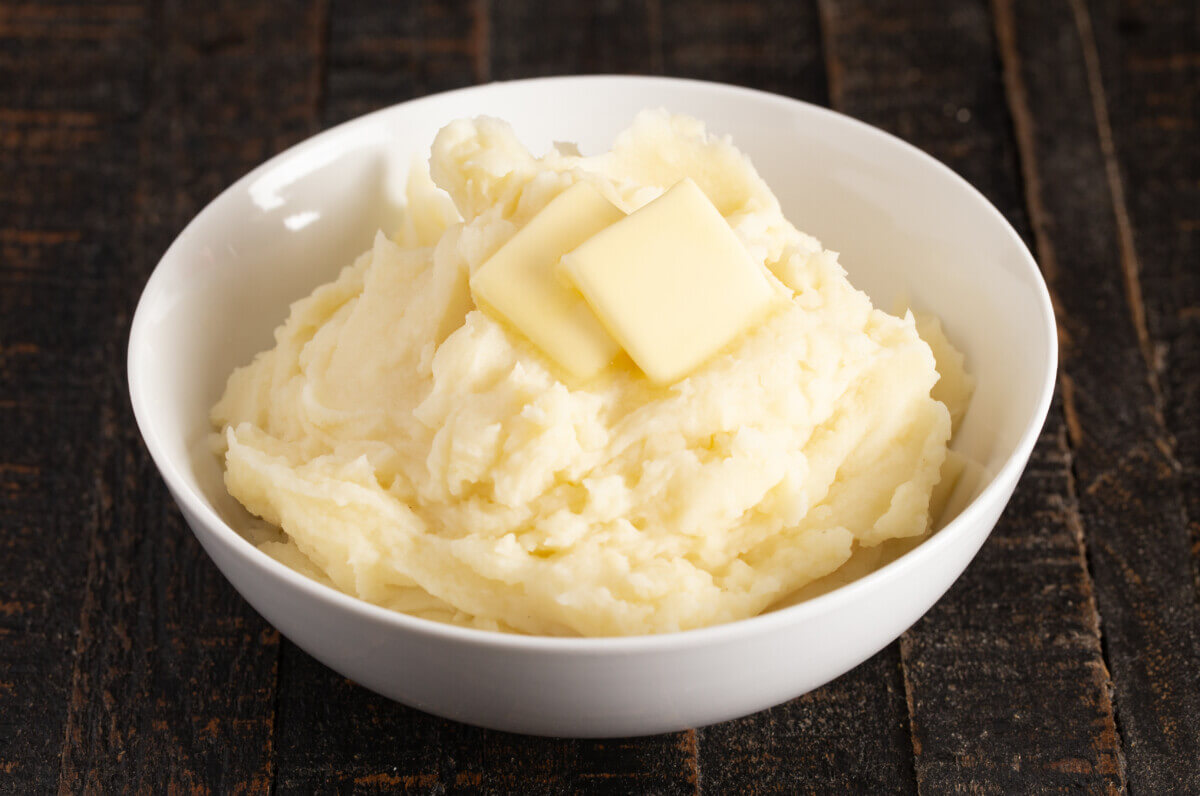
(Photo by P Maxwell Photography on Shutterstock)
In A Nutshell
- A major review found no link between naturally occurring dairy trans fats and higher risk of heart disease or type 2 diabetes.
- Unlike artificial trans fats in processed foods, dairy trans fats appear to behave differently in the body.
- Some studies found that people with higher blood levels of a dairy-specific trans fat were less likely to develop type 2 diabetes, though the evidence is not conclusive.
- Several of the study’s authors have ties to the dairy industry, a conflict of interest the researchers disclosed and that independent replication would help address.
For decades, “trans fat” has been one of the most feared phrases in nutrition, largely associated with warning labels, banned ingredients, and clogged arteries. But a sweeping new review of the science suggests that trans fats naturally found in dairy foods, the kind in butter, cheese, and milk, appear not to worsen key heart-health blood markers or raise the risk of cardiovascular disease or type 2 diabetes in the studies reviewed.
As governments crack down on artificial trans fats, the man-made kind in partially hydrogenated vegetable oils, dairy foods are increasingly becoming the largest remaining source in the average diet. That shift raises an urgent question. Should people be worried about trans fats that occur naturally in milk from cows, sheep, and goats? According to this analysis, the answer appears to be no.
How Researchers Tested Dairy Trans Fats
Published in the journal Nutrition Research, the review identified 10 clinical trials in which participants were fed dairy products from cows, sheep, or goats raised on special diets enriched with plant oils to naturally boost their milk’s trans fat content. Researchers then tested participants’ blood for markers tied to heart disease risk, including various forms of cholesterol. The enhanced dairy foods, which included butter, cheese, and milk from studies in Canada and several European countries, often had somewhat less saturated fat and more unsaturated fat than the control versions, a design limitation the researchers acknowledged. Participant counts ranged from 10 to 61, and trans fat doses ranged from about 1.3 to 13.2 grams per day.
What the Blood Tests Revealed About Dairy Trans Fats
When researchers pooled the clinical trial data, they found no significant effect of higher dairy trans fat intake on total cholesterol, LDL cholesterol (often called “bad” cholesterol), triglycerides, or protein markers associated with cardiovascular risk. There was one slight exception: a small dip in HDL cholesterol, sometimes called “good” cholesterol, among those eating more trans fat-rich dairy. When researchers broke the data down by food type, even that difference disappeared.
At the top end of the range, about 13 grams per day, one tightly controlled butter study showed some unfavorable shifts in cholesterol ratios among healthy men, but researchers noted this appeared to be dose-related, not something seen at typical eating levels.
A second part of the review looked at 12 large population studies tracking thousands of people over years to see who develops heart disease or diabetes. These measured actual levels of dairy-related trans fats in participants’ blood, a more reliable gauge than dietary recall. Nine were conducted in the United States, with others from Norway, Germany, and Finland, with follow-up periods as long as 22 years. Across all 12, no consistent evidence emerged that higher blood levels of dairy-associated trans fats raised the risk of heart attacks, strokes, heart disease death, or new cases of type 2 diabetes.
Two U.S. studies did stand out. Both found that people with the highest blood levels of a specific dairy trans fat called trans palmitoleic acid were less likely to develop type 2 diabetes. But the pattern was not consistent across the full review and should not be read as proof that dairy trans fats protect against diabetes.
Not All Trans Fats Are Created Equal
Dairy trans fats should not be confused with the artificially produced kind, which has been strongly and consistently linked to heart disease. Those fats, made through a chemical process to solidify vegetable oils, have a very different track record in the body and are the target of global elimination efforts by the World Health Organization. Vaccenic acid, the most common trans fat in dairy, behaves differently in the body than its industrial counterpart, and the overall nutritional makeup of dairy foods may also influence how these fats are processed.
Dairy Trans Fats and the Risk of Mislabeling Nutritious Foods
As policies targeting artificial trans fats succeed, dairy foods will make up an even larger share of trans fat in people’s diets. If labeling rules treat all trans fats the same, lumping naturally occurring dairy fats together with the industrial kind, consumers may end up avoiding nutritious foods for no good reason.
Worth noting is who conducted this review. Two of the five authors are affiliated with the Centre National Interprofessionnel de l’Économie Laitière, a French dairy industry organization, and one is affiliated with the National Dairy Council in the United States. These affiliations do not automatically invalidate the findings, but they are relevant context for readers weighing the conclusions. Independent replication would strengthen confidence considerably.
Years of concern about “trans fat” have been largely justified. But this body of evidence makes a reasonable case that the dairy aisle has been caught in the crossfire.
Disclaimer: This article is based on a published scientific review and is intended for informational purposes only. It does not constitute medical or dietary advice. Readers should consult a qualified healthcare provider before making changes to their diet.
Paper Notes
Limitations
Clinical trials in this review were small, with participant counts ranging from 10 to 61, and most ran only a few weeks, with the longest at 12 weeks. Because of this, they were not designed to measure actual disease outcomes like heart attacks, only blood markers associated with risk. All 10 trials received an overall bias rating of “some concerns,” primarily because most lacked a prespecified analysis plan. Enhanced dairy foods also tended to have lower saturated fat and higher unsaturated fat than control versions, making it difficult to isolate the effect of trans fats alone. Total trans fat content was reported consistently in only a few trials, complicating cross-study comparisons. For the population studies, no statistical pooling was performed, so findings were summarized descriptively rather than combined into a single quantitative estimate.
Funding and Disclosures
This research was funded by the National Dairy Council (NDC) in the United States and the Centre National Interprofessionnel de l’Économie Laitière (CNIEL) in France. Author Cindy Schweitzer received research funding from Dairy Management, Inc. Authors Constance Gayet-Boyer and Fanny Tenenhaus-Aziza work for CNIEL. Author Moises Torres-Gonzalez works for the National Dairy Council. Author D. Ian Givens has received funding from various international dairy organizations.
Publication Details
Authors: Constance Gayet-Boyer, Fanny Tenenhaus-Aziza (CNIEL, Paris, France); Moises Torres-Gonzalez (National Dairy Council, Rosemont, IL, USA); D. Ian Givens (Institute for Food, Nutrition and Health, University of Reading, UK); Cindy Schweitzer (Schweitzer Consulting LLC, Mount Prospect, IL, USA) | Journal: Nutrition Research, Volume 150 (2026), pages 33–48 | Paper Title: “Trans fatty acids from dairy foods do not affect risk of cardiometabolic diseases: Systematic review and meta-analysis of evidence from randomized controlled trials and systematic review of prospective cohort studies” | DOI: https://doi.org/10.1016/j.nutres.2026.03.009 | Open Access: Published under the CC BY-NC-ND 4.0 license.


