
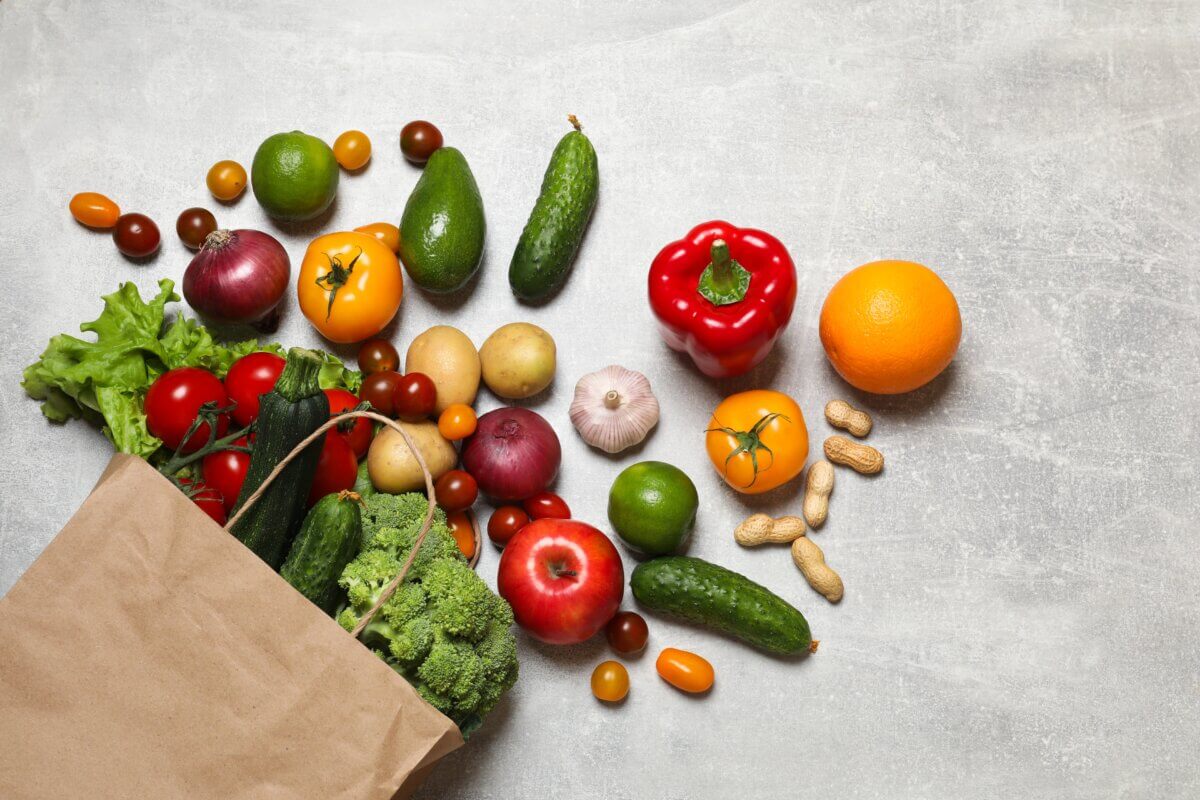
Photo by Tim Photoguy on Unsplash
The Math Behind Why Your Grocery Store Marks Down Food Instead of Donating It
In A Nutshell
- For most food categories, marking down surplus food and selling it in-store is more financially attractive for retailers than donating it to charity.
- Donation only beats one alternative economically: throwing food away, and even that doesn’t hold for liquid dairy and dry foods.
- Discount apps like surplus food platforms are generally more profitable for retailers than donation, which may draw products away from food banks.
- Getting more surplus food to people who need it will likely require financial incentives like tax breaks or logistics subsidies, not just appeals to generosity.
Grocery stores end up with food that is close to expiring, and some of it never reaches people who could use it. It seems like an easy fix: just donate the leftovers. But a new study out of Denmark reveals that the economics of surplus food are far more tangled than they appear, and the financial incentives facing retailers often push them away from charitable donation and toward other strategies, like slashing prices or selling through discount platforms.
Research published in the Journal of Food Products Marketing digs into a question that food waste advocates have wrestled with for decades. If so much edible food goes to waste at the retail level, why aren’t stores simply giving it to organizations that feed hungry people? The answer, as the study lays out, boils down to money. For most food categories, selling surplus items in-store at a discount is the most financially attractive option for retailers, beating out donation, selling on alternative platforms, or simply throwing food away.
Why Surplus Food Economics Favor Markdowns Over Donations
Researcher Jørgen Dejgård Jensen used Denmark as a case study, drawing on desk research, stakeholder interviews, and estimated retail food prices to model what happens when a grocery store ends up with food it can’t sell. For each of nine food categories, from fresh bread and produce to meat, seafood, dairy, and dry goods, the study weighed four options available to retailers: mark the price down and sell it in-store, move it through a discount platform like a surplus food app, donate it to a charity, or throw it away.
Selling at a discount came out on top financially in most cases, as long as there was enough time before the expiration date to actually move the product. That tracks with common sense. A store that can put a yellow “reduced for quick sale” sticker on something and still collect money is always going to prefer that over giving it away for free. Donation, by contrast, was only economically competitive with one alternative: throwing the food away. Even then, liquid dairy and dry foods were exceptions where donation didn’t make financial sense even compared to disposal. And on average, donation couldn’t match the returns from discount platforms, though results varied widely by food type and circumstance.
Not All Surplus Food Is Created Equal
On the receiving end, charities generally came out ahead when accepting donations, with most food categories generating a positive financial return for recipient organizations. Liquid dairy and dry foods were again the outliers: for those categories, the costs of transportation, storage, and handling likely outweighed the value of the food itself. A crate of milk that needs refrigeration and must be consumed within days creates a very different logistical equation than a pallet of canned goods with months of shelf life remaining. It also raises a practical question that policymakers rarely factor in: what happens when you require a food bank to accept items that actually cost it more to handle than they’re worth?
While the study uses Denmark as its test case, retailers in many countries face similar calculations. Differences in retail structures, labor costs, and charitable networks mean the specific numbers would vary, so how broadly these findings apply elsewhere remains an open question.
Discount Apps Add a Wrinkle to Food Donation
Some governments have considered or adopted policies that push retailers toward donation, but this study suggests those policies work best when the economics make sense for both stores and recipient organizations. If charities are losing money by accepting certain types of donated food, requiring donations could create new problems rather than solving existing ones.
Apps and services that connect consumers with discounted surplus food from retailers offer stores a way to recoup some revenue while also reducing waste, but they may pull products away that might otherwise have gone to food banks. The finding that selling on alternative platforms is generally more profitable for retailers than donating, on average, sharpens this tension.
A System That Needs More Than Good Intentions
Jensen’s research makes it clear that reducing food waste at the retail level is not simply a matter of goodwill. Donation becomes the rational choice primarily when the alternative is throwing food away, and even then, not for every food category. If policymakers and advocates want to move more surplus food from store shelves to dinner tables, they will likely need to find ways to reshape the financial landscape, whether through subsidies for donation logistics, tax incentives, or support for the charitable organizations that bear the costs of receiving and distributing food. Simply asking retailers to be more generous, without addressing the underlying economics this study reveals, is unlikely to close the gap.
Paper Notes
Limitations
This study used Denmark as a single test case, which means its findings may not directly translate to countries with different retail structures, food pricing, labor costs, or charitable networks. The research relied on desk research, stakeholder interviews, and estimated retail food prices rather than direct observation or tracking of actual food flows, which introduces uncertainty into the cost and value estimates. The study itself acknowledges wide variation in estimated costs and returns, suggesting that real-world outcomes could differ depending on local conditions, specific retailers, and the operational capacity of recipient organizations. The cost and price data refer to 2019, while the assumptions underlying cost estimates were drawn from information collected in 2023 to 2024, a gap the author acknowledges as a potential source of minor bias.
Funding and Disclosures
This study was supported by Velux Fonden through its HUMpraxis programme (Grant no. 40434), as part of the project “Fighting food waste: exploring the interplay between values, choices, and habits.” No potential conflict of interest was reported by the author.
Publication Details
Author: Jørgen Dejgård Jensen, Department of Food and Resource Economics, Copenhagen University, Copenhagen, Denmark Journal: Journal of Food Products Marketing Title: Food Waste Prevention and Economic Incentives to Redistribute Surplus Foods from Food Retailing Volume/Issue: Vol. 31, Nos. 6-9, pp. 110-123 Year: 2025 DOI: 10.1080/10454446.2025.2584844


