(© Pixel-Shot - stock.adobe.com)
Most Americans Are Generous. We’re Just Not Measuring It Right.
In A Nutshell
- Nearly three in four Americans aspire to be generous, and most already give regularly in ways that traditional charity tracking simply cannot capture.
- Money is the top barrier to giving, not apathy: 91 percent of Americans say giving and volunteering are personal priorities.
- Everyday acts like rounding up at the grocery register, helping neighbors, and sending money to family abroad go largely uncounted by nonprofits and researchers.
- Celebrities dominate news and social media coverage of generosity, yet only 9 percent of Americans say they would trust a celebrity as a messenger about giving.
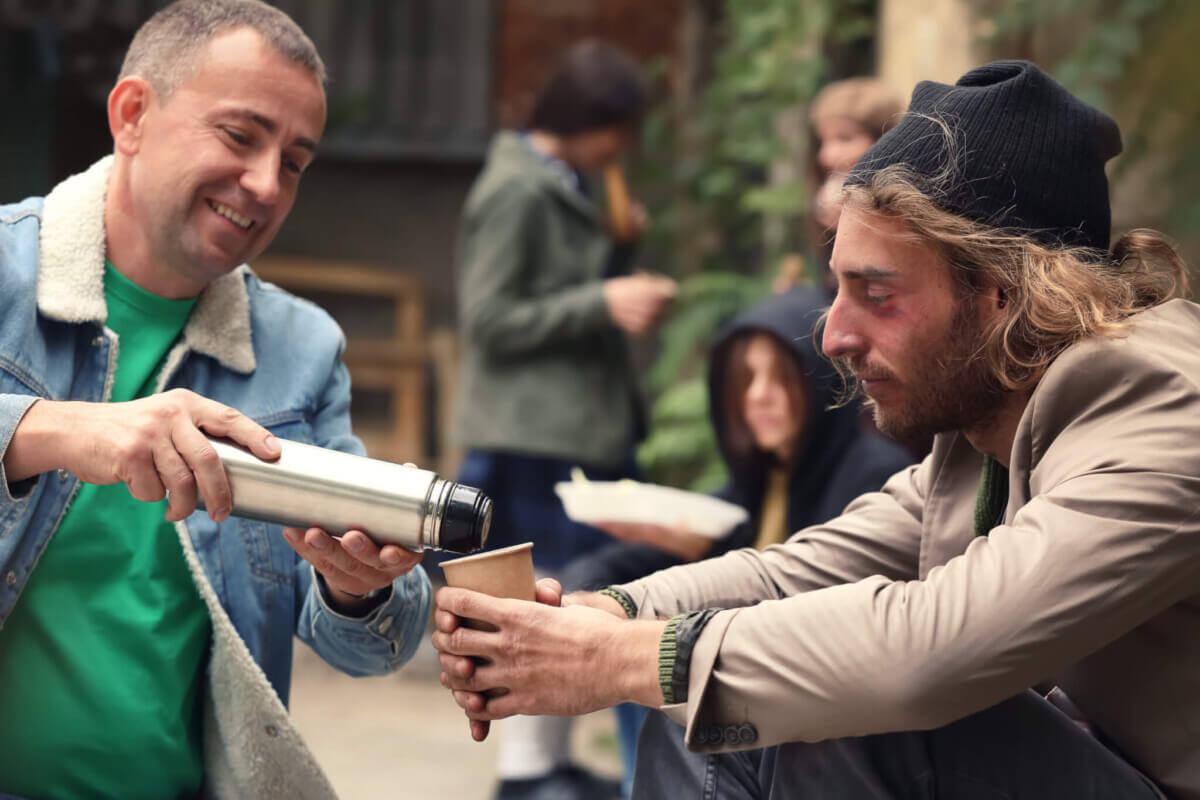
Buying groceries for a stranger in a checkout line. Writing Christmas cards to veterans who’ve lost loved ones. Handing cash to a homeless family after watching the car ahead do the same. When researchers asked thousands of Americans what generosity looks like in their lives, the answers painted a picture that looks almost nothing like the celebrity mega-donations and nonprofit fundraising drives that dominate the news.
A report from the Generosity Commission and Hattaway Communications found that nearly three in four Americans say they aspire to be generous, and most of them already are, in ways that charities and traditional tracking methods simply can’t measure. As formal charitable participation trends downward, the real story may not simply be declining participation. It’s that many everyday forms of generosity aren’t being captured.
Some deeply held assumptions about what drives people to open their wallets took a hit. Tax breaks? Only 6 percent of respondents said that mattered. Impressing others? Just 3 percent. An overwhelming 73 percent said they give to help people in need, and 47 percent said they want to contribute to something they care deeply about. Generosity comes from the heart first. Incentive structures that policymakers and nonprofits have spent years building around giving may be largely beside the point.
How Researchers Studied American Generosity
Researchers drew on three main sources. First, a nationally representative survey of 2,569 U.S. adults conducted between June 28 and July 8, 2022, with oversamples of low-income adults, African Americans, Latinos, Asian Americans, millennials, and Gen Zers, weighted by race, age, and gender. Margin of error was plus or minus 2 percent. Second, three 90-minute focus groups held in August 2022 with participants who were ambivalent about giving, exploring their motivations, barriers, and reactions to different messages. Third, researchers reviewed 70 news articles and 60 tweets about generosity published between January 2020 and June 2022, coding each for tone, themes, and messengers.

American Generosity Is Widespread, Just Often Invisible
More than three in four respondents (77 percent) reported donating money each year, and more than half (57 percent) reported volunteering. Most were giving modestly, less than $500 and fewer than 25 hours per year. But the variety of generous actions people described was wide. Donating clothes, food, or supplies was the most common. Giving money to people they know personally came in at 64 percent. Purchasing an item because it supports a charity hit 63 percent. Rounding up at the register reached 61 percent. Giving to strangers in need came in at 58 percent.
Many of these acts fall entirely outside what organizations use to track charitable behavior. Between a quarter and a third of respondents reported giving through mutual aid organizations, contributing to crowdfunding campaigns, or providing data and research. One-fifth reported sending money to family members outside the country. Focus group participants described generosity in terms ranging from taking in a stray dog to helping a loved one with housework to buying water for teachers on strike.
“The most simple definition is the act of giving,” one participant said. “And it doesn’t have to be money. It could be giving of yourself, your time, or your money if you have it. But it’s the act of giving without the expectation of something in return.”
Nonprofits and faith communities remained major channels. More than half of respondents (58 percent) gave to nonprofits, and nearly half gave to faith-based organizations (46 percent) or through their faith communities (45 percent) at least yearly.
What Holds Americans Back from Giving More
If most Americans want to be generous, the biggest barrier is simple: money. Fully 57 percent said they had chosen not to give because of financial constraints, and around two-thirds (69 percent) agreed they couldn’t give as much as they’d like after taking care of themselves and their families. Yet in the same breath, 69 percent said it was important to give even if it requires sacrifice.
“I’m disabled, so I only get a check once a month,” one focus group participant explained. “And even though I would want to help out as much as I can financially with someone, I just can’t. Social Security is not enough for me to barely make it on.”
Transparency was the other major sticking point. A full 67 percent of respondents wanted to know exactly how their money would be spent before giving. People didn’t need to be told how to give, but they wanted reassurance their contributions would matter. That desire drove many toward local, personal acts of generosity where the impact was visible, handing someone a meal, helping a neighbor, volunteering at a nearby food pantry, rather than writing checks to distant organizations. Nearly half (44 percent) also felt uncertain about how best to make a difference, and more than half (53 percent) said they would be more likely to volunteer if they had resources to help find opportunities.
How Media Portrays American Generosity
One notable finding is the gap between how ordinary people experience generosity and how it shows up in the media. Celebrities and public figures dominated the media conversation, appearing in 31 percent of news coverage and 53 percent of Twitter coverage analyzed. A small handful of famous names, including Barack Obama, Lady Gaga, Ellen DeGeneres, Katy Perry, Bill Gates, and Elon Musk, each appeared in nearly 10 percent of the social media conversation on their own.
Coverage focused overwhelmingly on massive donations to high-profile causes. Yet when the survey asked Americans whom they’d most trust to talk about generosity, only 9 percent named a celebrity. People were far more likely to trust friends (59 percent) or family (49 percent). More than half (55 percent) said they were most interested in talking about giving at small events with people they know. Media coverage also tied generosity to polarizing issues at high rates, and about 33 percent of the conversation around generosity and the Black Lives Matter movement was negative, largely driven by questions about how donated funds were being used.
When generosity in the news looks like billionaires writing eight-figure checks, ordinary people can feel like their $20 donation or their afternoon spent tutoring doesn’t count. Family, it turns out, has more influence on giving behavior than any media message ever could. More than half of respondents (56 percent) said they are more generous today because their families instilled in them the importance of giving at a young age. Among those who regularly discussed giving and volunteering with their families growing up, 85 percent donated at least some money each year, compared to 66 percent of those who rarely or never had those conversations.
Nine in 10 respondents (91 percent) said giving and volunteering are priorities for them, and nearly two-thirds said they planned to increase their giving in the future. Generosity may not be disappearing in America. It’s just happening in places we don’t always track.
Disclaimer: This article is based on self-reported survey data and focus group research conducted by the Generosity Commission in partnership with Hattaway Communications in 2022. Survey responses are subject to social desirability bias, and findings may not reflect current trends.
Paper Notes
Limitations
This research has several limitations worth noting. Because the survey relied on self-reported data, respondents may have overstated their generosity. The media scan covered a turbulent window, January 2020 through June 2022, which included the pandemic, Black Lives Matter protests, the war in Ukraine, and major natural disasters, all of which may have skewed coverage in ways that aren’t representative of typical years. With only 70 news articles and 60 tweets reviewed, the sample was small and selected based on social engagement, which may favor polarizing content. Focus groups included only three sessions with participants already identified as ambivalent about giving, so their views may not represent the full range of American attitudes. Specific demographic breakdowns of individual findings are not detailed beyond the survey’s oversample design.
Funding and Disclosures
This report was produced by the Generosity Commission in partnership with Hattaway Communications. No specific funding sources or conflict-of-interest disclosures are detailed in the report itself.
Publication Details
Title: How and Why We Give: Research Insights on the Aspirations and Motivations That Inspire People to Give and Volunteer | Published by: Generosity Commission, in partnership with Hattaway Communications | Date: May 2023 | Authors: Paige Rice, Senior Research Associate; Caitlin Fitzpatrick, Research Associate | Available at: The Generosity Commission | Nationally representative survey of 2,569 U.S. adults, June 28 to July 8, 2022; margin of error ±2%. Three focus groups conducted August 22 and 23, 2022. Media scan covered January 2020 through June 2022.


