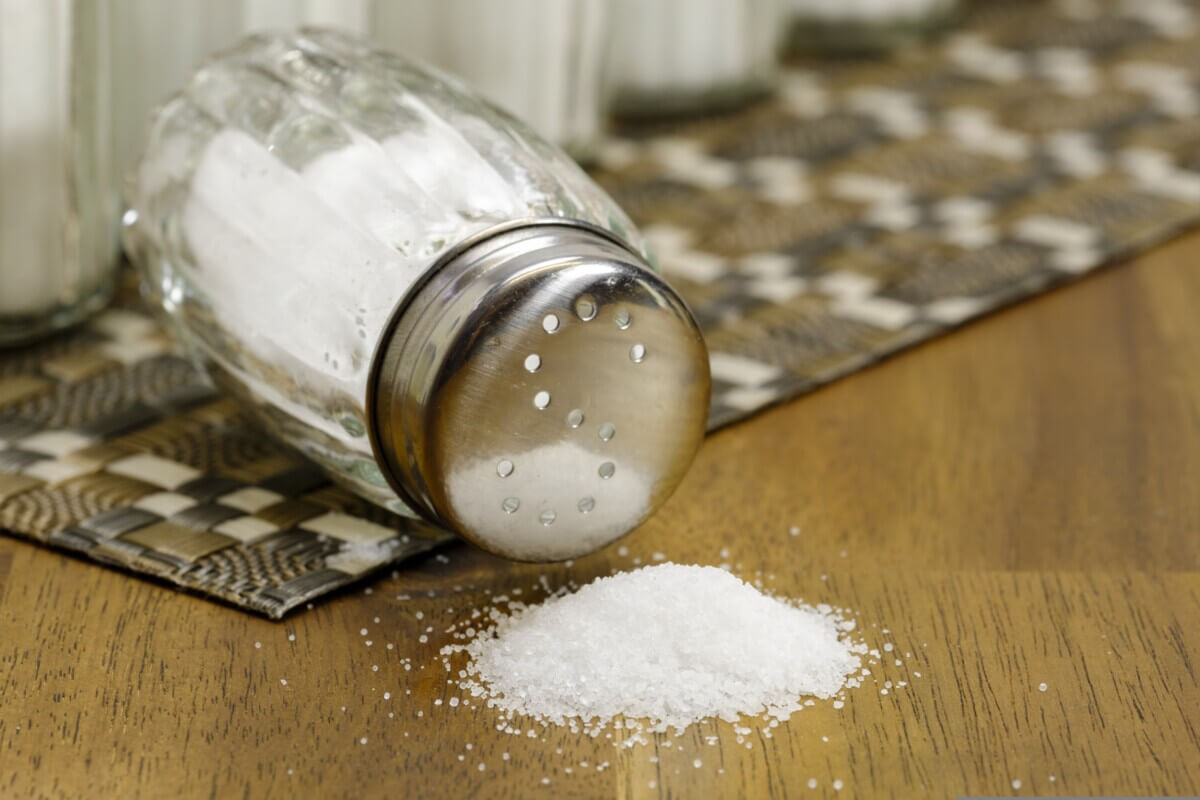
(Image by Bruno /Germany from Pixabay)
New mouse research suggests salt speeds blood vessel aging indirectly, by cranking up immune signals like interleukin‑16 rather than damaging the cells on its own
In A Nutshell
- In mice, a high-salt diet pushed blood vessel cells into a premature aging state, which can impair how vessels relax and function.
- The damage did not appear to come from salt directly. Instead, the immune system, including a signal called interleukin-16, may play a key role.
- A drug that clears out aged cells improved blood vessel function in these mice, but this was not a human study.
- Researchers say the findings point to new ways to study salt-related vascular damage, though more work is needed before any treatments reach people.
Too much salt over time may do more than raise blood pressure. New research in mice shows that a chronically high-salt diet causes the cells lining blood vessels to grow old before their time, and a cancer drug might help prevent that damage from taking hold.
Scientists at the University of South Alabama have traced a surprising chain of events linking heavy salt intake to blood vessel damage. Rather than salt directly harming the delicate inner lining of blood vessels, the real culprit appears to be the body’s own immune system. Excess salt ramps up immune activity, flooding the bloodstream with inflammatory signals, including a little-studied molecule called interleukin-16, that push blood vessel cells into a state of premature aging. Those prematurely aged cells then stop working properly, setting the stage for cardiovascular problems.
Published in the Journal of the American Heart Association, the findings matter because despite decades of public health warnings, people still consume far too much sodium. The American Heart Association recommends capping sodium at 2,300 milligrams per day, yet average daily consumption hovers around 9 grams of salt, and that number hasn’t budged in years. Cardiovascular diseases account for an estimated 19.1 million deaths globally, and high salt intake is considered a major dietary risk factor. Understanding exactly how salt damages blood vessels could open the door to treatments that go beyond simply telling people to put down the salt shaker.
How the High-Salt Diet Study Worked
The research team, led by Thiago Bruder-Nascimento, fed male mice a diet containing 8% sodium chloride, far above the standard 0.49% in normal mouse chow, for either 14 or 28 days. They then tested how well the animals’ blood vessels functioned by examining two types of arteries: a large vessel near the heart and the much smaller arteries that supply the intestines.
After just two weeks on the salty diet, the mice showed only minor changes: a heightened contraction response in their small arteries but no real dysfunction. After four weeks, a clear picture emerged. The small arteries showed serious trouble relaxing on command, a sign that the vessel lining was no longer doing its job. This kind of impairment is considered an early warning sign for serious cardiovascular disease.
At the cellular level, the damage told an even clearer story. After 28 days, cells lining the blood vessels showed elevated levels of two proteins, p21 and p16, that serve as red flags for cellular aging. When cells enter this aged state, they stop dividing and enter an inflammatory, dysfunctional condition. Levels of additional aging markers, IL-6 and IL-1β, also rose in those same cells. The pattern was unmistakable. Prolonged salt exposure was pushing blood vessel cells into premature old age.

A Cancer Drug That Improved Blood Vessel Function
To test whether this premature aging was actually causing the blood vessel problems, the team turned to navitoclax, a drug originally developed for cancer treatment that belongs to a class of medications designed to selectively clear out aged, dysfunctional cells in the body.
Mice that ate the high-salt diet for 28 days but also received navitoclax showed dramatically better results. The drug reduced aging markers in blood vessel tissue, restored the ability of small arteries to relax properly, and improved how the muscle cells in vessel walls contracted. When the researchers blocked production of nitric oxide, the molecule that tells blood vessels to relax, the differences between the salt-fed groups disappeared. That pointed to a specific mechanism: navitoclax was protecting blood vessel function primarily by preserving nitric oxide signaling, the very thing that prematurely aged cells tend to disrupt.
In control mice, navitoclax did not produce obvious vascular side effects over the 28-day study window. It left blood vessel function and cell death markers essentially unchanged, though the experiment was not designed as a full safety assessment. Neither the high-salt diet nor the drug produced significant kidney damage, heart remodeling, or increased protein in the urine over the 28-day window, suggesting the blood vessel aging occurred before any obvious organ damage set in.
How Salt Ages Blood Vessels Without Touching Them Directly
Perhaps the most surprising result came when the researchers tried to make salt directly age blood vessel cells in a laboratory dish. They exposed cells to high-sodium conditions for up to 96 hours, and nothing happened. The cells showed no increase in aging markers. Even when the researchers added a chemical known to force cells into an aged state, high salt didn’t make the effect any worse.
Salt wasn’t directly aging blood vessel cells. Something else had to be driving the process.
The team found their answer in the immune system. Immune cells harvested from salt-fed mice showed elevated activity across multiple inflammatory genes. When the researchers analyzed blood plasma from these mice, they found elevated levels of several inflammatory proteins, but one stood out: interleukin-16, a molecule traditionally associated with recruiting other immune cells to sites of inflammation.
Interleukin-16 is not a molecule that typically headlines cardiovascular research. Its role in heart and blood vessel disease has been described as “poorly characterized.” But when the researchers bathed isolated arteries in interleukin-16 for 24 hours, the arteries developed impaired relaxation responses, mimicking the dysfunction seen in salt-fed mice. The treated vessels also showed the same aging marker, p21, that was elevated by the high-salt diet.
Going a step further, the team applied interleukin-16 directly to cultured blood vessel lining cells and found a marked increase in cells showing signs of premature aging. Interleukin-16 alone was enough to age blood vessel cells. The researchers also confirmed that the small arteries naturally carry receptors for interleukin-16, meaning these vessels are equipped to receive and respond to this inflammatory signal.
That chain of events, salt activating the immune system, immune activity producing interleukin-16 among other signals, interleukin-16 driving blood vessel cells into premature aging, and aged cells causing vessels to malfunction, is strongly suggested by this data, though the researchers note it isn’t fully proven. They did not block interleukin-16 in living animals or identify its primary cellular source during high-salt exposure, and blood pressure was not measured, so the degree to which blood pressure changes might also contribute remains an open question.
What This Means for Salt and Blood Vessel Health
For anyone eating a modern diet, which is nearly everyone, this mouse research reframes a familiar problem. Rather than thinking of salt as something that simply raises blood pressure through fluid retention, these findings suggest salt triggers an immune response that speeds up blood vessel aging at the cellular level.
The fact that a drug could prevent this process in mice raises real possibilities, though significant hurdles remain before any such treatment could reach humans. Several clinical trials are already evaluating drugs that clear out aged cells for conditions ranging from bone metabolism disorders to Alzheimer’s disease to diabetic eye disease. Adding salt-related blood vessel disease to that list is a logical next step, though the researchers note that navitoclax has shown mixed results in other settings. In one study involving artery-clogging plaque buildup, it actually reduced plaque stability and increased death.
None of this changes the familiar advice to eat less salt. But the researchers suggest that targeting cellular senescence or interleukin-16-driven inflammation could represent a new therapeutic direction for salt-sensitive vascular disease, one that would need to be validated in human clinical trials before it becomes anything more than a promising lead.
Disclaimer: This article is for general informational purposes only and is based on findings from animal research. Results observed in mice do not always translate directly to humans. It is not medical advice. For guidance on diet, medications, or heart health, consult a qualified healthcare professional.
Paper Notes
Limitations
The researchers acknowledge several limitations. Blood pressure was not measured in any of the experimental groups, though prior studies suggest that 28 days of high-salt feeding is typically insufficient to produce sustained high blood pressure in these mice. The assessment of blood vessel aging relied primarily on p21 expression; incorporating additional markers would strengthen the findings. The study did not identify the specific pathways within blood vessel lining cells that aging disrupts to cause dysfunction. Only male mice were used, and the researchers note that sex differences in salt sensitivity and vascular damage, particularly the protective effects of estrogen before menopause, were not addressed. No strategy was employed to block interleukin-16 activity in living animals or to determine which cell type is the primary source of interleukin-16 during high-salt exposure.
Funding and Disclosures
This work was supported by the National Institutes of Health (NIH-R01HL169202) and start-up funds from the University of South Alabama to Thiago Bruder-Nascimento. The authors declare no conflicts of interest.
Publication Details
Title: High-Salt Diet–Induced Endothelial Dysfunction Is Mediated by Cellular Senescence | Authors: André F. Nascimento, Renata A. M. Luvizotto, Rafael M. Costa, Gustavo F. Pimenta, Ariane Bruder, and Thiago Bruder-Nascimento | Affiliations: Department of Physiology and Cell Biology, University of South Alabama, Mobile, AL; Institute of Health Sciences, Federal University of Mato Grosso, Sinop, MT, Brazil | Journal: Journal of the American Heart Association, 2026;15:e045304 | DOI: 10.1161/JAHA.125.045304 | Received: July 22, 2025; Accepted: February 18, 2026


