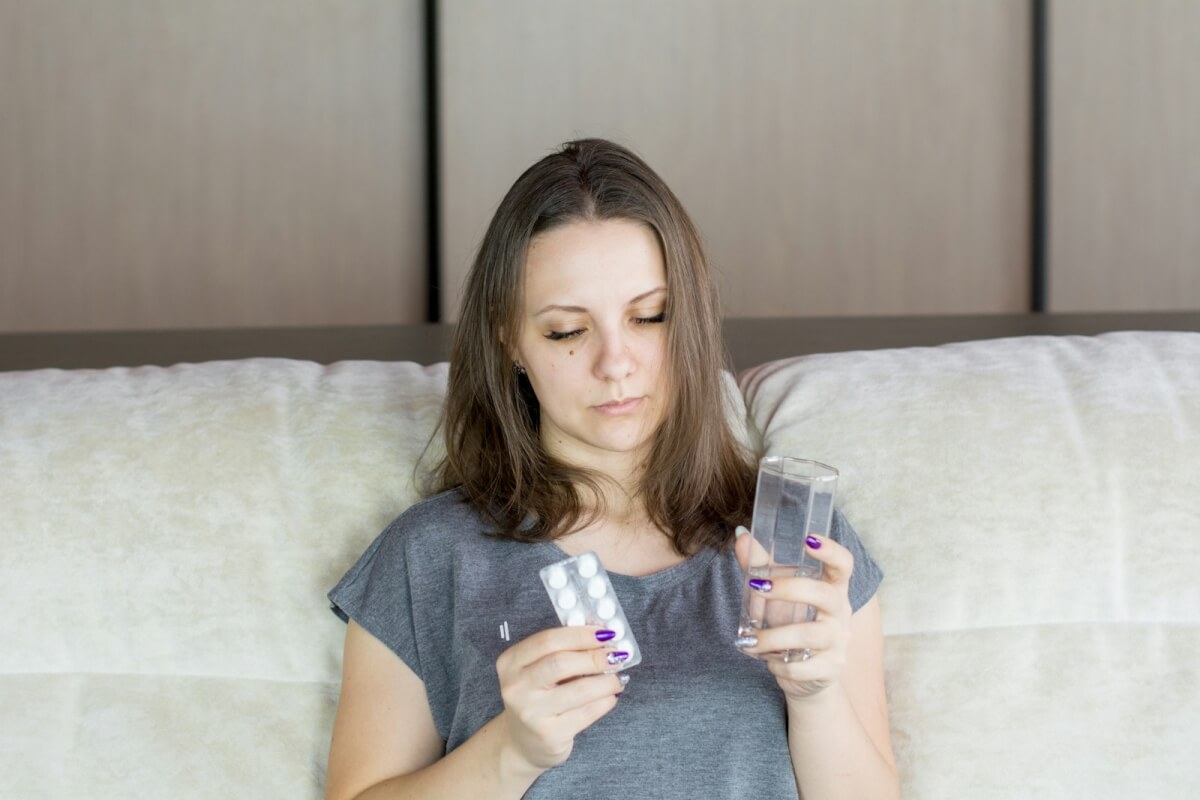
Photo by Bermix Studio from Unsplash
Taking Seroquel for Sleep? Study Suggests Avoid Driving In The Morning
In A Nutshell
- Quetiapine (Seroquel), a psychiatric drug widely prescribed off-label for sleep problems, helped people with sleep apnea sleep longer and breathe more easily at night in a new clinical trial.
- The morning after taking it, those same participants showed significantly slower reaction times and worse driving simulator performance than after taking a placebo.
- About one in four participants felt fine or even more alert the next morning despite objectively performing worse, raising serious safety concerns about driving and operating machinery.
Millions of prescriptions are written each year in the United States for quetiapine. A powerful psychiatric drug commonly known by the brand name Seroquel, quetiapine is now one of the most widely prescribed off-label sleep aids in the country. Now, a new clinical trial found that a low dose of the drug, originally approved to treat schizophrenia and bipolar disorder, helped people with sleep apnea sleep longer and spend less time awake during the night. Unfortunately, those same people showed dramatically slower reaction times and significantly worse driving simulator performance the next morning. Some of them had no idea.
Related: For the bigger picture, see our complete guide to what the science says about sleep.
In 2023, quetiapine was prescribed 10.7 million times in the United States, with 76% of those prescriptions written at doses below what the drug is officially approved for. An estimated 80% of people with sleep apnea are never diagnosed, meaning a significant number of quetiapine users may have undetected sleep apnea and no idea how the drug is truly affecting them.
Researchers at Flinders University in Adelaide, Australia, set out to fill that gap. Their study, published in the Annals of the American Thoracic Society, is the first to systematically examine what happens when people who have both sleep apnea and difficulty staying asleep take a low dose of quetiapine, looking not just at the night itself, but at how they function the next morning.
15 Sleep Apnea Patients Took Quetiapine, Then Got Behind the Wheel
Fifteen adults, seven women and eight men, were enrolled; all had confirmed sleep apnea and reported moderate to high difficulty staying asleep. Participants had an average age of 61 and moderate to severe insomnia symptoms. Each person completed two separate overnight sleep studies in a laboratory, roughly one week apart. On one night, they took 50mg of quetiapine just before lights out. On the other, they took a placebo. Neither the participants nor the researchers scoring the results knew which pill was which until all data had been collected, a design widely considered the gold standard for this kind of research.
Each night, participants were monitored for brain activity, breathing, oxygen levels, and leg movements across an eight-hour window. Within 30 minutes of waking, they completed a driving simulator task designed to replicate a monotonous nighttime drive on a rural road, followed by a 10-minute reaction time test.
The Night Looked Promising, But the Morning Did Not
On quetiapine nights, several sleep measures improved. Participants stopped breathing less often, dropping from an average of 27 episodes per hour to 20, and gaining more than 40 minutes of total sleep time. Wake time in the middle of the night fell by roughly 45%. Blood oxygen levels stayed stable throughout.
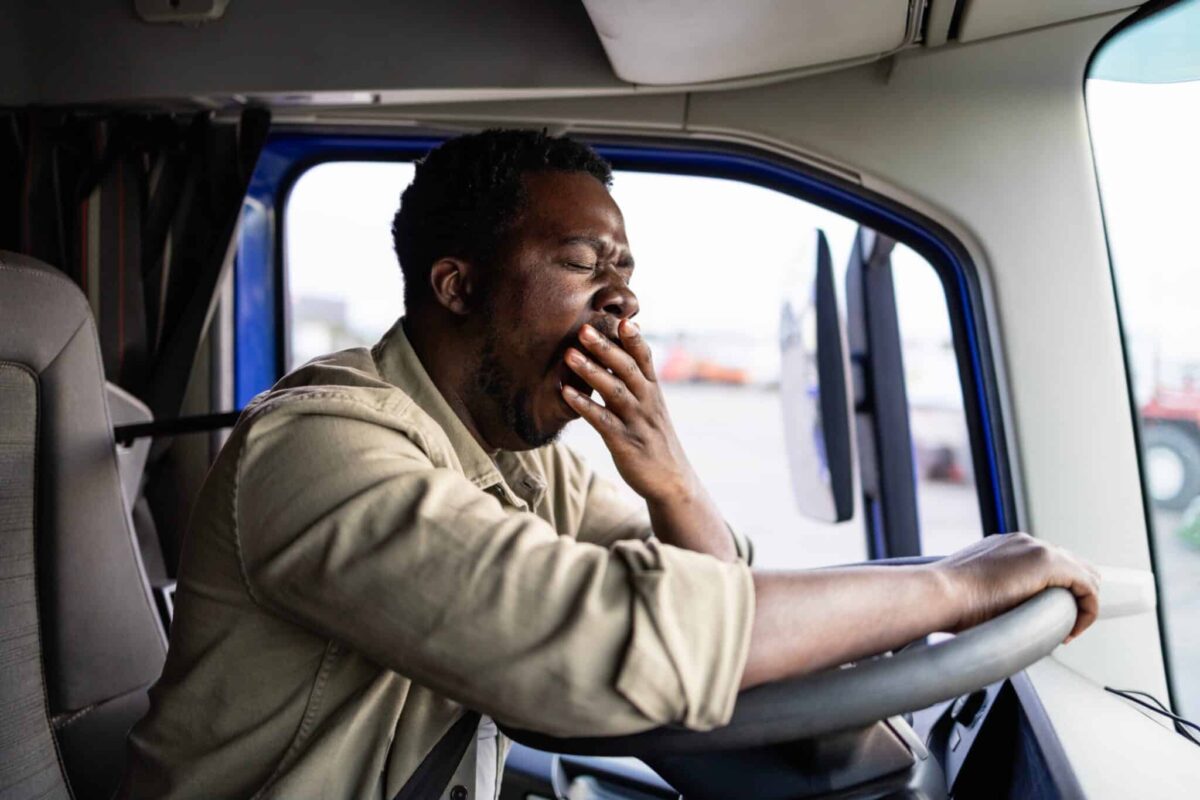
Morning performance told a different story. Reaction times were significantly slower after quetiapine than after placebo. Attention lapses (moments where reaction time exceeded half a second) more than tripled. Participants swerved far more from their lane in the driving simulator. Simulated crashes were more frequent on quetiapine nights, though the study was not large enough for that result to reach statistical significance on its own.
To put those driving numbers in context: participants in the placebo condition already showed steering impairment roughly double that of healthy drivers from earlier simulator studies. After quetiapine, that gap widened to nearly triple. These were people who had slept a full eight hours and were still performing worse than healthy drivers, and the drug made it worse.
When Quetiapine Users Don’t Know They’re Impaired
One of the more troubling findings had nothing to do with sleep data or the simulator. It had to do with self-awareness.
Most participants, 11 out of 15, felt sleepier the morning after quetiapine, which at least matched their actual performance. But two noticed no change in sleepiness, and two more felt more alert, even though their objective test results showed worse performance on both the reaction time and simulator tasks. As the researchers noted, roughly one in four people may not recognize, or may actively underestimate, how impaired they actually are after taking the drug.
A person who feels fine is far more likely to get behind the wheel, go to work, or operate machinery, completely unaware that a pill taken the night before has quietly dulled their reflexes.
About one in three participants experienced mild to moderate side effects on quetiapine nights, including nausea, restless legs, and a sudden blood pressure drop upon standing. All resolved within 48 hours, though two participants required a medical evaluation.
Researchers called for larger, longer-term studies before quetiapine can be considered appropriate for routine clinical use in people with both sleep apnea and insomnia. In the meantime, they emphasize that while impairment was still observed at approximately 9.5 hours post-dose, no safe “return-to-driving” interval was established. Primary care providers should weigh these risks carefully before writing a quetiapine prescription.
“Although quetiapine is not recommended due to safety concerns, the study provides evidence that medications can alter sleep apnea,” study co-author Cricket Fauska, a PhD candidate at Flinders’ College of Medicine and Public Health, tells StudyFinds. “With only about half of patients able to tolerate CPAP, there is a clear need for further research into pharmacological treatments for sleep apnea.”
Sleeping longer is a genuine benefit. Arriving impaired at the wheel the next morning is a cost worth knowing before filling that prescription.
Disclaimer: This study examined a single 50mg dose of quetiapine in 15 adults over one laboratory night and cannot establish long-term effects or real-world crash risk. Results may not apply to all doses or patient populations. Consult a qualified healthcare provider before making any changes to medication or getting behind the wheel the day after taking the medication.
Editor’s Note: This report has been updated to clarify that impairment was still observed after 9.5 hours, and that researchers did not establish a specific “safe” time to resume driving.
Paper Notes
Limitations
The study enrolled only 15 participants, which the authors acknowledged limits the ability to generalize findings to broader populations or conduct meaningful subgroup analyses. Research was conducted in a single-night, highly controlled laboratory setting, meaning results may not fully reflect real-world or longer-term use of quetiapine. Only the 50mg dose was tested, while quetiapine is commonly prescribed for insomnia at doses ranging from 25mg to 100mg. The study did not account for potential tolerance effects that might develop with continued use, and all participants were people not currently taking quetiapine, which limits applicability to established users. The relatively small sample also meant the study was not statistically powered to evaluate adverse events or draw firm conclusions about side effect rates.
Funding and Disclosures
This study was funded by a National Health and Medical Research Council of Australia Grant (1196261). The corresponding author, Danny Eckert, is supported by a National Health and Medical Research Council of Australia Leadership Fellowship under the same grant number. Outside of this study, Eckert reports receiving research grants from Bayer, Apnimed, Eli Lilly, Invicta Medical, Withings, and Takeda, and serving on Scientific Advisory Boards or as a consultant for Invicta Medical, Mosanna, SleepRes, and Apnimed. No other authors reported external disclosures.
Publication Details
Authors: Cricket Fauska, Tarun Bastiampillai, Georgina Rawson, Barbara Toson, Andrew Vakulin, Robert Adams, Gary Wittert, Kelly A. Loffler, and Danny J. Eckert, all affiliated with Flinders University, Flinders Health and Medical Research Institute (FHMRI) Sleep Health / Adelaide Institute for Sleep Health (AISH), College of Medicine and Public Health, Adelaide, South Australia, Australia. Gary Wittert is additionally affiliated with the Freemason Centre for Male Health and Wellbeing, University of Adelaide, Adelaide Medical School, South Australia, Australia. | Journal: Annals of the American Thoracic Society | Paper Title: “Quetiapine modestly improves sleep and breathing but impairs next day performance in people with OSA and difficulty maintaining sleep: A randomized controlled trial” | DOI: 10.1093/annalsats/aaoag092 | Clinical Trial Registration: NCT05303935


