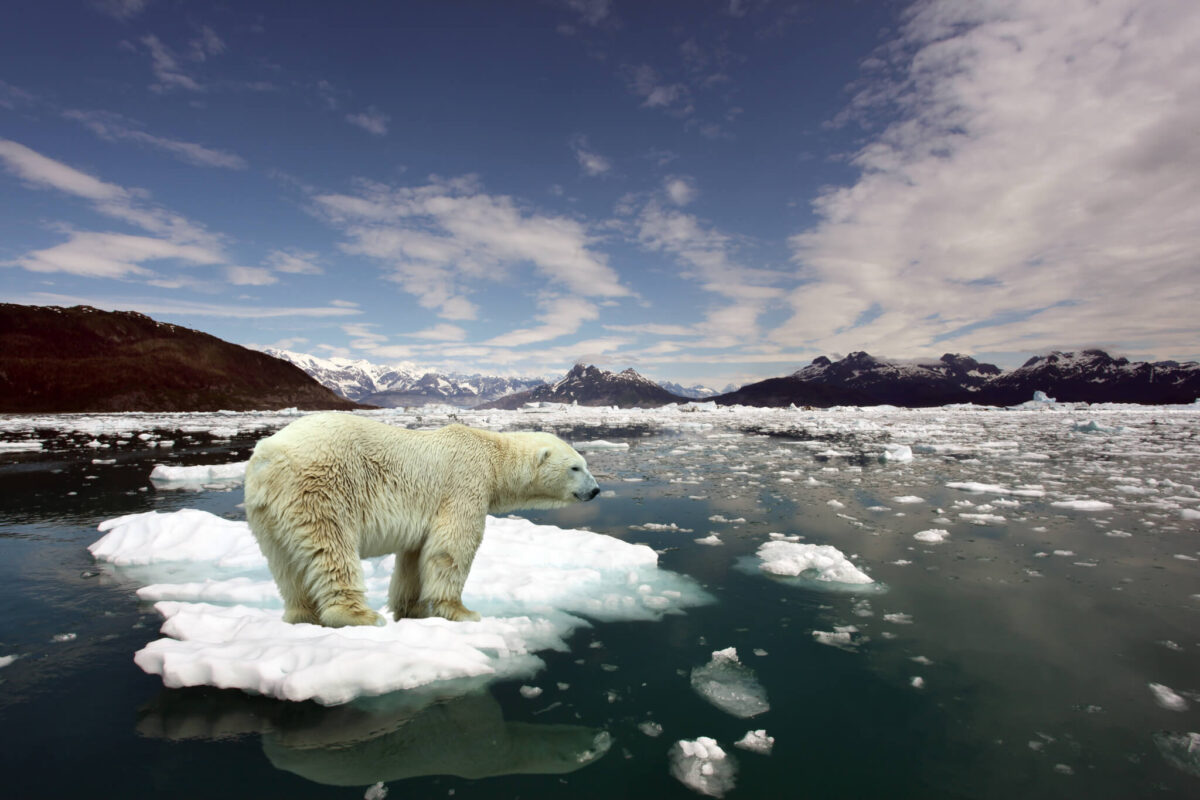
(© Alexander - stock.adobe.com)
The findings offer a preview of how most polar bears may respond to climate change genetically.
In A Nutshell
- Polar bears in southeast Greenland’s warmer climate showed different genetic activity than bears in the colder northeast—including higher levels of “jumping genes” and stress-response proteins
- These warm-climate bears already experience the temperatures most polar bears won’t face until 2050, when two-thirds of the species is expected to disappear
- The study measured gene activity in blood samples, not inherited DNA changes, so it shows how bears’ bodies respond to heat stress rather than proving they’re adapting or evolving
- Only 17 bears were studied (five from the warm region, 12 from the cold), and researchers say the findings could help track thermal stress in other polar bear populations as the Arctic warms
Polar bears living in one of Greenland’s warmest regions are showing unusual genetic activity that scientists say could provide a clue to how these iconic predators respond to vanishing Arctic ice. Scientists from the University of East Anglia found that bears already living in warmer conditions show different genetic patterns than their cousins in colder regions.
The finding matters because these warm-climate bears are essentially living in the future. Temperatures they experience today are what many polar bears may face later this century, when scientists expect two-thirds of all polar bears to be gone.
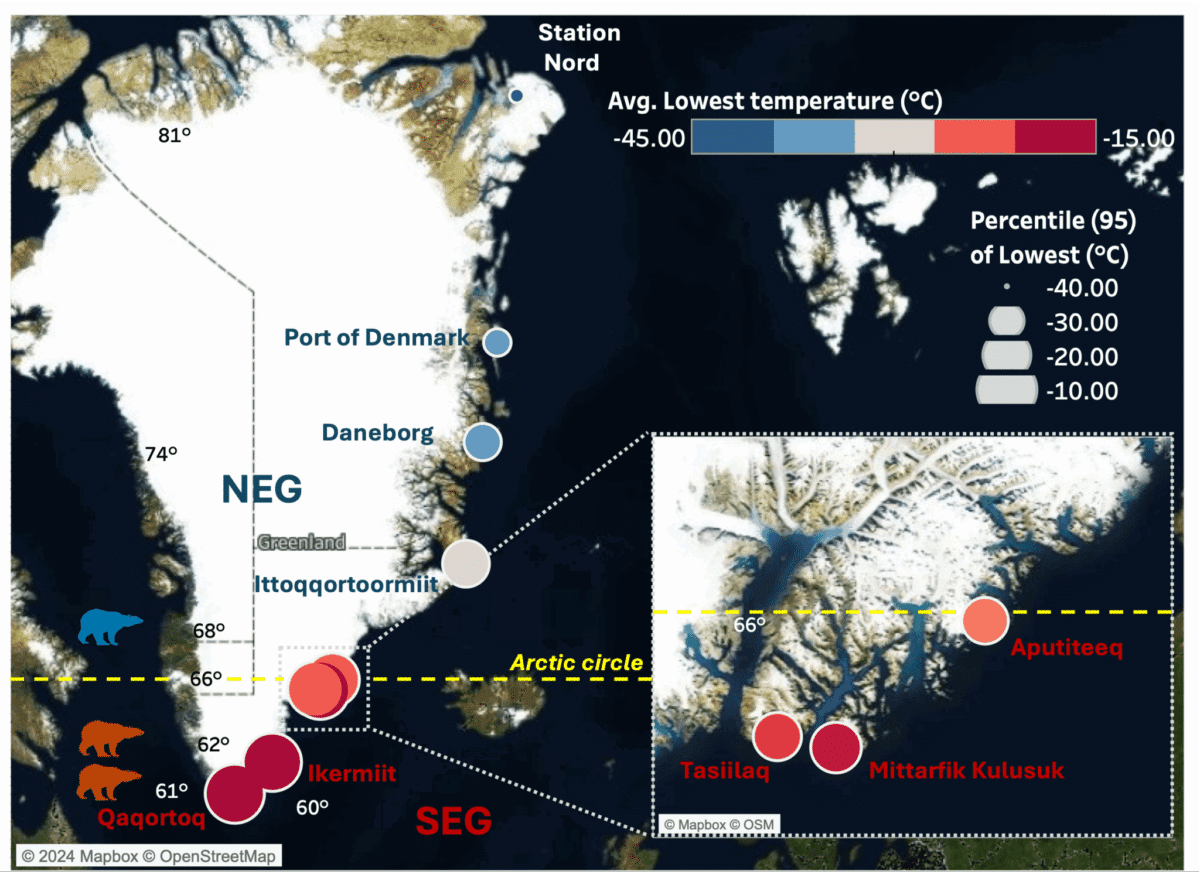
Researchers compared blood samples from 17 bears in two parts of Greenland. The northeast stays brutally cold. The southeast? Not so much. Temperatures there swing wildly from about 20 below zero to about 80 degrees Fahrenheit.
When the team analyzed the blood, they found about 1,500 pieces of genetic material behaving differently in the warmer bears. These pieces, nicknamed “jumping genes,” can move around and potentially affect how other genes work
Polar Bear Genes Respond Differently to Heat
The study, published in Mobile DNA, showed that warmer bears also cranked up production of special proteins that help cells survive stress.
Does this mean polar bears are adapting to survive climate change? Not necessarily. The study only looked at what’s happening in their blood right now, not whether these changes get passed down to cubs. It’s more like watching someone sweat on a hot day. Yes, their body is responding to heat, but that doesn’t mean their kids will be better at handling summer.
The most active pieces of DNA belonged to a family called LINEs. Transposable elements make up about 38 percent of the polar bear genome. Many of the most active ones in this study were LINEs. In the warmer bears, the pattern suggested a higher share of “younger” LINEs (and LTRs), which can indicate more recent activity.
Bears in the warmer region also showed changes in genes related to stress, fat processing, and immune function. One gene that fights viruses was less active, though researchers aren’t sure why.
The team only studied five bears from the warm region and 12 from the cold one—a pretty small group. And they looked at blood, not the reproductive cells that would pass traits to offspring.
Looking Ahead
Southeast Greenland is unusual for polar bears. Instead of flat Arctic tundra, it has mountains, forests, and deep fjords. Sea ice comes and goes unpredictably. Bears there have been cut off from other populations for hundreds of years because of ocean currents.
That isolation might explain some of the genetic differences. But temperature seems to play a role too. When researchers factored in how warm each bear’s home region was, the genetic patterns lined up.
It isn’t hyperbole to say these polar bears are facing a serious problem. They hunt seals from sea ice platforms, and that ice is disappearing fast. The International Union for Conservation of Nature predicts a 71 percent chance that polar bear numbers will drop by more than 90 percent in the next 40 years.
Studying bears already living in warmer conditions might help scientists predict what happens next. But genetic responses alone won’t save polar bears. They need ice to hunt. Without it, even the most adaptable bears will struggle.
The research does offer something valuable: a way to measure stress in polar bears. If these same genetic patterns show up in other populations as temperatures rise, it might become one way to track stress as conditions warm, but it’s early.
Paper Summary
Limitations
The study analyzed RNA expression patterns in blood samples rather than examining DNA sequences from whole genomes or germline tissue. Blood provides information about somatic responses to environment but adaptation requires heritable changes passed through reproductive cells. The RNA-based approach measures transposable element expression levels but does not directly demonstrate new insertions into the genome. Sample sizes were relatively small, with only five bears from southeast Greenland compared to 12 from the northeast, limiting statistical power. The analysis used publicly available RNA sequencing data originally collected for different research purposes, and haemoglobin depletion during library preparation could affect certain gene expression measurements. Temperature data represented annual averages from meteorological stations nearest to sampling locations rather than precise individual exposure measurements. The correlation between temperature and transposable element expression does not establish causation, as other environmental factors differing between regions could influence patterns. Long-read DNA sequencing would be needed to identify new transposable element insertions in genomes. The study examined a single time point, preventing conclusions about whether observed patterns represent short-term stress responses or longer-term genetic changes.
Funding and Disclosures
This research was funded by grants from the Natural Environment Research Council (NE/S011188/1) and the European Research Council (SELECTHAPLOID – 101001341) awarded to Simone Immler. The authors declared no competing interests.
Publication Information
Authors: Alice M. Godden, Benjamin T. Rix, and Simone Immler, School of Biological Sciences, University of East Anglia, Norwich Research Park, Norwich NR4 7TJ, UK.
Journal Citation: Godden, A.M., Rix, B.T. & Immler, S. Diverging transposon activity among polar bear sub-populations inhabiting different climate zones. Mobile DNA 16, 47 (2025). DOI: 10.1186/s13100-025-00387-4 Data Availability: RNA-seq data deposited under ENA accession PRJNA669153. Analysis scripts available at https://github.com/alicegodden/polarbear/


