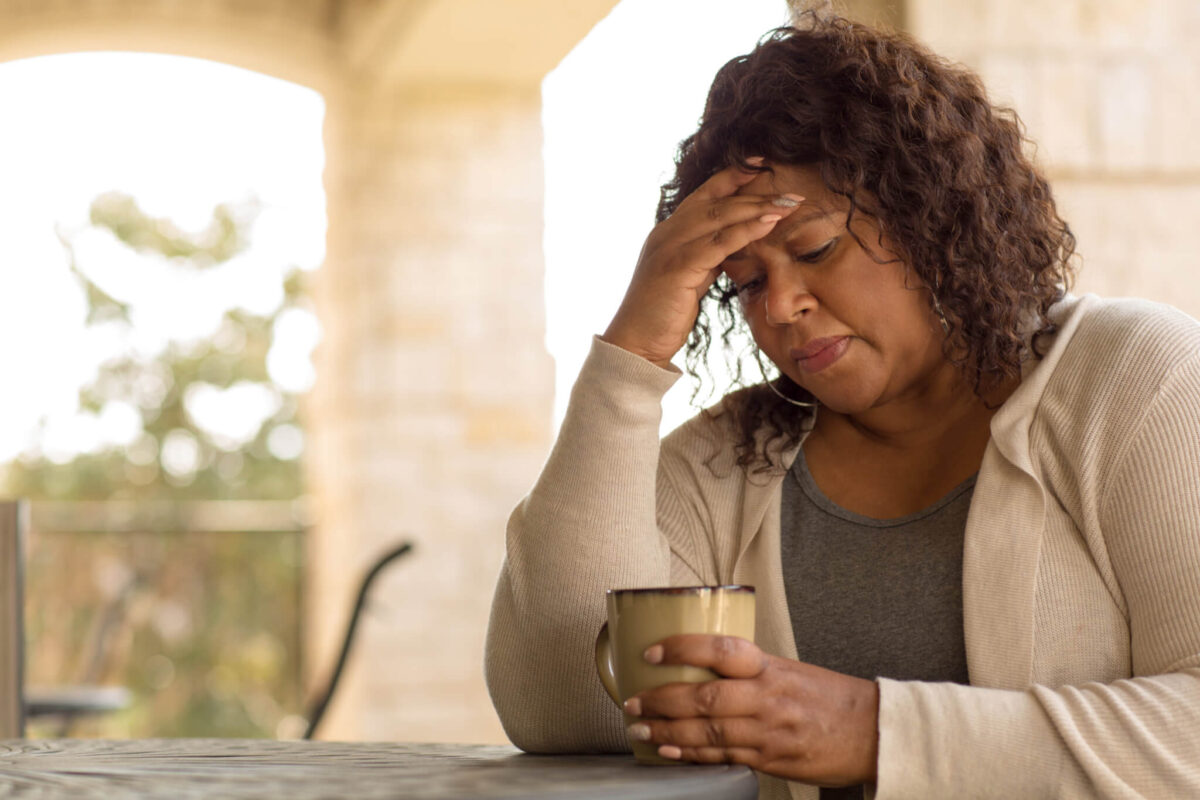
(Credit: © digitalskillet1 - stock.adobe.com)
In a Nutshell
- A JAMA Network Open study found that posts in Reddit’s menopause forum mentioned emotional and memory symptoms far more often than UCSF clinical notes recorded them.
- Medical records leaned the other way, documenting hot flashes, night sweats, and treatments more than the online posts did.
- The two sets of texts came from separate groups, not the same women tracked across Reddit and their appointments.
When researchers compared what women write about menopause online with what shows up in their medical records, the two barely lined up. A study found a wide gap between the symptoms women describe in an online forum and the ones documented in clinical notes, and that gap hints at how much of the menopause experience the healthcare system may not be capturing.
Researchers compared nearly 600 posts from Reddit’s r/menopause community with 646 clinical notes from the University of California, San Francisco. Posts in that forum were far more likely to mention emotional struggles, memory lapses, and mental fog than the clinical notes were to record them. Doctors’ notes, by contrast, leaned toward physical symptoms like hot flashes and night sweats, as well as treatment discussion. Menopause looks like two different conditions depending on whether the source is a Reddit thread or a medical chart.
That gap matters because menopause touches millions of women, and a system that documents only part of the experience may address only part of it. The study, published in JAMA Network Open, cannot say why any single symptom went unrecorded, whether it was never raised, raised but not written down, or simply beside the point of that visit. But it shows a clear mismatch between the two sets of records.
How Researchers Studied the Menopause Gap
To build the study, researchers pulled from two sources. First, they gathered the top 999 all-time posts from Reddit’s menopause forum, ranked by upvotes, to capture the themes that resonated most in that community. After removing posts unrelated to personal menopause experiences, 577 posts remained. Second, they drew a random sample of clinical notes from UCSF’s electronic health record system and retained those that mentioned menopause, resulting in 646 notes.
One point is worth stressing: these were two separate groups of texts. Researchers did not track the same women across Reddit and their medical appointments, so the comparison is between two populations, not two versions of the same patients.
To sort all that text into categories, the team used a HIPAA-compliant AI tool built at UCSF called Versa. It read each post and note and tagged it by topic: emotional well-being, hot flashes, sleep problems, memory and thinking changes, sexual health, and more. A single post or note could land in several categories at once.
What the Numbers Show About Menopause Talk
Differences between the two sources were hard to miss. Emotional well-being showed up in more than 77% of Reddit posts but only about 26% of clinical notes. Trouble with memory and thinking, things like forgetfulness and mental fog, appeared in nearly 20% of online posts and under 5% of clinical records. Weight changes also came up more often online than in the notes.
Clinical notes told a different story. Hot flashes and night sweats appeared in roughly 47% of medical records but only about 19% of Reddit posts. Hormone therapy came up in nearly 48% of clinical notes, compared with about 37% of posts. Lifestyle changes and sexual health also surfaced more often in doctors’ notes than online.
A few topics behaved about the same in both places. Sleep problems, skin and hair changes, and bone and joint health appeared at similar rates on Reddit and in the records. Researchers had expected as much and used those steady topics as a check to confirm that the tool was detecting real differences rather than random noise.

Why the Records May Diverge
Researchers point to a possible explanation familiar to anyone who has ever downplayed a symptom at an appointment: the pull to say what sounds acceptable instead of what’s true. The authors suggest that embarrassment, fear, stigma, or that kind of social pressure may account for part of the difference. Online forums work differently, offering anonymity and a sense of community that can make it easier to speak plainly about private experiences. In the paper’s own terms, patient discussions online surface emotional and mental symptoms “at several-fold higher rates than clinical documentation.”
What Better Data Could Mean for Women’s Health
Relying on medical records alone, the researchers say, gives an incomplete view of menopause. Pairing clinical data with the candid accounts women post online could highlight topics that receive less attention in medical notes and guide what the authors call “more responsive, patient-centered care.”
This kind of approach, sometimes called “social listening,” has been used before to follow mental health trends and patient experiences in other areas of medicine, work this study builds on and cites. Applying it to menopause, an area the authors describe as understudied, could round out the picture of what women actually need.
A harder question sits underneath the results. If women describe their symptoms more freely in an anonymous forum than the clinical notes capture, it’s worth asking whether some patients feel more comfortable raising certain topics outside a medical visit than inside one. Answering that will take more than better data. It will take research that asks women directly what would make the exam room feel like the right place to talk.
Disclaimer: This article summarizes an observational study comparing online forum posts with clinical notes from two separate groups of people. The research did not track individual women across both settings, interview participants, or test why certain symptoms appeared less often in medical records. It is not medical advice. Women with menopause symptoms should consult a qualified healthcare provider about their individual care.
Paper Notes
Limitations
The study carries a few constraints worth keeping in mind. Reddit data was capped at the top 999 all-time posts by upvotes, so it reflects only the most widely shared content rather than the full range of the forum. Reddit users are also a self-selected group whose makeup may not match the broader population of women in menopause. Clinical notes, on the other hand, only capture people who sought care, so both sources carry their own slant. The researchers reviewed a random sample of posts and notes while developing their categories, but did not run a separate manual validation of the AI’s final labels. The analysis also looked at post titles and body text only, leaving out comments that might have held useful detail.
Funding and Disclosures
Funding for the study was obtained by Dr. Irene Y. Chen. One author, Dr. Monica Agrawal, disclosed that she is a co-founder of a health startup, Layer Health, and reported receiving nonfinancial support from Google in the form of paid travel unrelated to this work. No other conflicts of interest were reported.
Publication Details
Authors: Tanya Mehta, BS (University of California, Berkeley); Monica Agrawal, PhD (Duke University); Irene Y. Chen, PhD (University of California, Berkeley and University of California, San Francisco); Yulin Hswen, ScD, MPH (University of Maryland School of Public Health)
Journal: JAMA Network Open
Paper Title: “Divergence in Menopause Symptom Narratives Between Online and Clinical Settings”
Published: July 14, 2026
DOI: 10.1001/jamanetworkopen.2026.23217
Corresponding Author: Yulin Hswen, ScD, MPH, University of Maryland, College Park ([email protected])
This is an open-access article published under a CC-BY-NC-ND license.


