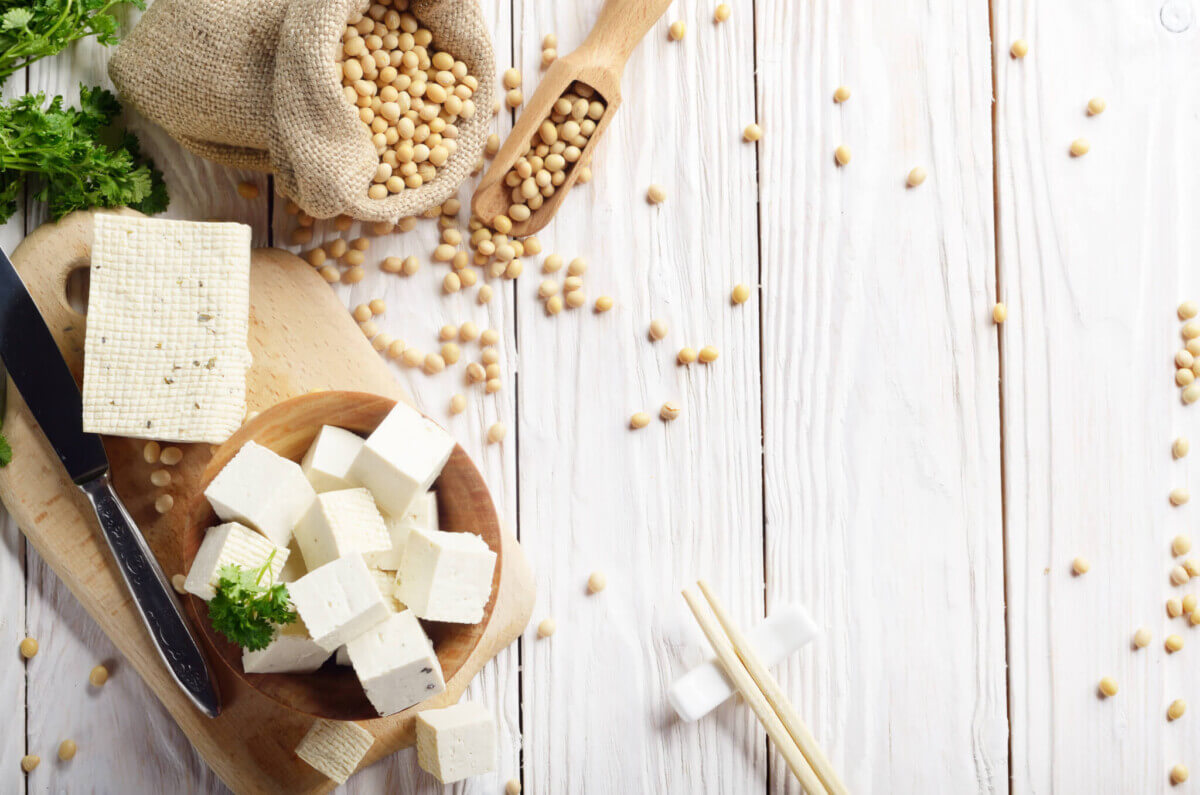
(© Olena Mykhaylova - stock.adobe.com)
What 300,000 People’s Diets Reveal About Preventing High Blood Pressure
In A Nutshell
- A meta-analysis of 12 long-term studies covering hundreds of thousands of people found that eating more legumes and soy foods was linked to a lower risk of developing high blood pressure.
- People eating the most legumes had a 16% lower risk, and those eating the most soy had a 19% lower risk, compared to the lowest consumers.
- Benefits for legumes kept climbing up to about 170 grams a day, while soy’s benefit leveled off around 60 to 80 grams a day.
- The study is observational, so it shows a strong association rather than proof that legumes or soy directly cause lower blood pressure.
A bowl of lentil soup or a block of tofu may benefit cardiovascular health, according to a new analysis tying legumes and soy to a lower risk of high blood pressure. The research pulled data from more than 300,000 people across multiple countries, and the pattern held: eating more beans, lentils, chickpeas, and soy foods like tofu was linked to a lower risk of developing hypertension, one of the leading causes of heart attacks and strokes worldwide.
Timing matters here. High blood pressure affects an estimated 1.4 billion people globally, and the total number of cases more than doubled between 1990 and 2019, rising from 648 million to over 1.28 billion. Its burden is particularly high in low- and middle-income countries, adding to existing health inequalities, which makes affordable, food-based strategies worth paying attention to. The new findings, published in BMJ Nutrition, Prevention & Health, add fresh weight to that case.
Legume Eaters Showed a 16% Lower Hypertension Risk
A research team pooled results from 12 long-term studies that tracked people’s eating habits and health outcomes over time, a method that captures patterns individual studies often miss. For the legume analysis, 10 cohorts included 309,853 participants and 86,098 cases of high blood pressure. Seven cohorts made up the soy analysis, with 278,200 participants and 93,934 cases.
Studies came from several regions: five from the United States, five from Asia, including China, Iran, South Korea, and Japan, and two from Europe. Individual study sizes ranged from 1,152 to 88,475 participants, giving the analysis a broad evidence base.
People who ate the most legumes, meaning beans, lentils, chickpeas, and peas, had a 16% lower risk of developing high blood pressure than those who ate the least. The result barely budged even when researchers dropped individual studies from the analysis one at a time to check whether a single large study was skewing things.

Soy Intake Showed an Even Stronger 19% Lower Risk
For soy foods, the association was stronger. People who consumed the most soy had a 19% lower risk compared to the lowest consumers. The researchers noted this is the first analysis of its kind to specifically examine the link between soy food intake and high blood pressure risk.
Researchers also looked at whether more food meant more benefit. For legumes, risk continued to fall across the range studied, up to about 170 grams per day, with no sign that the benefit tapered off. For soy, most of the apparent benefit occurred by about 60 to 80 grams per day, with little further reduction at higher intakes.
Potassium, Fiber, and Isoflavones May Explain the Effect
Legumes are rich in potassium and magnesium, two minerals that other research has linked to lower blood pressure. They also contain plenty of fiber and plant-based protein. More recent work cited in the paper suggests that when the gut breaks down certain fibers found in legumes and soy, it produces compounds that help blood vessels relax and widen, which brings blood pressure down.
Soy gets additional attention for its naturally occurring plant compounds called isoflavones, which have shown blood pressure-lowering effects in multiple controlled studies. There’s also a possible indirect route: other research cited in the paper ties legume and soy intake to a lower risk of obesity, itself a major driver of high blood pressure.
Observational Data Cannot Prove Cause and Effect
Authors of the study are upfront about its limits. Results varied across the 12 individual studies, likely because of differences in the types of legumes eaten, how they were prepared, how much people consumed, and the overall eating patterns of different populations. Some studies found no clear association at all.
Because every study in the analysis was observational, researchers tracked what people already ate rather than putting them on a controlled diet, so the findings show a strong association rather than proof that beans or soy directly cause blood pressure to drop. Other lifestyle habits could be part of the picture, though the studies generally accounted for many of those factors, and the pattern held up across most follow-up checks. The 16% and 19% figures describe relative differences in risk between people eating the most legumes or soy and those eating the least, not a specific drop in a blood pressure reading, and the 170-gram and 60-to-80-gram figures describe patterns in the data rather than doses proven in a clinical trial.
Researchers used an established framework for judging cause-and-effect relationships and landed on a “probable” causal link between eating legumes and soy and a lower risk of high blood pressure, a step above simple correlation but short of proof. A statistical check also flagged a possible publication bias for legumes, though that signal disappeared once two outlying studies were set aside, without changing the overall conclusion. Researchers also flagged a research gap worth closing: no study in the analysis specifically examined Southeast Asia.
With hypertension continuing to rise worldwide, and diet being one of the most accessible tools people have for prevention, the case for adding more beans, lentils, and tofu to the plate is looking a little stronger.
Disclaimer: This article summarizes findings from a peer-reviewed observational meta-analysis and is intended for general informational purposes. It is not medical advice. Anyone considering major dietary changes, especially those managing high blood pressure or taking related medication, should consult a doctor or registered dietitian.
Paper Notes
Limitations
Study authors identify several important limitations. First, there was high variability in results across the studies included in the analysis, driven by differences in legume types, preparation methods, intake levels, and dietary contexts, factors that were difficult to fully account for statistically. Some studies showed no clear association at all between legume or soy intake and blood pressure. Because all the studies were observational in nature, the analysis cannot prove direct causation. Authors also acknowledge that unmeasured or unaccounted-for lifestyle and dietary factors could be influencing the observed associations. Differences in how high blood pressure was defined across studies may also have contributed to variability. Authors call for additional large-scale prospective and intervention studies, particularly across diverse geographic regions including Southeast Asia, to confirm these findings.
Funding and Disclosures
Two of the four authors, Michael Metoudi and Isabelle Sadler, received financial support from Plant-Based Health Professionals UK for their work on this research. Metoudi and Sadler are both members of Plant-Based Health Professionals UK, and co-author Shireen Kassam is the organization’s director. According to the paper, the funder had no role in the study’s design, data collection, analysis, or interpretation, despite these author affiliations. Kassam was consulted to review the final manuscript but was not involved in the study’s data collection, analysis, or interpretation. Corresponding author Dagfinn Aune declares no conflict of interest with regard to the manuscript. The authors thank Professor Lyn Steffen for providing additional information from the ARIC study and Professor Myint for additional data from the EPIC-Norfolk study. The article was published under a CC BY-NC open access license, permitting non-commercial reuse with appropriate credit.
Publication Details
Title: Legume and soy consumption and the risk of hypertension: a systematic review and dose–response meta-analysis of prospective studies | Authors: Michael Metoudi, Isabelle Sadler, Shireen Kassam, Dagfinn Aune | Journal: BMJ Nutrition, Prevention & Health | DOI: 10.1136/bmjnph-2025-001449 | Received: 12 November 2025 | Accepted: 18 February 2026 | Review protocol registered in PROSPERO: CRD420251138887


