(Credit: © fascinadora - stock.adobe.com)
In a Nutshell
- Older adults in England who adhered more closely to a Mediterranean-style diet reported higher psychological well-being before the pandemic.
- When COVID-19 caused a population-wide drop in well-being, higher dietary adherence was associated with a smaller decline.
- Even after researchers accounted for income, physical health, activity levels, smoking, and depression symptoms, the diet-and-well-being link held.
When pandemic lockdowns began in 2020, older adults faced a wave of fear, isolation, and stress. A new study points to an unexpected factor in how well some of them weathered it mentally: what had been on their dinner plates in the years before COVID-19 ever hit.
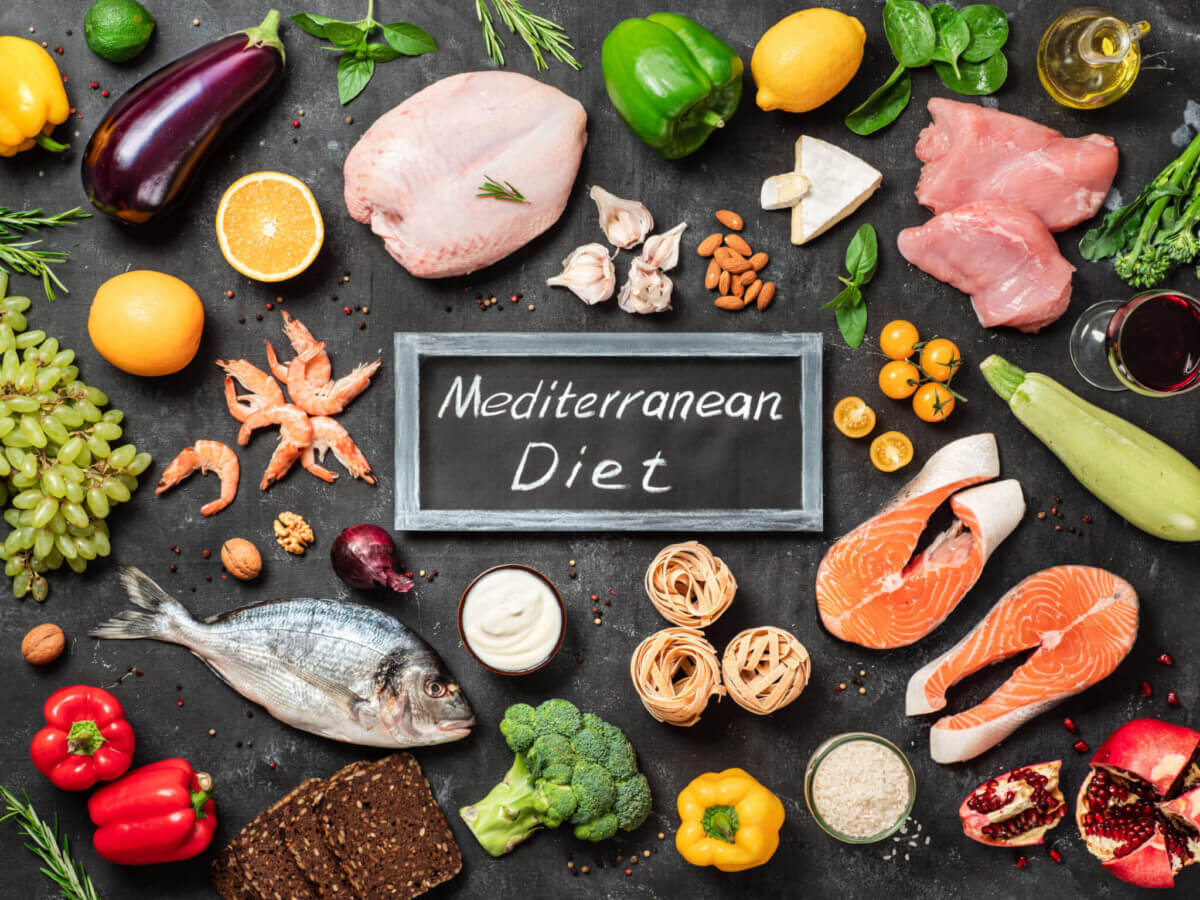
Older adults in England who more closely followed a Mediterranean-style diet, one rich in fruits, vegetables, fish, legumes, and olive oil and lower in red meat and dairy, reported higher psychological well-being before the pandemic, according to research published in BMJ Open. Once COVID-19 arrived and well-being fell across this group, people who had been eating closer to that pattern saw a gentler drop in their sense of meaning, enjoyment, and control over life than those who had not.
Eating habits, in other words, may be linked to how steadily people hold up when life turns hard. That matters most for older adults, whose well-being in later life is already strained by illness, loss, and social isolation. Among older people in England, depression climbed and well-being sank in the summer of 2020, though most measures later bounced back. A dietary pattern that softens such a blow reframes how nutrition might fit into mental health care for aging populations.

How the Study Was Conducted
Data came from the English Longitudinal Study of Ageing, a long-running survey of men and women aged 50 and older across England. Researchers zeroed in on 3,296 participants, roughly 46% men and 54% women, with an average age of about 68. Diet information was gathered in 2018 and 2019, before the pandemic, using an online tool that asked people to recall everything they had eaten over the previous day, on two separate days. Each person’s diet was then scored on how closely it matched a Mediterranean pattern across nine food groups: fruits, vegetables, legumes, cereals, fish, olive oil, meat, dairy, and alcohol. Higher scores meant a closer match to the traditional pattern.
Well-being was measured using a validated scale that assesses whether people feel their lives have meaning, enjoy what they do, and feel in control. It was recorded alongside the diet survey in 2018/2019 and again during the early pandemic months of June and July 2020. A separate depression scale let the team check that any diet-and-well-being link was not simply a matter of healthier eaters being less depressed.
Analysis ran in rounds, layering in age, sex, income, education, smoking, physical activity, and chronic illness. Even after all of those were folded in, the link persisted, both in the pre-pandemic snapshot and in the change measured during the crisis.
Why the Mediterranean Diet May Help Aging Brains
Back in 2018/2019, people with higher Mediterranean scores had meaningfully better well-being than those with lower scores. That relationship held even after controlling for depression symptoms. Rather than reflecting a simple absence of depression, the connection appeared tied to positive mental states in their own right.
During the pandemic, well-being fell across the board. Among people who had scored higher on the diet measure beforehand, though, the drop was smaller. Whether or not someone had caught COVID-19 did not explain the pattern away.
Higher scorers did tend to be older, more educated, wealthier, more physically active, and less likely to smoke, since healthier habits often travel together. Accounting for total daily calories did not shift the result either, a sign that the effect was not simply about how much people ate.

What’s Still Unknown About the Mediterranean Diet and Mental Health
Researchers stop short of claiming the diet directly causes better mental health. Because this was an observational study, it cannot rule out the reverse: that people who already feel good gravitate toward healthier food. Which comes first stays an open question.
Who took part is another catch. Only about half of the broader study’s members completed the diet survey, and those who did were healthier, wealthier, more educated, and in better mental shape to begin with. Results may not capture older adults with fewer resources or worse health. Diet data rested on just two days of recall, which can be error-prone, and the pandemic well-being check happened only once, in June and July 2020, possibly missing the rougher stretch earlier that spring. Most participants were white, which limits how far the findings stretch.
Biology offers some clues about why the pattern might exist. Several parts of the Mediterranean diet, among them fiber, omega-3 fatty acids, magnesium, and polyphenols, plus a lower intake of pro-inflammatory foods like processed meat, are known to affect inflammation, brain chemistry, and gut health, and may in turn influence mood and resilience. Those pathways remain under active study.
A global pandemic turned out to be a revealing natural experiment, testing whether a diet tied to good well-being in calm times would hold up under real strain. For adults over 50, the answer here was yes, and the results point to the Mediterranean diet supporting not only physical but also mental well-being in later life.
Disclaimer: This article summarizes findings from an observational study and is for general informational purposes only. It is not medical or nutritional advice. Because the research shows an association rather than a cause-and-effect relationship, no dietary changes should be made based on it alone. Anyone with questions about diet or mental health should consult a qualified healthcare professional.
Paper Notes
Limitations
Several limitations deserve mention, most of them flagged by the authors. Only about half of the broader study’s participants completed the online dietary module, and those who did were generally healthier, wealthier, more educated, and in better mental health than those who did not, which raises questions about how representative the results are. Dietary data rested on just two days of recall, a practical method for large studies that still introduces measurement error. Psychological well-being was assessed only once during the pandemic, in June and July 2020, and there is evidence that mental health was worse earlier that spring, so that single snapshot may not capture the full picture. Because the study is observational, causal conclusions cannot be drawn; it remains possible that people with better well-being simply choose healthier diets. The sample was also predominantly white and living in England, limiting how broadly the results apply.
Funding and Disclosures
According to the paper, the English Longitudinal Study of Ageing (ELSA) is funded by the National Institute on Aging (grant number RO1AG17644) and the National Institute for Health and Care Research (198/1074-02). The authors declared no competing interests. Patients and the public were not involved in the design or conduct of the research.
Publication Details
Authors: Andrew Steptoe (Behavioural Science and Health, University College London); Alanna Jo Shand (Psychology, Institute of Psychiatry, London; and University College London); and Camille Lassale (Environmental Health Over the Lifecourse Programme, Barcelona Institute for Global Health, Barcelona, Spain).
Paper Title: “Adherence to the Mediterranean diet and psychological wellbeing before and during the COVID-19 pandemic: a prospective analysis of the English Longitudinal Study of Ageing”
Journal: BMJ Open
Published: June 16, 2026


