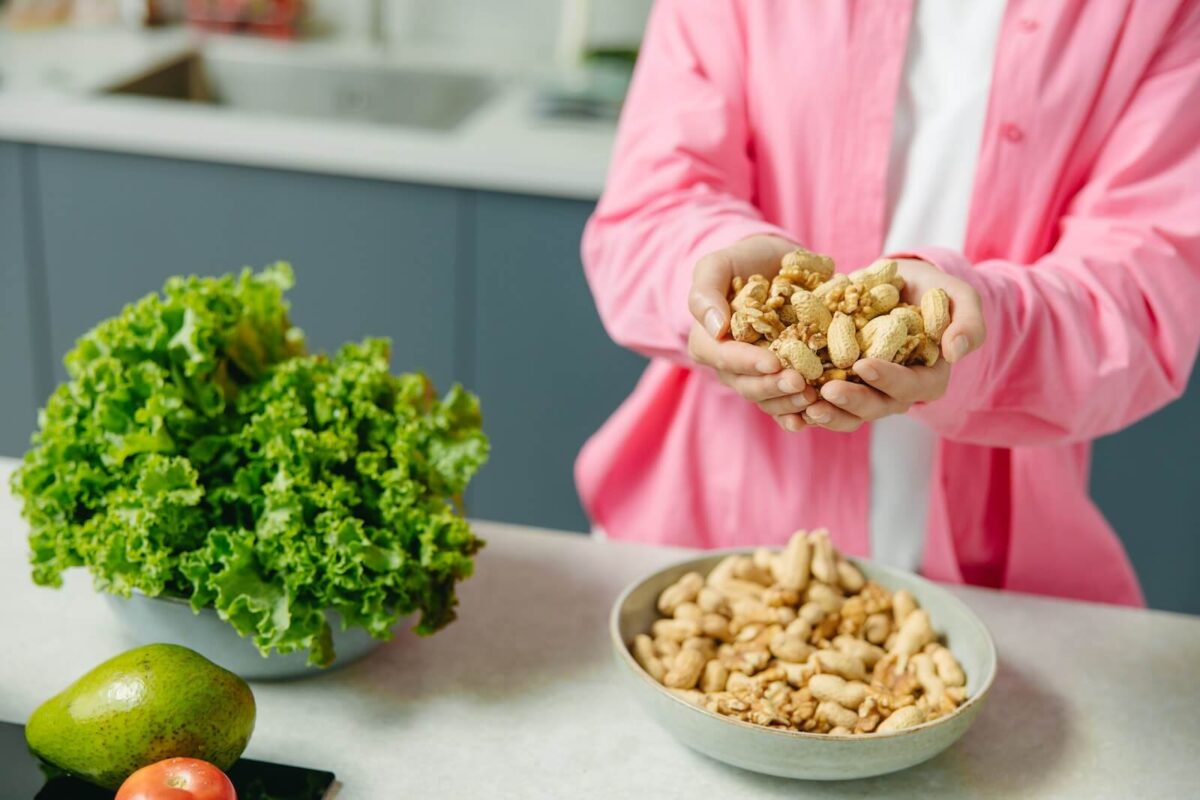
(Credit: Photo by Yaroslav Shuraev from Pexels)
In a Nutshell
- People who ate the most nuts had a 16% lower risk of developing high blood pressure compared with people who ate the least.
- Each additional ounce of nuts eaten per day was linked to a 20% drop in hypertension risk, with the largest benefit, a 26% reduction, around 30 grams a day, about a handful.
- Evidence came from eight large studies following more than 143,000 people across the United States, Europe and Asia.
Swapping an afternoon bag of chips for a small handful of almonds or walnuts might do more than curb a craving. New research pooling data from more than 143,000 people points to a measurably lower risk of developing high blood pressure among those who eat a daily serving of nuts, roughly the amount that fits in one palm.
High blood pressure, also called hypertension, affects more than 1.4 billion people around the world. It rarely causes symptoms on its own, but it ranks among the biggest drivers of heart attacks, strokes and kidney failure. Because so much of that damage happens without warning, researchers have spent years trying to figure out which everyday food choices actually affect blood pressure risk, and nuts have long been a leading candidate.
A team of researchers, including scientists from Imperial College London and the Cancer Registry of Norway, combined results from eight long-term studies that tracked people’s nut-eating habits and whether they later developed hypertension. Their conclusion, published in the British Journal of Nutrition, adds fresh weight to something dietary guidelines have recommended for years: nuts deserve a regular spot on the plate, and there appears to be a real, measurable benefit tied to how much someone eats.
How Scientists Linked Nuts to Lower Blood Pressure Risk
Rather than running a new experiment, the researchers performed what’s called a meta-analysis: they gathered existing studies and combined the results into one larger picture. They searched two major medical databases for studies published through early April 2026, focusing on research that followed real people over time and tracked what happened to their health based on their habits.
Eight studies made the cut. Three were conducted in the United States, two in Europe (Spain and France), and three in Asia (South Korea, China and Iran). Together, they included 20,665 cases of hypertension among 143,380 participants, with ages spanning from 18 to 87. Six of the studies included both men and women, while two followed only men. Most scored high marks for quality, based on a standard system researchers use to judge how reliable a study’s methods are.
To measure the connection between nuts and blood pressure, the researchers compared people who ate the most nuts against those who ate the least. Separately, they calculated how risk changed for every additional 28 grams of nuts eaten per day, roughly one small handful, the standard serving size used in nutrition research. They also tested whether the relationship followed a straight line or curved, meaning whether benefits kept climbing the more nuts someone ate or eventually flattened out.
What the Study Found About Nuts and Blood Pressure
People eating the highest amounts of nuts had a 16% lower risk of hypertension compared with those eating the least. When researchers looked at risk per serving, they found a 20% reduction for every 28 grams of nuts consumed daily.
That relationship wasn’t perfectly straight, though. Data hinted at a curve where the benefit grew as intake increased, then leveled off. The largest reduction, 26%, showed up at around 30 grams a day compared with eating none, which lines up closely with the amount already recommended in several European and North American dietary guidelines. Eating far more than that didn’t appear to add much extra protection, at least based on the available data.
Researchers also checked whether the results might be skewed by unpublished negative studies sitting in a file drawer somewhere, a problem known as publication bias. Using statistical tests and a chart designed to reveal missing studies, they found no sign of that kind of skew, although the small number of studies means they couldn’t rule it out entirely.
To gauge how convincing the evidence really is, the team used grading criteria developed by the World Cancer Research Fund, a system that weighs factors like study quality, consistency across studies, and whether there’s a believable biological explanation for the pattern. Based on that framework, the researchers classified the likelihood that nuts actually cause a reduction in hypertension risk as “probable,” one step below the highest possible rating of “convincing.”

Why Nuts Might Lower Blood Pressure
Nuts are rich in unsaturated fats, protein, fiber, vitamins, minerals and antioxidant plant compounds. Several of these ingredients have plausible ways of protecting the heart and blood vessels. Nuts contain a substance called L-arginine, which the body uses to make nitric oxide, a chemical that helps blood vessels relax and widen. Fiber from nuts can also be broken down by gut bacteria into byproducts that have been linked to lower blood pressure. On top of that, the antioxidant and anti-inflammatory compounds in nuts may help calm the low-grade inflammation tied to hypertension over time.
That pattern also fits with what’s already known about broader eating styles. Diets that include generous amounts of nuts, such as Mediterranean-style, vegetarian, vegan and DASH diets, have repeatedly been linked to lower blood pressure in other research. The authors note that nuts likely aren’t acting alone, and that fruits, vegetables, whole grains and legumes probably contribute to the same benefits seen in people who eat these diets.
What Researchers Still Don’t Know About Nuts and Blood Pressure
None of the eight studies tracked which specific type of nut people were eating, so it’s still unclear whether almonds, walnuts, peanuts or cashews might behave differently. None recorded whether the nuts were salted, either, which matters given how well established the link is between sodium and blood pressure. Salted nuts, common in many people’s snacks, could blunt some of the benefit seen here.
Still, the pattern held up across different subgroups and regions without major inconsistencies, matching what smaller earlier studies had already found. Swapping a processed snack for a small handful of unsalted nuts is a reasonable choice with a plausible payoff, and this research adds evidence that regularly eating nuts may help lower the risk of high blood pressure.
Disclaimer: This study is a meta-analysis of prospective cohort studies, which can reveal strong associations but cannot prove that nuts directly cause lower blood pressure. The researchers graded the evidence as “probable” rather than “convincing,” and other diet and lifestyle factors may contribute to the results.
Paper Notes
Limitations
Study authors point out that some inconsistency (statistical heterogeneity) showed up between the eight studies, particularly in the analysis measuring risk per serving, though this was driven largely by one study and the overall pattern held even after removing it. The team could not rule out the possibility that other unmeasured lifestyle or health factors influenced the results, though most of the original studies adjusted for a wide range of such factors. Diet was typically measured only once at the start of each study, meaning changes in nut-eating habits over the years weren’t captured, which the authors say would likely have weakened rather than strengthened the observed association. None of the included studies distinguished between types of nuts or noted whether nuts were salted, and there was a lack of data from the Indian subcontinent and Africa, meaning the findings may not apply equally to all populations. The authors also note that further large cohort studies are still needed, since many existing large studies have not yet published on this specific topic.
Funding and Disclosures
Disclosure statements note that two of the authors are members of Plant-Based Health Professionals UK, and a third author serves as the organization’s director. Funding for two of the authors came from Plant-Based Health Professionals UK, while the other two reported none. That organization, listed as the funder, had no role in designing the study, collecting data, or analyzing and interpreting the results, though the director was consulted to review the final manuscript. One author reported no conflicts of interest. The authors also thanked a researcher for providing additional information from one of the included studies (the ARIC study).
Publication Details
Paper Title: “Nut consumption and the risk of hypertension: a systematic review and dose response meta-analysis of prospective studies”
Authors: Michael Metoudi, Isabelle Sadler, Shireen Kassam and Dagfinn Aune
Authors Affiliations: with Plant-Based Health Professionals UK, Imperial College London’s Department of Epidemiology and Biostatistics, the Cancer Registry of Norway, Oslo New University College, King’s College Hospital, and the University of Winchester
Journal: British Journal of Nutrition, published by Cambridge University Press on behalf of The Nutrition Society


