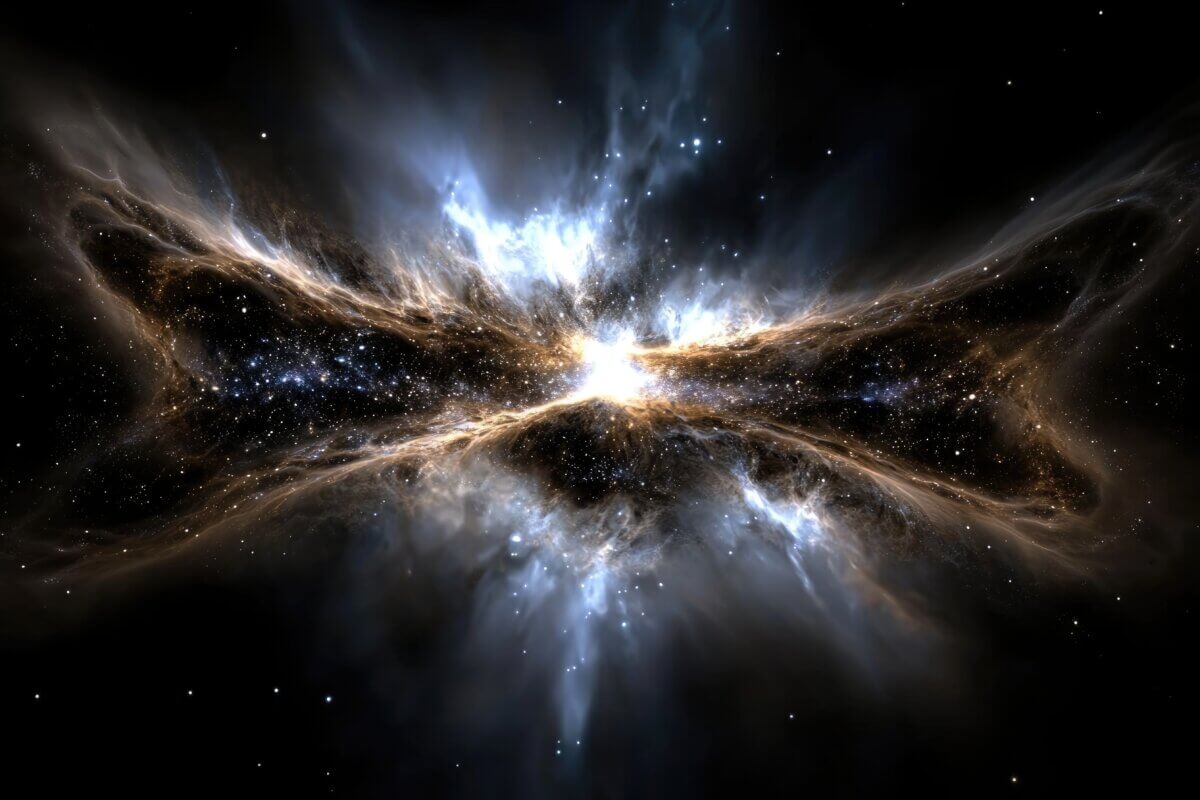
Primordial creation: The universe begins with the Big Bang, an extraordinary moment of immense energy, igniting formation of everything in existence. (© Alla - stock.adobe.com)
BALTIMORE — When two of humanity’s most powerful eyes on the cosmos agree something strange is happening, astronomers tend to pay attention. Now, the James Webb Space Telescope has backed up what Hubble has been telling us for years: the universe is expanding faster than our best physics can explain, and nobody knows why.
Scientists have long known that our universe is expanding, but exactly how fast it’s growing is an ongoing and fascinating debate in the astronomy world. The expansion rate, known as the “Hubble constant,” helps scientists map the universe’s structure and understand its state billions of years after the Big Bang. This latest discovery suggests we may need to rethink our understanding of the universe itself.
“The discrepancy between the observed expansion rate of the universe and the predictions of the standard model suggests that our understanding of the universe may be incomplete,” says Nobel laureate and lead author Adam Riess, a Bloomberg Distinguished Professor at Johns Hopkins University, in a statement. “With two NASA flagship telescopes now confirming each other’s findings, we must take this problem very seriously—it’s a challenge but also an incredible opportunity to learn more about our universe.”
This research, published in The Astrophysical Journal, builds on Riess’ Nobel Prize-winning discovery that the universe’s expansion is accelerating due to a mysterious “dark energy” that permeates the vast stretches of space between stars and galaxies. Think of this expanding universe like a loaf of raisin bread rising in the oven. As the dough expands, the raisins (representing galaxies) move farther apart from each other. While this force pushes galaxies apart, exactly how fast this is happening remains hotly debated.
For over a decade, scientists have used two different methods to measure this expansion rate. One method looks at ancient light from the early universe, like examining a baby photo to understand how someone grew. The other method, using telescopes to observe nearby galaxies, looks at more recent cosmic events. These two methods give significantly different answers about how fast the universe is expanding – and not just slightly different.
While theoretical models predict the universe should be expanding at about 67-68 kilometers per second per megaparsec (a unit of cosmic distance), telescope observations consistently show a faster rate of 70-76 kilometers per second per megaparsec, averaging around 73. This significant discrepancy is what scientists call the “Hubble tension.”
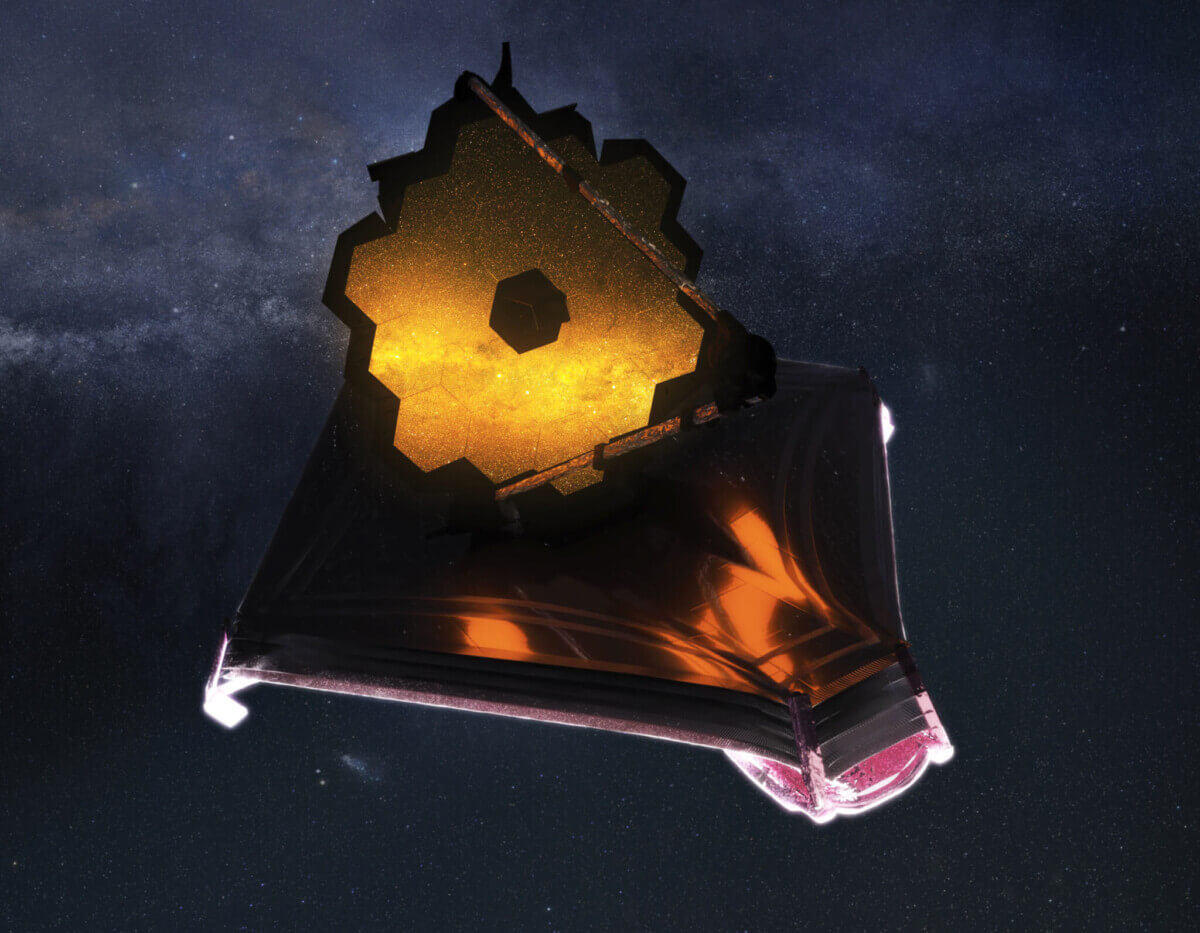
To help resolve this mystery, researchers turned to the James Webb Space Telescope, the most powerful space observatory ever built. “The Webb data is like looking at the universe in high definition for the first time and really improves the signal-to-noise of the measurements,” says Siyang Li, a graduate student at Johns Hopkins University who worked on the study.
Webb’s super-sharp vision allowed it to examine these cosmic distances in unprecedented detail. The telescope looked at about one-third of the galaxies that Hubble had previously studied, using a nearby galaxy called NGC 4258 as a reference point – like using a well-known landmark to measure other distances.
The researchers used three different methods to measure these cosmic distances, each acting as an independent check on the others. First, they observed special pulsating stars called Cepheid variables, which astronomers consider the “gold standard” for measuring distances in space. These stars brighten and dim in a precise pattern that reveals their true brightness, making them reliable cosmic yardsticks. The team also looked at the brightest red giant stars in each galaxy and observed special carbon-rich stars, providing two additional ways to verify their measurements.
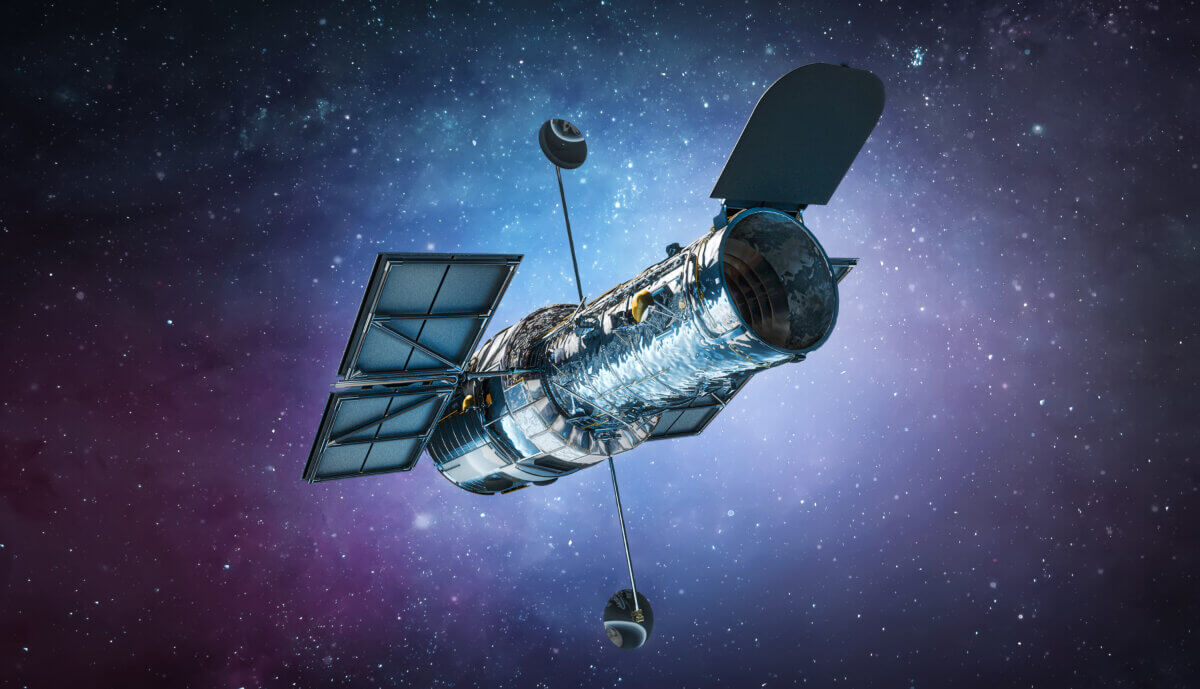
When they combined all these observations, they found something remarkable: All three methods pointed to nearly identical results, with Webb’s measurements matching Hubble’s almost exactly. The differences between measurements were less than 2% – far smaller than the roughly 8-9% discrepancy that creates the Hubble tension.
This agreement might seem like a simple confirmation, but it actually deepens one of astronomy’s biggest mysteries. Scientists now believe this discrepancy might point to missing pieces in our understanding of the cosmos. Recent research has revealed that mysterious components called dark matter and dark energy make up about 96% of the universe’s content and drive its accelerated expansion. Yet even these exotic components don’t fully explain the Hubble tension.
“One possible explanation for the Hubble tension would be if there was something missing in our understanding of the early universe, such as a new component of matter—early dark energy—that gave the universe an unexpected kick after the big bang,” explains Marc Kamionkowski, a Johns Hopkins cosmologist. “And there are other ideas, like funny dark matter properties, exotic particles, changing electron mass, or primordial magnetic fields that may do the trick. Theorists have license to get pretty creative.”
Whether this cosmic puzzle leads us to discover new forms of energy, exotic particles, or completely novel physics, one thing is certain: the universe is expanding our understanding just as surely as it’s expanding itself. And thanks to Webb and Hubble, we’re along for the ride.
Paper Summary
Methodology
The research team used the largest sample of Webb data collected during its first two years in space. They focused specifically on galaxies that had previously hosted supernovae – brilliant stellar explosions that serve as cosmic distance markers. Using their three different measurement techniques (Cepheid variables, red giant stars, and carbon-rich stars), they carefully compared Webb’s measurements with Hubble’s earlier observations of the same galaxies.
Results
The precision of Webb’s measurements was impressive – differences between its measurements and Hubble’s were less than 2%, far smaller than the roughly 8-9% discrepancy that creates the Hubble tension. When all measurements were combined, Webb found the universe expanding at 72.6 kilometers per second per megaparsec, remarkably close to Hubble’s measurement of 72.8 for the same galaxies.
Limitations
While groundbreaking, the study had some constraints. Webb could only use one reference galaxy (NGC 4258) rather than the four reference points Hubble had used. Additionally, Webb examined about one-third of Hubble’s full galaxy sample. However, even with these limitations, the precision of the measurements was remarkable.
Discussion and Takeaways
This research definitively shows that the Hubble tension isn’t due to measurement errors but points to something fundamental about the universe that our current theories don’t explain. It might require new physics or radical revisions to our understanding of the cosmos, from the nature of dark energy to the properties of subatomic particles.
Funding and Disclosures
This ambitious project brought together scientists from multiple institutions, including Johns Hopkins University, the Space Telescope Science Institute, Duke University, and several other research centers. The work received support from various sources, including the Department of Energy, the David and Lucile Packard Foundation, and the Templeton Foundation, demonstrating the broad scientific interest in solving this cosmic mystery.


