
(Credit: Louis Dty on Shutterstock)
In A Nutshell
- Completing a 171-kilometer (106-mile) ultramarathon accelerates the aging and clearance of red blood cells through inflammation and oxidative damage, not just the physical pounding of running.
- Copper buildup in the blood after extreme running tracks directly with stiffer, less flexible red blood cells, pointing to a little-known biological mechanism beyond foot-strike trauma.
- The molecular damage pattern in ultramarathon runners closely mirrors what happens to donated blood stored in blood bank bags, a finding with potential applications in transfusion medicine.
- The spleen ramps up its removal of damaged red blood cells after extreme distance running, with evidence showing measurable drops in red cell levels after a 106-mile race but not a 25-mile one.
Every year, thousands of athletes line up for ultramarathons, those punishing races that stretch 50 miles, 100 miles, or beyond over mountain terrain. Most runners worry about blisters, muscle cramps, or the mental grind of putting one foot in front of the other through the night. Few stop to think about what’s happening inside their veins. A new study suggests they should.
Researchers found that completing a 171-kilometer (106-mile) ultramarathon accelerates the aging and removal of red blood cells from circulation in ways that go far beyond the physical beating a runner’s feet take on the trail. Inflammation, chemical changes, and even copper buildup in the blood all conspire to damage these cells at the molecular level, making them stiff and less able to squeeze through tiny blood vessels. More surprisingly, the damage pattern closely mirrors what happens to donated blood sitting in a storage bag at a blood bank.
Red blood cells are the body’s oxygen couriers, and they’re also uniquely fragile. Unlike most other cells, they have no nucleus and no internal machinery to manufacture replacement parts. Once something goes wrong inside a red blood cell, it can’t fix itself. It either limps along, or the body’s spleen fishes it out of circulation and clears it. After an extreme ultramarathon, researchers found evidence that the spleen was doing a lot of fishing.
How Researchers Measured Ultramarathon Red Blood Cell Damage
Scientists recruited 23 endurance-trained runners who competed in one of two trail races held in the French Alps: a 40-kilometer (25-mile) marathon called the Martigny-Combes à Chamonix race, and the Ultra-Trail du Mont Blanc, a grueling 171-kilometer (106-mile) race with more than 10,000 meters of elevation gain. Blood samples were collected before and immediately after each race.
From those samples, the team ran an unusually thorough battery of tests, measuring thousands of individual proteins, fats, metabolites, and trace metals in both the blood plasma and inside the red blood cells themselves. They also measured how flexible the cells were, a property called deformability that matters because red blood cells need to squeeze through tiny capillaries and the narrow filters of the spleen. A stiff red blood cell is a cell on borrowed time. The study was led by researchers at the University of Colorado Anschutz Medical Campus, working alongside scientists from several French institutions, and was submitted to the journal Blood: Red Cells & Iron.
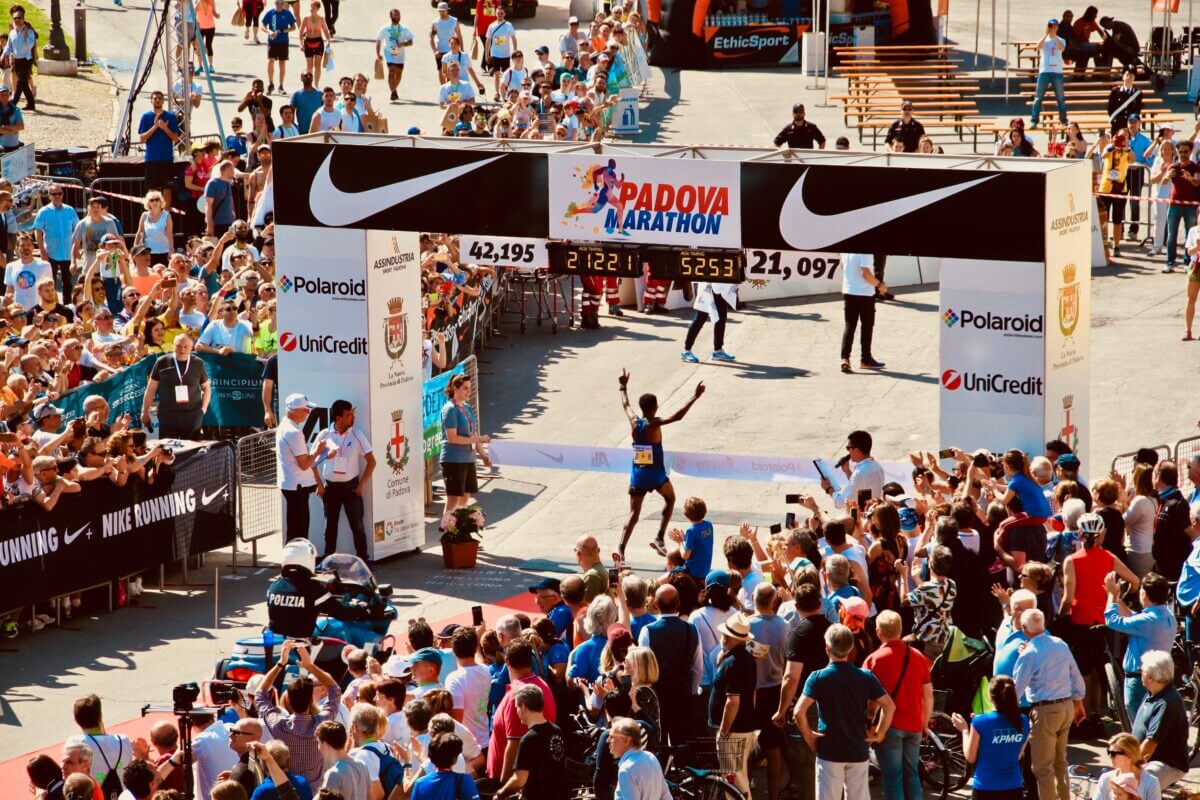
A Tale of Two Races
Both races left a mark on runners’ blood, but the ultramarathon produced damage on an entirely different scale.
After the 25-mile race, red blood cells showed early stress signals. Fats in their outer membranes had been partially oxidized, similar to how oil goes rancid. A cellular repair process kicked in, trying to swap out the damaged fatty components using a biochemical pathway that depends on nutrients including vitamin B5. Levels of that vitamin dropped noticeably in runners from both races, suggesting the repair machinery was burning through its fuel supply.
After the 106-mile race, things looked far more serious. Levels of interleukin-6, a protein the immune system releases during injury and illness, rose sharply, more so in male runners than female ones. A compound called kynurenine, which in prior research has been linked to red blood cell fragility in COVID-19 patients and people with sickle cell disease, spiked inside the cells. Proteins within the red blood cells showed widespread chemical damage, particularly a specific type of protein corrosion called methionine oxidation, where certain building blocks of proteins get chemically altered in ways that cripple their function. That damage directly correlated with how stiff and inflexible the cells had become.
Copper levels in the blood also rose after the ultramarathon, and tracked closely with reduced cell flexibility across every measurement the researchers took. Copper can damage the cell membrane and stiffen the cell, and its increase after extreme running is consistent with what the body does during an acute inflammatory response.
The body’s response to all this damage was to pull the affected cells from circulation. Levels of bilirubin and hypoxanthine, byproducts released when the spleen breaks down damaged red blood cells, rose after the 106-mile race. Hematocrit, the percentage of blood made up of red blood cells, dropped significantly in both male and female ultramarathon runners but not in the 25-mile group. The blood showed signs of losing red cells from circulation.
Beyond Foot-Strike: What Really Destroys Red Blood Cells in Ultramarathons
For decades, a condition called foot-strike hemolysis has been used to explain running-related blood cell destruction. The idea is simple: every time a foot hits the ground hard, red blood cells passing through the capillaries of the foot get physically crushed. Repeated thousands of times over a long race, that mechanical trauma destroys cells.
That explanation isn’t wrong, but this research makes clear it’s incomplete. Many of the molecular changes observed, including the oxidized fats, the damaged proteins, and the copper accumulation, are driven by inflammation and oxidative stress rather than physical impact. Cyclists, who don’t strike the ground repeatedly, show some of the same red blood cell changes during hard efforts. The body’s own immune response to extreme exercise appears to be doing significant damage on top of whatever the pavement delivers.
The damage seen after the 106-mile ultramarathon also closely mirrors what happens to red blood cells stored in blood bags for transfusion. Over weeks of storage, those cells accumulate oxidized proteins and fats, lose flexibility, and become increasingly likely to be cleared by the spleen after being transfused into a patient. Athletes running extreme distances are, in a sense, fast-forwarding their red blood cells through a version of that same aging process, at least in the short term.
Wider Meaning for Athletes and Medicine
For endurance athletes, the findings point toward potential interventions. Carnitine, a compound that helps ferry fatty acids into the membrane repair process, accumulated after the 106-mile race in a pattern consistent with heavy engagement of those repair pathways. Whether targeted nutritional support before or during races could ease that stress is a question for future research, but the biology described here gives scientists a clear starting point.
The copper finding raises its own set of questions. Where is that copper coming from? Is it leaking from proteins like superoxide dismutase, an antioxidant enzyme that uses copper as part of its structure, when those proteins get overwhelmed? Or is it arriving from elsewhere as part of the inflammatory response? The researchers flagged this as a priority for future work, and the answer could matter for understanding not just running physiology but inflammatory disease more broadly.
Beyond sports, the parallels between ultra-running and blood storage could eventually benefit patients who receive transfusions. Understanding exactly why red blood cells degrade, whether in a storage bag or a runner’s bloodstream, may open doors to better ways of preserving them in both settings.
After 106 miles in the mountains, the spleen is not indifferent to what the body has been through. It starts clearing damaged cells long before they would have retired on their own. The body, it turns out, keeps a detailed account of every mile.
Disclaimer: This article is based on a peer-reviewed study. Findings reflect acute biological changes observed immediately after racing and do not establish long-term harm or clinical risk. Nutritional and training suggestions referenced in this article are speculative and should not be taken as medical advice. Consult a qualified healthcare provider before making changes to your health or training regimen.
Paper Notes
Limitations
This study involved a small number of participants: 11 runners in the 40-kilometer race and 12 in the 171-kilometer race. While the testing approach captured an extraordinarily detailed molecular picture, the limited sample size means results should be interpreted cautiously and may not apply to all athletes. The study examined only acute changes immediately after each race, so nothing can be said about how long these effects persist or whether they fully reverse during recovery. The two races differed not only in distance but in pace, terrain, and total elevation gain, making it difficult to isolate which factor drove which specific changes. Researchers also noted that their testing method could not distinguish between different molecular forms of biliverdin. The study documents biological changes rather than proven clinical harm, and suggestions about nutritional interventions remain hypothetical pending future research.
Funding and Disclosures
This work was supported by the National Institutes of Health, including grants from the National Heart, Lung, and Blood Institute and the National Institute on Aging. Corresponding authors Travis Nemkov and Angelo D’Alessandro, along with co-author Kirk Hansen, are founders of Omix Technologies Inc. Nemkov and D’Alessandro also serve on the scientific advisory board of Hemanext Inc., and D’Alessandro is a scientific advisory board member for Macopharma Inc. and Synth-Med Biotechnologies. The remaining authors declared no competing financial interests.
Publication Details
Title: Long-Distance Trail Running Induces Inflammatory-Associated Protein, Lipid, and Purine Oxidation in Red Blood Cells | Authors: Travis Nemkov, Emeric Stauffer, Francesca Cendali, Daniel Stephenson, Elie Nader, Mélanie Robert, Sarah Skinner, Monika Dzieciatkowska, Kirk C. Hansen, Paul Robach, Guillaume Y. Millet, Philippe Connes, Angelo D’Alessandro | Journal: Blood: Red Cells & Iron (American Society of Hematology); Tracking No. RCI-2025-000198R1 | Preprint DOI: https://doi.org/10.1101/2025.04.09.648006 (bioRxiv) | Institutions: University of Colorado Anschutz Medical Campus; Université Claude Bernard Lyon 1; Centre Hospitalier Universitaire de Montpellier; National School for Mountain Sports, Chamonix, France; Université Jean Monnet Saint-Etienne; among others.


