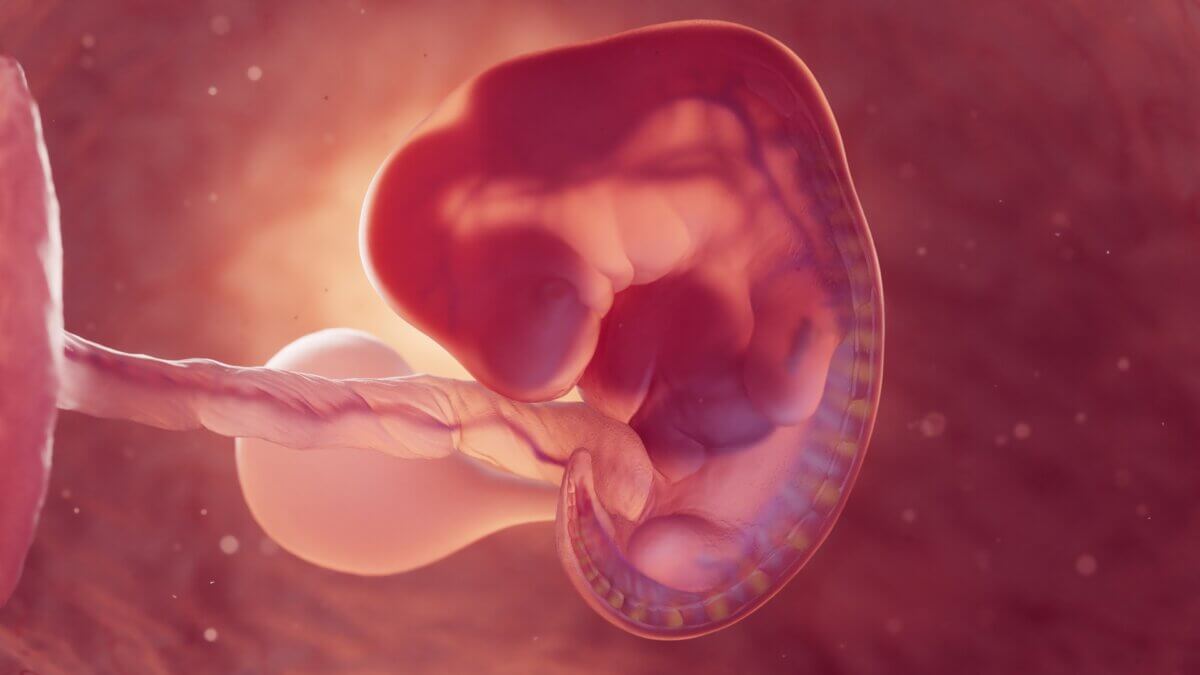
(Credit: Image by Sebastian Kaulitzki on Shutterstock)
In a Nutshell
- A review of 44 studies estimates that roughly 6% to 9% of transmasculine people have been pregnant at some point, including after starting gender transition.
- Miscarriage rates ran about 31% to 40% across several small studies, higher than the 11% to 22% typical in the general female population, but none of those studies had a comparison group, so the difference can’t be confirmed.
- Testosterone is not reliable contraception: conception rates during use were low but not low enough to prevent pregnancy, and some patients and providers wrongly treated it as birth control.
For transgender men and other transmasculine people who become pregnant, the experience often unfolds with little medical guidance inside a healthcare system that is largely unprepared to help them. A new review of 44 studies, the first to pull together numerical estimates of how often these pregnancies happen and how they turn out, found miscarriage rates that look elevated in several small studies, worrying signals around depression after birth, and a near-total absence of the research needed to understand what is happening or how to fix it.
Research has consistently shown that many transmasculine people, a term that covers trans men, non-binary people, and others who were registered female at birth, have an interest in pregnancy and parenthood. Far less understood is how often these pregnancies occur, what complications arise, and how medical care should respond. This review, published in the journal Acta Obstetricia et Gynecologica Scandinavica, is the first to gather the available numerical data on pregnancy rates and obstetric outcomes for this group and try to make sense of it.
Across those 44 studies, researchers estimated that roughly 6% to 9% of transmasculine people have been pregnant at some point, with roughly 4% to 9% having had a child. Those numbers may sound modest, but behind them sit real people making major reproductive decisions with almost no evidence to guide their care.
A Worrying Miscarriage Signal in Transmasculine Pregnancy
Miscarriage was the finding that stood out most. Across multiple studies, miscarriage rates among transmasculine people who became pregnant ranged from roughly 31% to 40%, and four out of five studies that reported this outcome landed in that elevated range. For comparison, background miscarriage rates in the general female population run closer to 11% to 22%.
None of those studies included a direct comparison group, so researchers cannot say for certain that the rate is higher because of being transmasculine or because of factors like a history of testosterone use. Even so, the authors write that the miscarriage findings “warrant further investigation.” Limited evidence also suggested pregnancy loss may have been more common among people with prior testosterone exposure, though the available studies were too small to show whether that link is real.
Testosterone, a hormone many transmasculine people take as part of their medical transition, already stops menstruation and is considered potentially harmful to a developing baby. Current precautionary guidance recommends stopping it before attempting pregnancy because of concerns about fetal development. The review also found that people who had previously taken testosterone reported fewer conceptions than those who had never used it, even after stopping treatment for several months, although the reason remains unclear.

Testosterone Is Not Reliable Birth Control
One finding carries immediate real-world weight: testosterone should not be treated as reliable contraception. Despite that, the review found evidence that some transmasculine people, and even some of their healthcare providers, have assumed it works that way. In one study, 16% of participants had used testosterone as a contraceptive method, and a smaller share reported that providers had advised this. Conception rates during testosterone use were low, the authors report, but not low enough to depend on for preventing pregnancy.
This matters because unintended pregnancy is already a documented concern in this group. Prior research cited by the review pointed to poor contraceptive knowledge, higher rates of sexual violence, and barriers to reproductive healthcare as contributing factors.
Postpartum Depression Signals From Small Studies
Beyond miscarriage, the review turned up troubling numbers on postpartum depression, the emotional downturn that can follow childbirth. Two small studies that examined it reported rates ranging from 15% to 58%, and one of those also found that 25% of participants reported thinking about suicide after giving birth. Both samples were tiny and cannot be applied broadly, yet the authors treat them as an early warning that deserves proper follow-up research.
Carrying a pregnancy can also intensify gender dysphoria, the distress that comes from a mismatch between a person’s gender identity and their body. Several participants described feeling it acutely during pregnancy and while chestfeeding. Some who had previously undergone chest surgery still chose to chestfeed, and two were caught off guard by complications their providers were equally unprepared to handle.
A Healthcare System Unready for Transmasculine Pregnancy
Much of what gives these findings their weight is the state of care surrounding transmasculine pregnancy. Prior research cited in the review found that 80% of OB-GYN doctors in one earlier survey reported no training on the topic, and fewer than a third felt comfortable caring for transmasculine patients. People in this group have long reported denial or difficulty when trying to access reproductive healthcare.
Most of the 44 studies came from the United States, with additional work from countries including Australia, Canada, Sweden, Belgium, and Brazil. Many were small, lacked comparison groups, and were not designed to study pregnancy at all, meaning pregnancy data often showed up as a side note rather than the main focus. That left the research team unable to do the kind of rigorous statistical work that yields firmer answers. Data on access to fertility treatments, stillbirths, and a range of other outcomes were sparse or missing entirely.
Researchers are calling for action on several fronts: better data collection by maternity services, routine recording of patients’ gender identity, studies built specifically to examine this population, and training for healthcare providers. They also stress that counseling during gender transition should routinely cover fertility, contraception, and how transition-related treatments might affect future pregnancies.
What emerges is a group moving through one of life’s most demanding physical and emotional experiences with almost no medical guidance. Miscarriage rates look elevated across several studies, the postpartum mental health signals are hard to ignore, and there is little data on much else that can go right or wrong in pregnancy. On that point the researchers are blunt: transmasculine people are getting pregnant now, and medicine needs to catch up.
Disclaimer: This article summarizes a systematic review of existing studies, most of which were small and lacked comparison groups. The findings point to possible patterns rather than proven cause and effect, and they should not be read as medical advice. Anyone weighing pregnancy, contraception, or gender-affirming care should consult a qualified healthcare provider about their individual situation.
Paper Notes
Limitations
The review’s authors are candid about several limitations. The 44 studies varied widely in design, size, country of origin, and the outcomes they measured, which made it impossible to combine their results through standard statistical methods. Many were small and lacked comparison groups, so the findings cannot be taken as proof of cause and effect. In several cases, pregnancy data was collected incidentally, appearing as a footnote in studies focused on other topics rather than as a primary goal. In a few studies, results for transmasculine participants could not be cleanly separated from those of other groups. The authors also note that some study types likely overestimate pregnancy rates, because participants self-selected based on an interest in reproductive health, while others may underestimate them, meaning the true rates probably fall somewhere within the reported range. No data existed on total lifetime pregnancy rates at the end of reproductive life, and information on outcomes like stillbirth, access to fertility treatments, and obstetric complications was sparse or absent.
Funding and Disclosures
The authors report no funding for this work. On conflicts of interest, they state no financial interests. One author, Susan Bewley, notes that she was the founder co-chair of GLADD, the UK-based association for LGBT doctors and dentists, with her interests publicly listed. The authors state that no AI tools were used in this research.
Publication Details
Paper Title: Transmasculine pregnancy—Occurrence, associations, and outcomes: A quantitative systematic review
Authors: Catherine Meads (Anglia Ruskin University, Cambridge, UK), Chelsea Daniels (King’s College London, London, UK), Shawn Walker (King’s College London, London, UK), Susan Bewley (King’s College London, London, UK)
Journal: Acta Obstetricia et Gynecologica Scandinavica, published by John Wiley & Sons Ltd on behalf of the Nordic Federation of Societies of Obstetrics and Gynecology (NFOG)
DOI: 10.1111/aogs.70276
Received: March 3, 2026 | Revised: May 14, 2026 | Accepted: May 19, 2026
PROSPERO Protocol Registration: CRD42020159034


