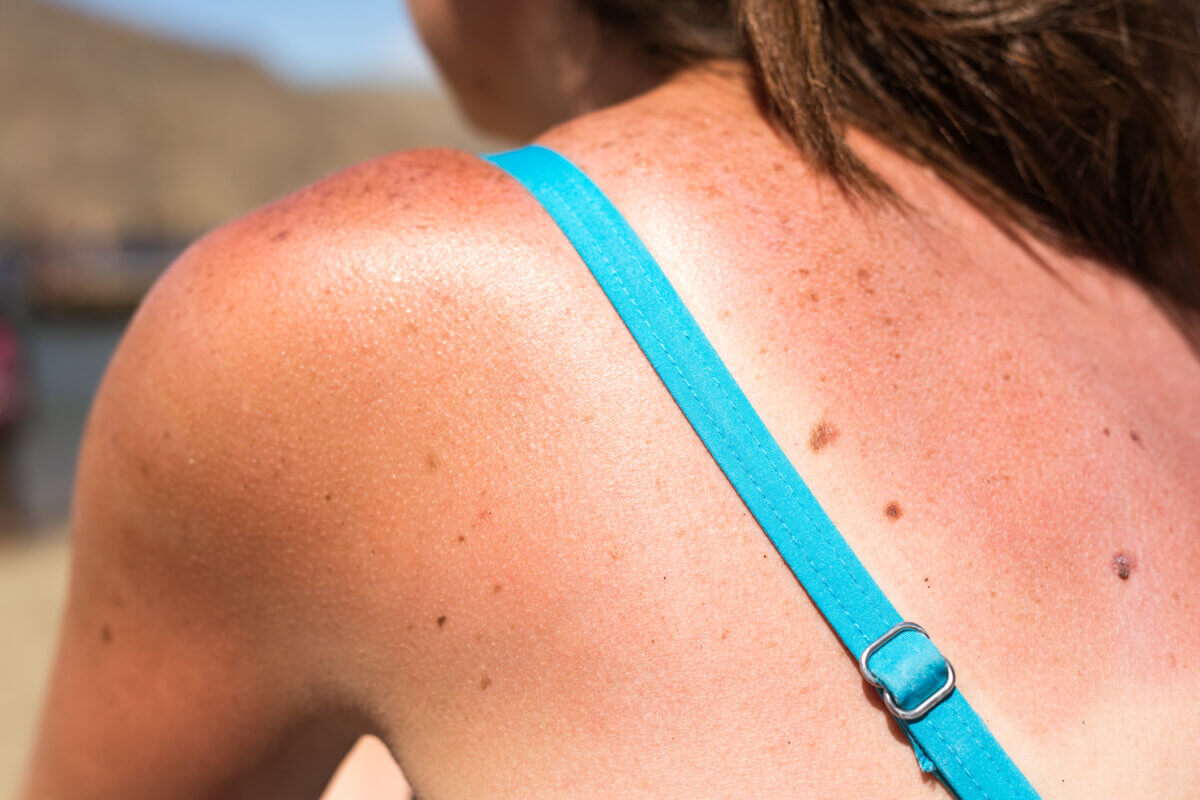
(Credit: © Wisutaporn Jingjit | Dreamstime.com)
TikTok Isn’t Overrun With Sunscreen Misinformation. But the Little That Exists Spreads Loudly.
In A Nutshell
- A study of 971 top-viewed TikToks found that nearly 87% of sunscreen content promotes its use, while only 1.6% pushed a purely negative message with no counterbalancing promotion.
- Anti-sunscreen videos claiming the product is toxic, hormone-disrupting, or unnecessary were rare, but attracted significantly more likes, shares, and comments than pro-sunscreen videos.
- Cancer prevention was mentioned in only 6.1% of pro-sunscreen TikToks, even though it is sunscreen’s most important health benefit.
- Researchers say public health agencies were right to sound the alarm early about sunscreen misinformation, since even a small amount of contrarian content can draw disproportionate attention online.
Scroll through TikTok long enough and you might stumble across a video claiming sunscreen is toxic, causes cancer, or that our ancestors were better off without it. A new study found that sunscreen misinformation on TikTok is actually pretty rare. The real problem may not be how much of it exists. It’s how strongly people react to it.
Researchers from the University of Alberta and the University of British Columbia analyzed nearly 1,000 of the most-viewed TikToks using the five most popular sunscreen-related hashtags. Most content on the platform supports wearing sunscreen. But the videos that push back attracted far more likes, shares, and comments than the pro-sunscreen videos did.
That gap is what makes this study worth paying attention to. Sunscreen remains one of the most accessible tools for protecting against skin cancer, a disease public health researchers have flagged as a growing global concern. When false ideas about sunscreen draw more reactions than accurate ones, even in small quantities, that’s worth taking seriously.
Most Sunscreen TikToks Play It Straight. A Few Don’t.
For the study, researchers analyzed 971 of the most-viewed TikTok videos across five popular hashtags: #sunscreen, #sunscreenviral, #spf, #sunscreenreview, and #sunprotection. Those hashtags had been used in more than 2.9 million TikToks at the time of data collection in late September and early October 2024.
Researchers used an automated tool to pull the top-viewed videos from each hashtag, starting with more than 5,000 links. After removing duplicate accounts, non-English videos, and broken links, the final dataset had been viewed more than 2.4 billion times and collected nearly 95 million likes.
Three trained coders watched and categorized each video. Misinformation was defined as content claiming sunscreen causes harm or blocks benefits from sun exposure, including assertions that sunscreen is toxic, causes cancer, disrupts hormones, or that skipping it is fine. Cosmetic complaints about smell or texture were not counted as health misinformation.

Sunscreen Dominated TikTok. Cancer Prevention Barely Got a Mention.
An overwhelming 86.8% of videos promoted sunscreen use, mostly focused on skin appearance: preventing sunburns (17.4%), reducing acne (15.3%), and slowing visible aging (11.5%). Cancer prevention came up in only 6.1% of pro-sunscreen videos, a strikingly low share given that cancer prevention is sunscreen’s most serious health benefit.
Product promotion was heavy. About 62% of all videos featured a specific brand, and more than 11% offered discount codes. Women appeared in roughly 76% of videos, while men had a notable presence in about 15%. Skin doctors and other medical professionals appeared in or were mentioned in about 10% of all videos.
On the misinformation side, the numbers were small but notable. In total, 58 videos, or 6% of the dataset, included some form of health-related sunscreen criticism, and most of those still also promoted sunscreen. Only 16 videos, just 1.6% of the entire dataset, pushed a purely negative message with no counterbalancing promotion.
Those critical videos included claims that sunscreen disrupts hormones, contains cancer-causing ingredients, taints breast milk, or that sunburns are not actually dangerous. Some argued that short, unprotected sun exposure is harmless, or that previous generations thrived without sunscreen.
Anti-Sunscreen Videos Were Rare. Their Engagement Numbers Were Not.
Despite making up only a sliver of content, videos that only criticized sunscreen were associated with significantly higher engagement, more likes, more shares, and more comments, compared to videos that only promoted it. View counts did not show a statistically significant difference, but the interaction numbers told a different story.
According to the researchers, this fits with what experts know about how misinformation travels online: contrarian content that taps into distrust tends to trigger stronger emotional reactions, leading more people to interact with it. Prior studies have also shown that repeated exposure to false claims can make them feel more credible over time, even to initially skeptical audiences.
As background, social platforms often use engagement signals such as likes, shares, and comments when deciding what content to distribute widely. The study did not test TikTok’s algorithm directly, but it found that sunscreen critique was consistently linked to more of those signals.
Taken together, the authors, writing in PLOS Digital Health, argue public health agencies were right to quickly sound the alarm about sunscreen misinformation when it began trending in 2024, even before anyone had measured exactly how much of it existed.
Only 6% of Pro-Sunscreen TikToks Mentioned Cancer. Misinformation Filled the Gap.
Sunscreen is cheap, widely available, and backed by decades of science as a proven tool for preventing skin cancer. Yet the platform’s pro-sunscreen content was overwhelmingly focused on aesthetics, while a small cluster of anti-sunscreen videos attracted outsized engagement. That gap points to a real opening for misinformation to fill, and public health communicators have not yet closed it.
Paper Notes
Limitations
The study examined only the most-viewed TikTok videos under five specific English-language hashtags, meaning less-viewed content or videos using different hashtags, including non-English ones, were not captured. The dataset reflects a snapshot in time from late 2024 and may not represent how sunscreen content on TikTok looks at other points. Researchers did not analyze comment sections, which could reveal whether audiences were accepting or challenging the misinformation they encountered. Demographic coding of video creators, including gender and ethnicity, was based on visual interpretation and was intended as a broad overview rather than a definitive accounting. The study also did not evaluate individual sunscreen products to determine whether specific SPF claims made in videos were accurate.
Funding and Disclosures
Two of the study’s authors, Cheryl E. Peters and Timothy Caufield, received funding support from the Canadian Cancer Society Challenge Grant (#708169). The funders had no role in study design, data collection, analysis, the decision to publish, or preparation of the manuscript. The authors declared no competing interests.
Publication Details
Authors: Alessandro Marcon, Marco Zenone, Vincenza Boniface, Cheryl E. Peters, and Timothy Caufield, affiliated with the Health Law Institute at the University of Alberta; the School of Public Policy and Global Affairs and School of Population and Public Health at the University of British Columbia; the BC Centre for Disease Control; and BC Cancer. | Journal: PLOS Digital Health | Paper Title: “Sunscreen is overwhelmingly promoted on TikTok, but content with misinformation exhibits proportionally high levels of audience interaction” | Published: June 18, 2026 | DOI: https://doi.org/10.1371/journal.pdig.0001440


