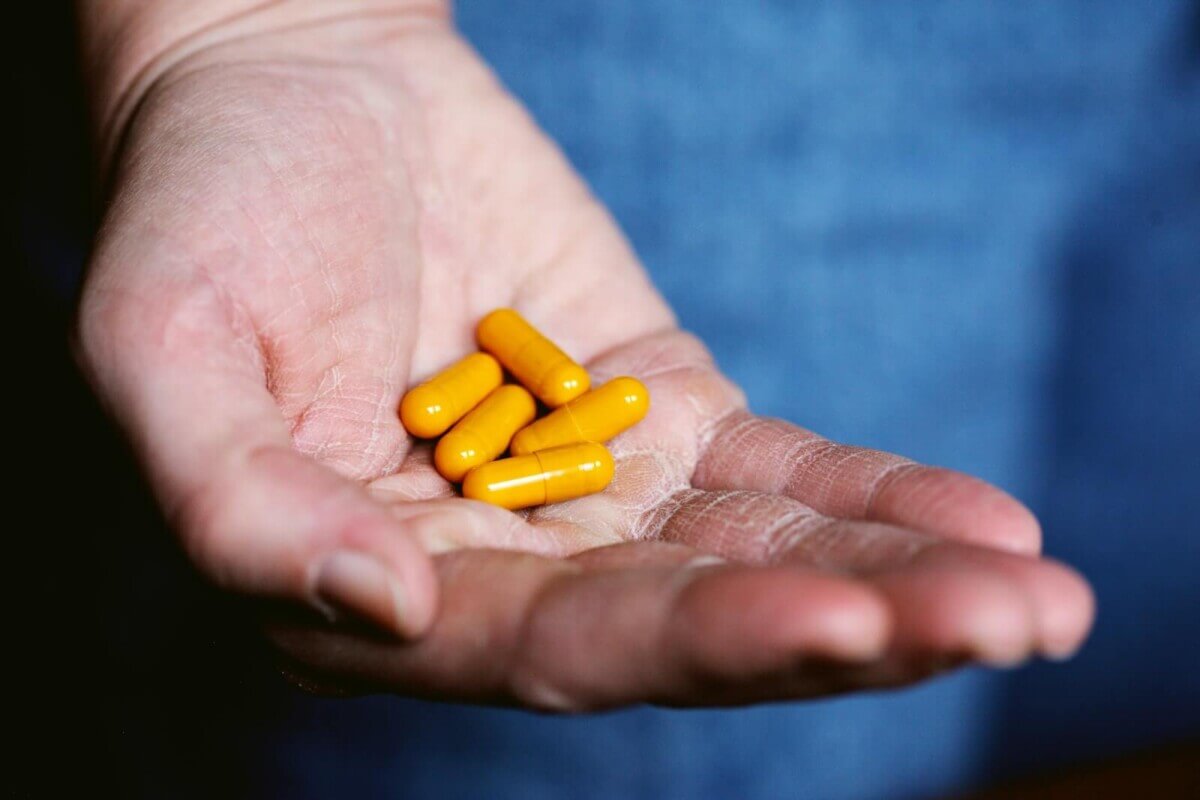
(Photo by Alexander Grey on Unsplash)
Collagen, Elderberry, and Probiotics Among Products Soaring In Popularity
In A Nutshell
- Supplement use among American adults rose from 51% to 60% between 1999 and 2023, with the biggest jump happening after 2009.
- Traditional multivitamin use declined, while stand-alone vitamins, minerals, and specialty products like collagen, elderberry, and ashwagandha surged.
- Adults 65 and older saw the largest increase of any age group, climbing from 62% to 78%, a pattern researchers call worth watching given how commonly older adults also take prescription medications.
There was a time when the average American’s supplement routine was simple. A multivitamin in the morning, maybe a vitamin C tablet during cold season, and nothing more. Those days are gone. A new analysis of 25 years of national health data finds that supplement use among American adults has climbed steadily since 1999, with people increasingly reaching for specialized products, from ashwagandha and collagen to elderberry and probiotic supplements, while the classic daily multivitamin has faded in popularity.
Related: our complete multivitamin research roundup.
Published in JAMA Network Open, the study tracked supplement use among American adults across 11 rounds of a major federal health survey, the National Health and Nutrition Examination Survey, covering 1999 through August 2023. It found that the share of adults taking any dietary supplement in the past 30 days rose from 51% to 60% over that period. Behind that number sits a dramatic reshuffling of what Americans are actually taking and why.
While overall supplement use went up, the traditional all-in-one multivitamin declined in popularity. What surged in its place were stand-alone vitamins, individual minerals, and a sprawling category of products marketed for immune support, gut health, skin, reduced inflammation, and joint comfort. Americans are taking more supplements, and increasingly more specific ones, though what is driving that shift is hard to untangle from survey data alone.
A 25-year snapshot of America’s supplement habits
To understand how supplement habits have shifted, researchers pulled data from 63,442 American adults who completed health interviews as part of the National Health and Nutrition Examination Survey, a nationally representative federal survey that collects detailed information on Americans’ health, diet, and lifestyle. Their analysis spanned 11 survey cycles from 1999 through August 2023.
Participants were asked whether they had taken any dietary supplements in the past 30 days. Researchers then tracked use over time, overall, by product category, by individual supplement, and across demographic groups including age, sex, race and ethnicity, education level, and income.
Year by year, the trend bent upward. Overall supplement use stayed largely flat through around 2009 and 2010, then began climbing. A growing share of adults took four or more supplements at once, nearly doubling over the study period from about 9% to 15%.
Multivitamin-multimineral products, the kind that bundle a wide range of nutrients into a single pill, slipped from 35% usage to 31%. Vitamins taken on their own climbed from 25% to 39% when multivitamins were excluded. Individual minerals followed the same path, rising from 18% to 27%.

Vitamin D, zinc, and the rise of immune supplements
Some of the biggest shifts involved specific nutrients that have drawn intense public and scientific interest over the past two decades. Vitamin D use exploded, rising from about 5% to 29% of adults when multivitamin products were excluded. Zinc use more than doubled. Magnesium, potassium, biotin, and vitamin K all gained ground too.
Several supplements that were common in the early 2000s fell sharply out of favor. Ginseng dropped from about 6% usage to under 1%. Ephedra, once popular for weight loss and athletic performance but banned by federal regulators in 2004 after being linked to serious heart problems, fell dramatically. A handful of trace minerals also saw steep drops, which the study authors say likely reflect growing safety concerns and weak evidence for their benefits.
A new wave of products gained real traction at the same time. Turmeric and its active compound, long promoted for anti-inflammatory properties, jumped from less than 1% to more than 5%. Collagen supplements, marketed for skin and joint health, gained ground. So did ashwagandha, a plant root promoted as a stress-fighting adaptogen, along with elderberry syrups and gummies, hyaluronic acid capsules, and probiotic and prebiotic supplements.
Supplement habits appeared to shift around COVID-19 as well. Comparing the period just before and during the early pandemic to the later and post-pandemic years, researchers found increases in vitamins and minerals, especially products tied to immune health. Zinc rose again in that window, on top of its longer climb, and elderberry use ticked up as well. Researchers caution that some of these changes may reflect longer-term trends already underway rather than a direct effect of the pandemic. Because the data only run through 2023, future survey cycles will be needed to see whether the immune-supplement boom outlasts the crisis that sparked it.
Older Americans lead the supplement surge, and the worry that comes with it
One of the most telling patterns in the data involves older Americans. Adults aged 65 and older were already the heaviest supplement users at the start of the study period, with 62% reporting use in 1999. By 2021 to 2023, that figure had risen to 78%, the largest increase of any age group tracked.
That number carries real weight for doctors and public health experts. Older adults are far more likely to be taking multiple prescription medications, and the potential for supplements to interfere with those drugs is a recognized concern, even as the study points out that evidence on harmful interactions remains limited for many products while the market keeps expanding.
Supplement use also ran higher among women, people with more education and income, those with health insurance, and non-Hispanic White adults. Meaningful increases showed up across demographic groups, though, including among Mexican American adults and those without a high school diploma.
A mostly unregulated market that nearly everyone is shopping
One piece of context carries outsized weight. Earlier national research has found that only about 1 in 4 supplement products is taken on the advice of a healthcare professional, which means most people are choosing on their own, in an industry where companies are not required to get federal approval before putting a product on shelves. Dietary supplements do not need Food and Drug Administration review for safety or effectiveness before they reach consumers, a regulatory gap that makes population-level monitoring studies like this one especially valuable to public health officials.
With more than 100,000 dietary supplement products currently on the market and Americans spending billions of dollars on them every year, the gap between consumer enthusiasm and scientific evidence stays wide for many products. Some supplements have solid research behind them. Many others do not. And for a growing number of newer entries, collagen, ashwagandha, and hyaluronic acid among them, the studies are still catching up to the sales.
Supplement aisles have never been more crowded, and Americans have never been more eager to fill their carts. Knowing exactly what people are taking, and who is taking it, has become a real public health priority, the kind of question that only nationwide tracking can answer.
Paper Notes
Limitations
The study authors identified several important limitations. Supplement use was measured over the previous 30 days, which may not fully capture products taken seasonally or irregularly. Dose and frequency of use were not examined, so the data describe whether people took a supplement, not how much or how often. The most recent survey cycle had lower response rates than earlier ones, though the researchers used statistical adjustments to address this. Comparisons between the pre-pandemic and post-pandemic periods should be interpreted carefully, since some changes may reflect ongoing long-term trends rather than a direct effect of COVID-19. The survey excludes people living in institutional settings, such as nursing homes, which could mean the actual supplement use rate among older adults is even higher than reported. Active-duty military personnel were also not included. Changes in how products are classified, as dietary supplements versus foods or beverages, over the 25-year study period may also have affected how use was reported and tracked across different survey cycles.
Funding and Disclosures
The study was supported in part by a National Cancer Institute Cancer Center Support Grant to Memorial Sloan Kettering Cancer Center, the Laurance S. Rockefeller Fund supporting the Memorial Sloan Kettering Herbal Education and Research in Oncology program, and the Geoffrey Beene Cancer Research Center at Memorial Sloan Kettering Cancer Center. The funders had no role in the study’s design, data collection, analysis, interpretation, or the decision to publish. One author reported receiving grants from the National Cancer Institute during the conduct of the study. Another author reported receiving grants from outside organizations made to an institution outside the submitted work and disclosed being a co-founder of a separate health company. Another author reported serving as Junior Faculty Chair at the Geoffrey Beene Cancer Research Center at Memorial Sloan Kettering during the study period.
Publication Details
Paper Title: Emerging Patterns in Dietary Supplement Use Among US Adults, 1999-2023 | Authors: Chun Sing Lam, PhD; Kelli O’Connell, MSPH; Maria J. Monroy-Iglesias, PhD, MBBS; Peng Wang, PhD; Yen-Nien Hou, PharmD; Mengmeng Du, ScD; Edward L. Giovannucci, MD, ScD; Jun J. Mao, MD, MSCE; Elizabeth D. Kantor, PhD, MPH | Author Affiliations: Integrative Medicine and Wellness Service, Department of Medicine, Memorial Sloan Kettering Cancer Center, New York; Department of Epidemiology and Biostatistics, Memorial Sloan Kettering Cancer Center, New York; Department of Nutrition and Department of Epidemiology, Harvard T.H. Chan School of Public Health, Boston, Massachusetts. | Journal: JAMA Network Open | Published: June 15, 2026 | DOI: 10.1001/jamanetworkopen.2026.19291


