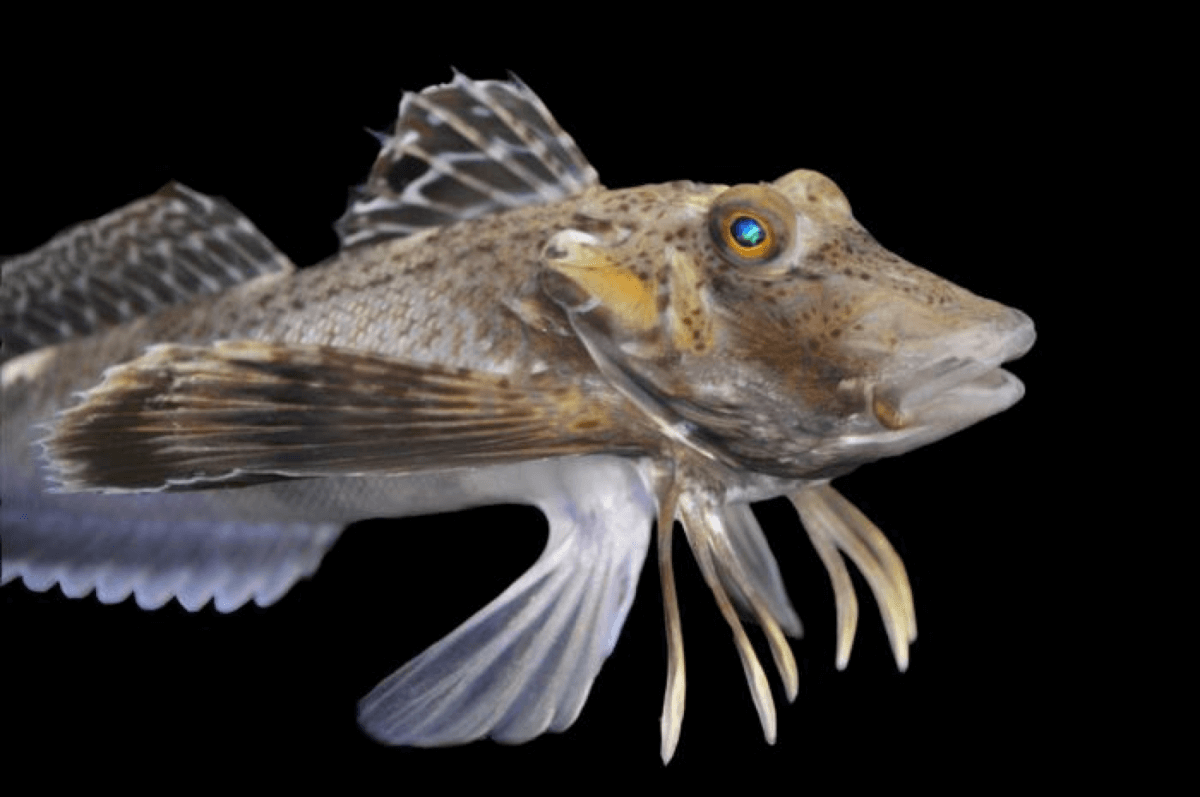
Sea robin (Prionotus carolinus). (Credit: Anik Grearson)
CAMBRIDGE, Mass. — Something fishy is happening in the deep blue sea. In a recent study, scientists documented how a particular fish species known as sea robins evolved to have legs.
Sea robins can easily be called the oddballs of the ocean. Most fish have fins and gills, but these creatures took it a step further and evolved brand-new organs. The six leg-like appendages are extensions of the fish’s pectoral fins, making them a popular creature amongst other fishes. Their legs make it so easy for sea robins to find and uncover buried prey that other fish hang around them and swipe their food supply.
“Sea robins are an example of a species with a very unusual, very novel trait,” says Corey Allard, a postdoctoral fellow at Harvard University and study co-author, in a media release.
Sea robins captured Allard’s attention in 2019 when the authors observed their movements in a tank.
“We wanted to use them as a model to ask, ‘How do you make a new organ?’”
In collaboration with other research labs, several studies published in Current Biology have examined the genetics that helped sea robins grow leg-like appendages and how they use their legs for survival. The findings also establish sea robins as an evolutionary model for developing unique traits.
First, Allard wanted to know what these legs were. While legs are usually used for walking, scientists have long suspected that sea robin legs function more as sensory organs. However, this theory has never been confirmed. His team ran several experiments in which they watched captive sea robins hunt prey in real-time.
The sea robins switched between swimming and “walking” as they scratched the sand to look for buried prey such as mussels and other shellfish. Despite having no visual cues, they can easily detect prey and buried capsules containing a single chemical. The findings suggest the legs serve as a type of antennae to mechanical and chemical stimuli.
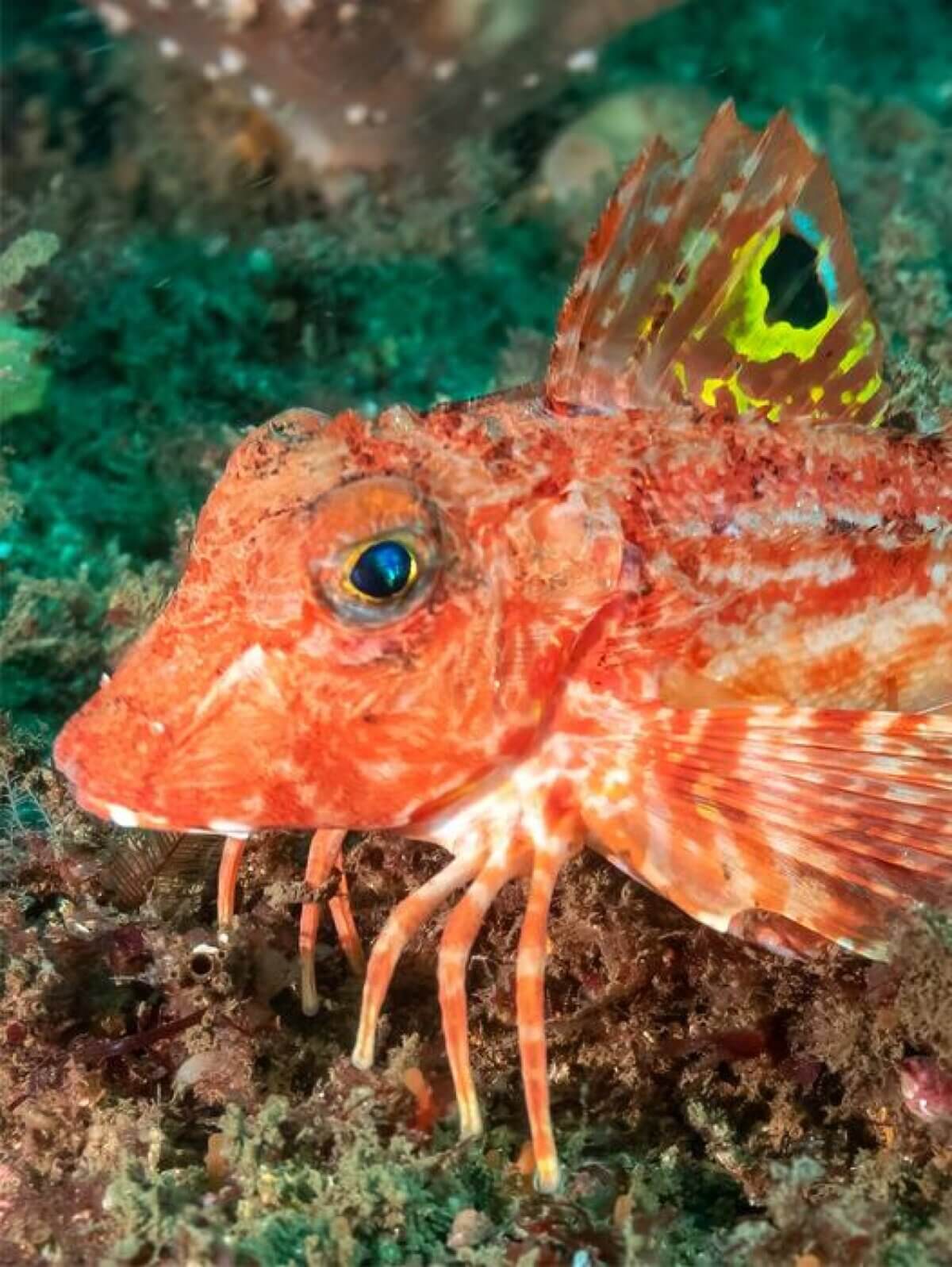
Adding to their findings, researchers found that not all sea robins have the same sensory ability with their leg-like appendages. Through an accident with shipping, the scientists received a different species of sea robin — Prionotus evolans — that looked like the original ones they studied earlier (P. carolinus) but acted differently. P. evolans used their legs to walk and probe the sand surface, but not to dig.
The researchers found slight differences in the shape of the legs of the two types of sea robins. The ones that used their legs for digging had shovel-shaped legs covered in papillae or small structures that help with grip, similar to the bumps on our taste buds. Fish that used their legs for movement rather than digging had rod-shaped legs and no papillae.
The study also analyzed the composition of sea robin legs across species and time. It finds that digging legs are a recent evolutionary trait, as this feature is only found in a few locations where sea robins live. Additionally, the second study focused on the genetics that express the leg-like appendages. Researchers used genetic tools, such as transcriptomic and genetic editing, to examine what genes are involved in sea robin leg formation and function. They also created hybrids with different leg shapes to study the genetic differences between the two sea robin species closely.
“I think it’s pretty rare to go from the description of the behavior, to the description of the molecules, to the description of an evolutionary hypothesis,” says Nicholas Bello, a professor in the department of molecular and cellular biology at Harvard and co-author of the study. “I think this is a nice blueprint for how one poses a scientific question and rigorous follows it with a curious and open mind.”
Paper Summary
Methodology
The researchers conducted experiments on a unique type of fish called sea robins, which have developed specialized leg-like appendages. These appendages are used for walking and sensing their environment, especially to locate prey hidden under the sand. The scientists tested how well these fish could find hidden food by setting up controlled environments where the fish were placed in tanks with buried prey.
They also used electrophysiology to record how the sensory nerves in the fish’s legs responded to physical touch and chemical signals. Additionally, genetic analyses and comparisons between different sea robin species were conducted to understand how these sensory abilities evolved.
Key Results
The study found that the sea robins use their leg-like appendages to find food hidden under the sand. These legs are equipped with sensors that can detect touch and certain chemicals released by their prey. The fish with specialized legs, like the species Prionotus carolinus, were much better at finding hidden food compared to other species without these specialized legs. The researchers discovered that the special sensory cells in the legs make the fish more sensitive to chemicals, which helps them locate prey.
Study Limitations
While the study provided significant insights into how sea robins use their legs to find food, there are some limitations. For instance, the experiments were conducted in controlled tank environments, which might not fully capture the complexities of the fish’s natural habitat. Additionally, only a few species of sea robins were studied, so it’s unclear how general these findings are across other species or environments. Lastly, the long-term evolutionary advantages of these sensory legs were not fully explored in this study.
Discussion & Takeaways
This study shows how animals can evolve new traits to adapt to their environments. For sea robins, the evolution of sensory legs allows them to expand their hunting strategies, giving them an edge in finding food hidden under the sand. This research helps us understand how complex behaviors and traits can emerge through evolution. The findings also open up questions about how other animals may have evolved similar specialized traits to adapt to their environments.
Funding & Disclosures
This research was funded by several prominent organizations, including the New York Stem Cell Foundation and the National Institutes of Health. The authors disclosed that there are no competing interests that might have influenced the study.


