(© Microgen - stock.adobe.com)
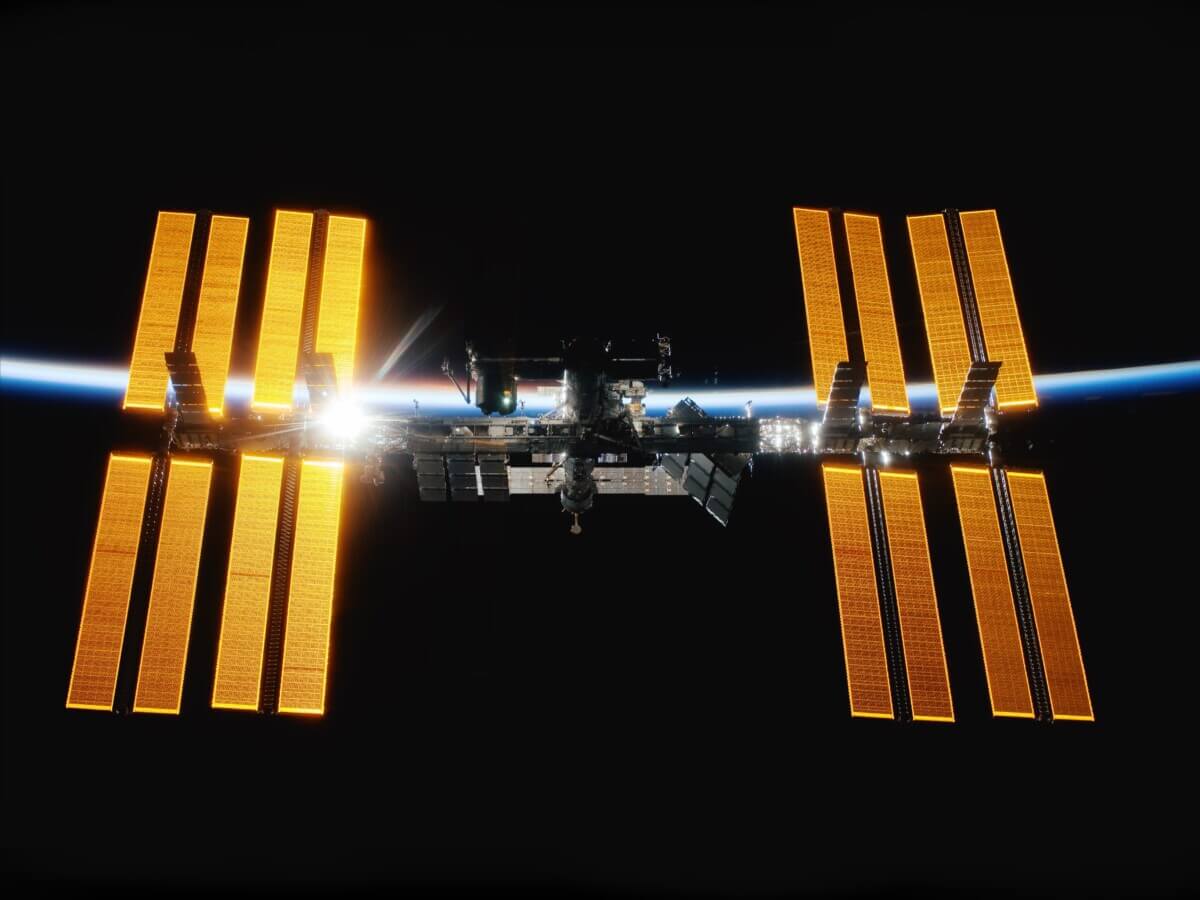
JACKSONVILLE, Fla. — While Jeff Bezos and Elon Musk race to send tourists to space, scientists have found a more practical use for the final frontier: growing better medicines. It turns out that the International Space Station, orbiting 250 miles above Earth, might be the perfect laboratory for cultivating human stem cells.
A recent review published in NPJ Microgravity shows that stem cells grown in the microgravity environment of space possess unique qualities that could accelerate the development of new treatments for complex diseases. This discovery represents a significant breakthrough in regenerative medicine, potentially offering new ways to treat conditions ranging from stroke to cancer.
“Studying stem cells in space has uncovered cell mechanisms that would otherwise be undetected or unknown within the presence of normal gravity,” says Dr. Abba Zubair, a laboratory medicine expert and medical director for the Center for Regenerative Biotherapeutics at Mayo Clinic in Florida, in a media release.
One of the biggest challenges in stem cell therapy on Earth is growing enough cells for treatment. Adult stem cells, found in bone marrow and fat tissue, don’t readily divide and transform into specialized cells. This limitation means that obtaining sufficient quantities for research or patient treatment requires a costly and time-consuming process that often yields inconsistent results.
Space offers a unique solution to this problem. In the microgravity environment of the ISS, cells can grow in three dimensions more naturally, similar to how they develop in the human body. This is a significant advantage over traditional two-dimensional cell cultures used in Earth-bound laboratories, which less accurately represent human tissue.
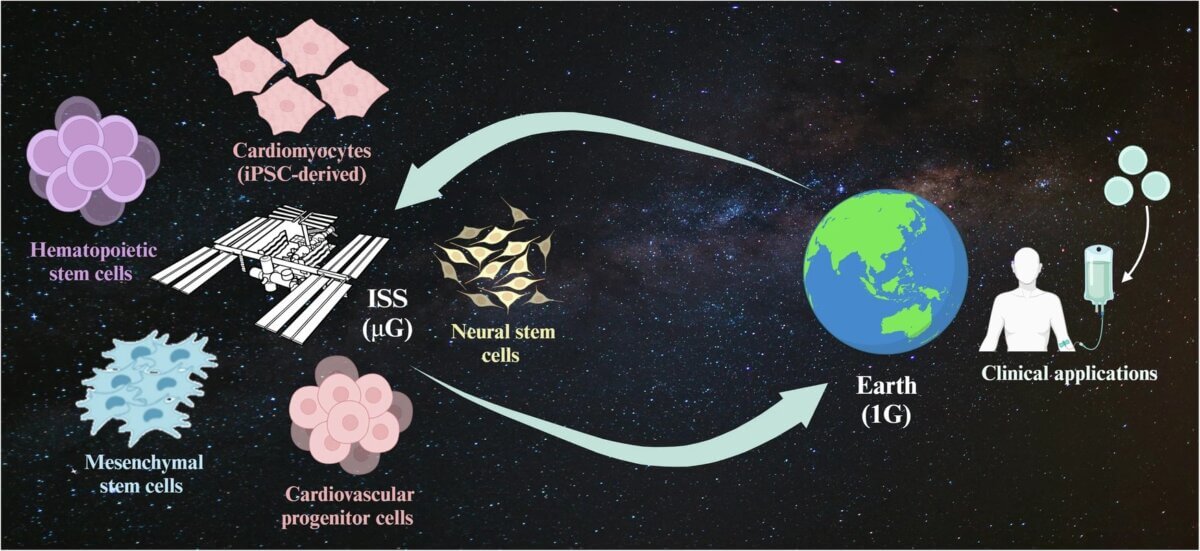
The research team, led by Dr. Zubair and research technologist Fay Abdul Ghani at Mayo Clinic, analyzed multiple studies conducted on the ISS over the past decade. They examined five main types of stem cells, each with potential therapeutic applications:
Mesenchymal stem cells, which can develop into bone, cartilage, and fat cells, showed enhanced ability to suppress immune responses when grown in space – a crucial feature for treating inflammatory conditions. Dr. Zubair’s team documented that these cells had greater immunosuppressant capabilities than their Earth-grown counterparts.
Hematopoietic stem cells, which produce blood cells, demonstrated the ability to expand and differentiate into red or white blood cells during space cultivation. This finding could lead to new treatments for blood cancers.
Cardiovascular progenitor cells, which provide building blocks for blood vessels and heart muscle, showed promise for potentially repairing tissue damaged by heart attacks when grown in the space environment.
Neural stem cells, found in the central nervous system, maintained their regenerative capabilities even after returning to Earth from space. This discovery could lead to replacement therapy for diseases of the central nervous system.
The immediate value of this interstellar research may be in growing tissue for disease modeling. Space-cultured stem cells could be used to create lifelike models of cancer and other diseases in laboratory dishes, allowing researchers to track disease progression and test new therapies.
However, significant challenges remain. Scientists must ensure that cells maintain their strength and function after long-term exposure to microgravity. There are concerns about potential DNA damage from space radiation and whether cells might become cancerous. Encouragingly, Dr. Zubair’s team found no evidence of chromosomal damage that could trigger cancer in mesenchymal stem cells cultured in space.
Through research on the ISS, scientists have gained a new understanding of how cells multiply, function, and transform into specialized cells. Importantly, they’ve discovered that microgravity fosters better cell growth and function compared to Earth-based laboratory settings. However, stem cell research in space remains in its early stages, and more scientific data, research, and funding are needed to fully understand the clinical potential of space-expanded cells.
“The space research conducted so far is just a starting point. A broader perspective about stem cell applications is possible as research continues to explore the use of space to advance regenerative medicine,” Dr. Zubair notes.
Paper Summary
Methodology
The research team conducted a comprehensive review of various studies performed on the International Space Station, examining how different types of stem cells behaved in microgravity. They analyzed data from multiple experiments that sent stem cells to space for periods ranging from 11 days to 5.5 weeks. The cells were grown in specialized containers on the ISS, then returned to Earth for detailed analysis. Scientists examined the cells’ physical characteristics, genetic expression, ability to multiply, and capacity to develop into specialized cell types. They compared these results with identical cells grown on Earth under normal gravity conditions.
Key Results
The review revealed several significant findings across different stem cell types. Mesenchymal stem cells maintained their characteristics and showed enhanced immunosuppressive capabilities. Cardiac-related stem cells demonstrated improved proliferation and development into heart muscle cells. Neural stem cells preserved their ability to multiply and develop into neurons.
Many cell types showed increased proliferation rates in space while maintaining their undifferentiated state. The three-dimensional growth environment in microgravity appeared to better mimic natural conditions in the human body compared to traditional two-dimensional cell cultures on Earth.
Study Limitations
Several important limitations were noted. The studies had relatively small sample sizes and short durations. The effects of cosmic radiation on long-term cell growth and genetic stability remain uncertain. The high cost and limited access to space create challenges for replicating and expanding these studies.
There’s also conflicting evidence about how some stem cells respond to microgravity, with some studies showing decreased proliferation or altered differentiation patterns. The research team noted that different types of stem cells may respond differently to the space environment, and optimal cell culture conditions still need to be established.
Discussion & Takeaways
The research suggests that space-based stem cell cultivation could offer unique advantages for regenerative medicine. The microgravity environment appears to support more natural three-dimensional cell growth and may enhance certain beneficial characteristics of stem cells. This could potentially lead to more effective treatments for conditions ranging from heart disease to neurological disorders.
However, significant technological, logistical, and regulatory challenges must be overcome before space-grown stem cells can be used in clinical applications. The research team emphasizes the need for further studies to better understand the mechanisms behind microgravity’s effects on stem cells and to establish standardized protocols for space-based cell cultivation.
Funding & Disclosures
The review article was published in cooperation with the Biodesign Institute at Arizona State University, with support from NASA. The authors declared no competing interests. The research was conducted at Mayo Clinic’s Center for Regenerative Biotherapeutics and Department of Laboratory Medicine and Pathology in Jacksonville, Florida.


