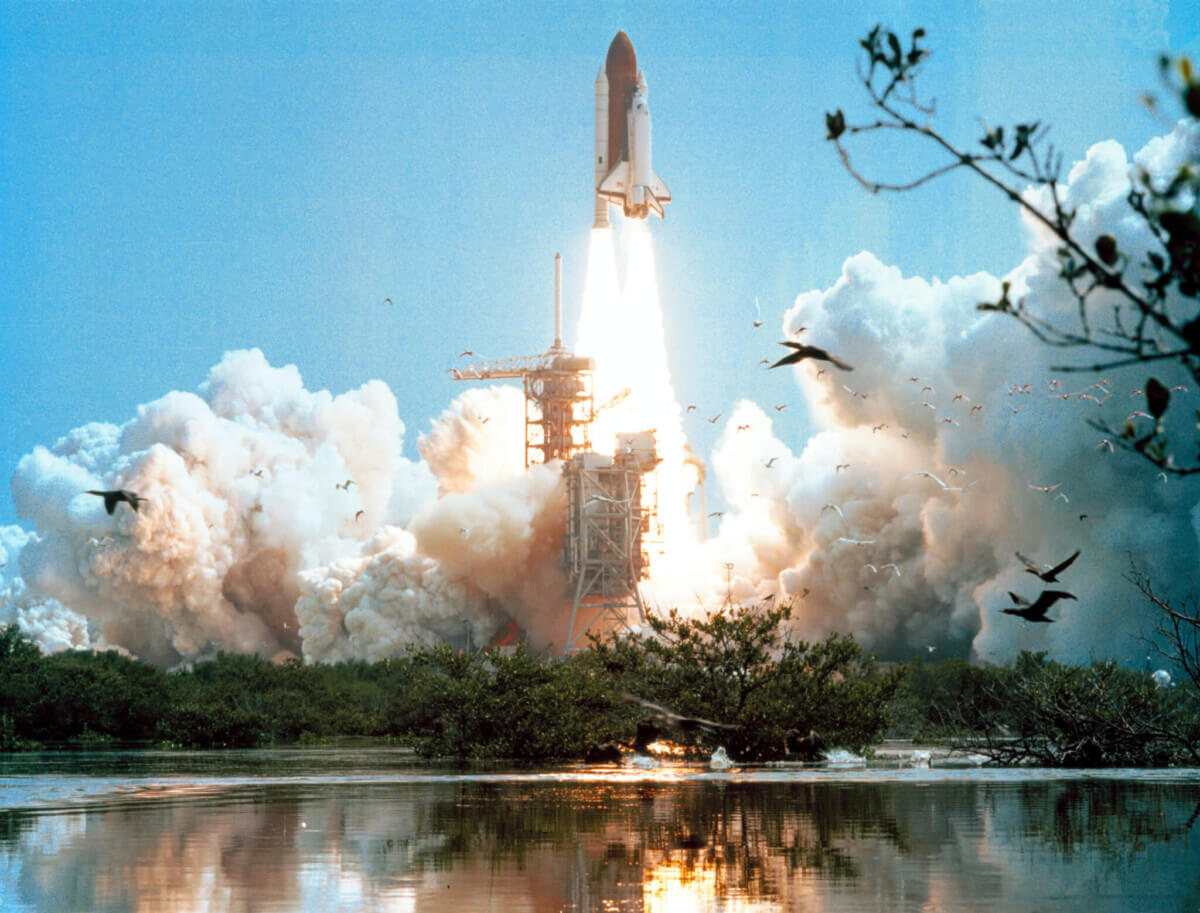
Space Shuttle Columbia's STS-4 mission launched from Kennedy Space Center on June 27, 1982. (credit: NASA/Unsplash)
LA PAZ, Bolivia — There’s a plethora of issues astronauts need to be concerned about while miles above planet Earth: their space craft, their equipment, and — most importantly — their health. A concerning new study from Bolivian researchers reveals that launching a rocket into space causes astronauts’ blood cells to burst, leading to anemia.
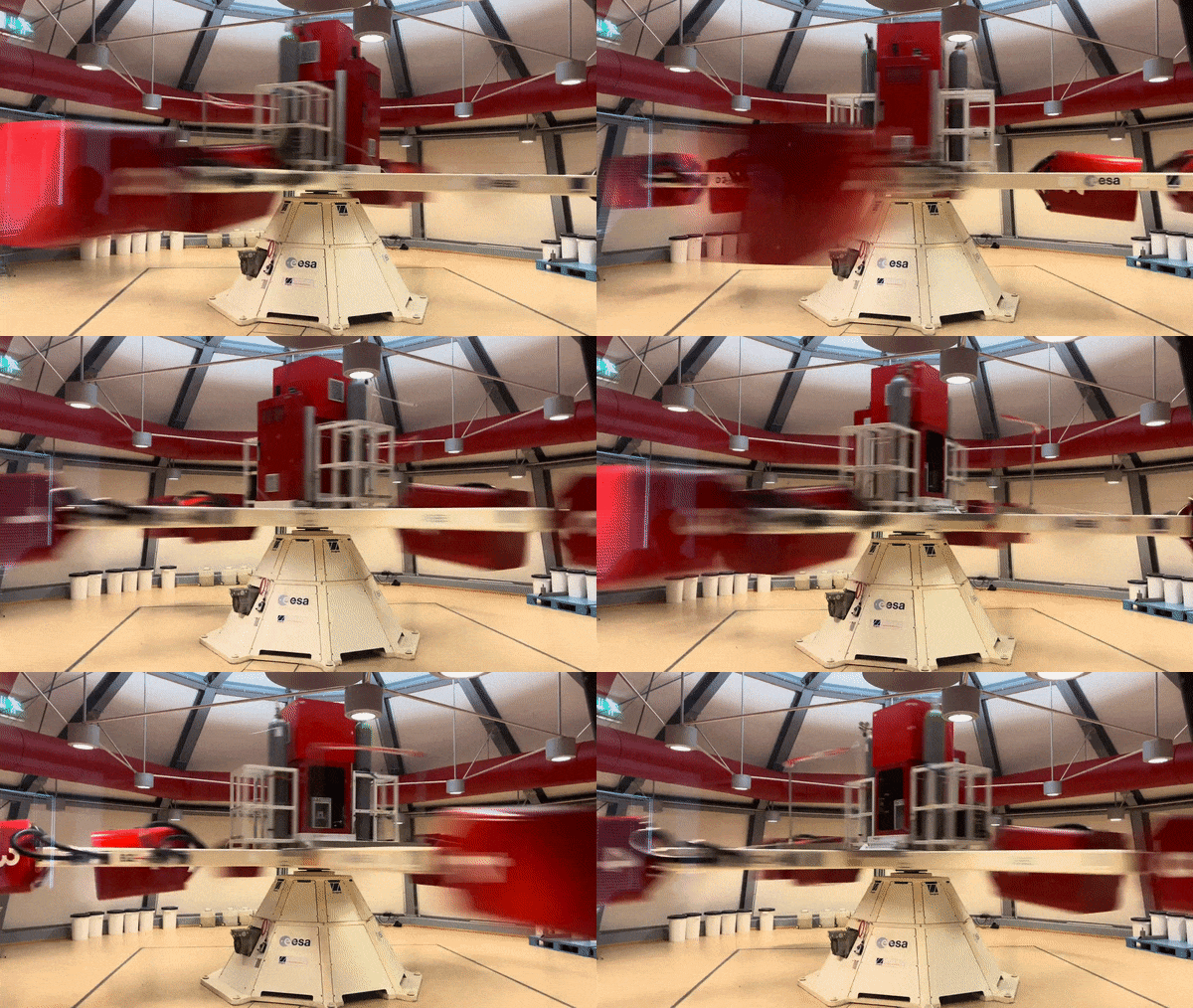
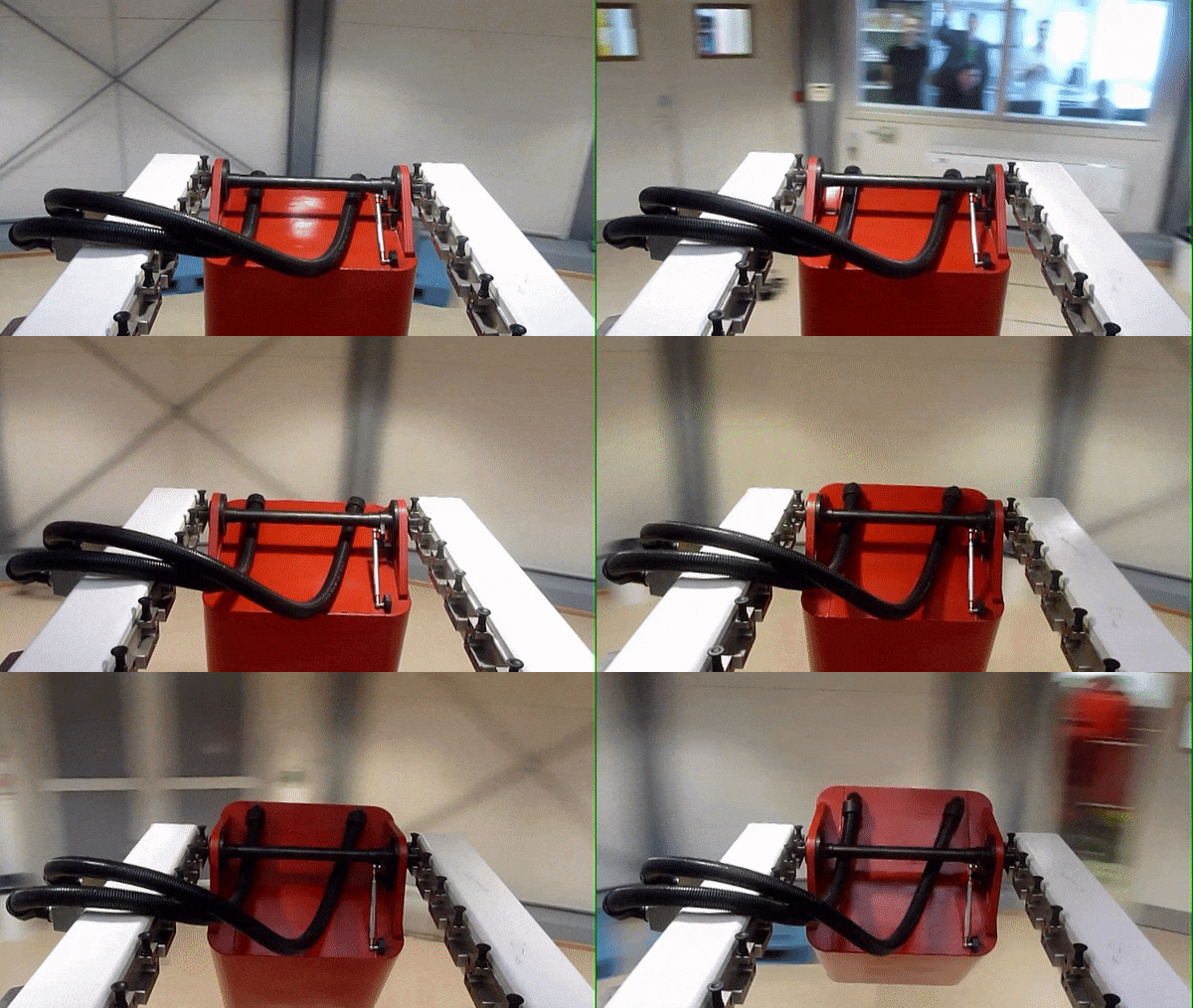
Scientists from the Universidad Católica Boliviana “San Pablo” utilized the European Space Agency’s (ESA) high-tech Large Diameter Centrifuge (LDC) to investigate this significant health issue faced by astronauts. The LDC, located at ESA’s ESTEC technical center in the Netherlands, is an eight-meter diameter centrifuge capable of simulating hypergravity conditions up to 20 times that of Earth’s gravity. This device is essential for researchers, as it allows them to replicate the high-gravity conditions experienced during rocket launches, a phase thought to contribute to the anemia seen in many astronauts in space.
Anemia, a condition characterized by a lack of healthy red blood cells, has been a persistent problem for astronauts. It can cause symptoms like dizziness and weakness, impacting their ability to perform in space. Recent studies have linked this anemia to a process called hemolysis, where red blood cells are destroyed more rapidly than usual.
“As part of a biology class I assigned a very simple task which many people might do in school: testing how osmosis affects red blood cells,” says team leader Dr. Georgina Chávez, of the Universidad Católica Boliviana, in a media release. “By putting low-salinity ‘hypotonic’ solution in the fluid surrounding the red blood cells, then water moves into the cells and they eventually burst. We saw the paper in Nature on the hemolytic anemia suffered by astronauts, and the parallels with our testing raised our interest. It is possible that hypergravity exposure causes cellular membranes to become fragile, leading to hemolysis.”
The team’s experiment involves exposing red blood cells to various low-salinity solutions under different gravity conditions, including 7.5 and 15 times Earth’s gravity, to test their osmotic fragility. They aim to determine if the brief but intense hypergravity phase during rocket launches contributes to hemolysis in space.
“It typically takes a few minutes of high-gravity rocket flight to make it into orbit,” notes team member Daira Quenta. “We want to see how the amount of time spent in hypergravity might make a difference.”
This initiative is inspired by Bolivia’s previous involvement in UNOOSA programs, such as the DropTES (Drop Tower Experiment Series), which provided international researchers access to microgravity conditions. The team’s participation marks a significant step in their careers.
“We’re training to become biochemistry and bioprocess engineers, which is really quite vocational,” explains team member Belen Flores. “This career encompasses a wide range of options, we might for instance end up working for the pharmaceuticals sector or food companies. We don’t typically have the chance to undertake scientific investigations like this, so this has been exciting.”
“We are an all-female team, which wasn’t intentional, but they are all brilliant students, and it’s fair to say females are a bit more organized!” Dr. Chávez adds.
The team’s work has also sparked interest in promoting STEM subjects among female Latin American students, as mentioned by team member Natalia Agramont. They’ve been involved in initiatives like Matilda and featured on popular Bolivian TV shows, inspiring a new generation of scientists.
The study was sponsored by the United Nations and ESA.


