
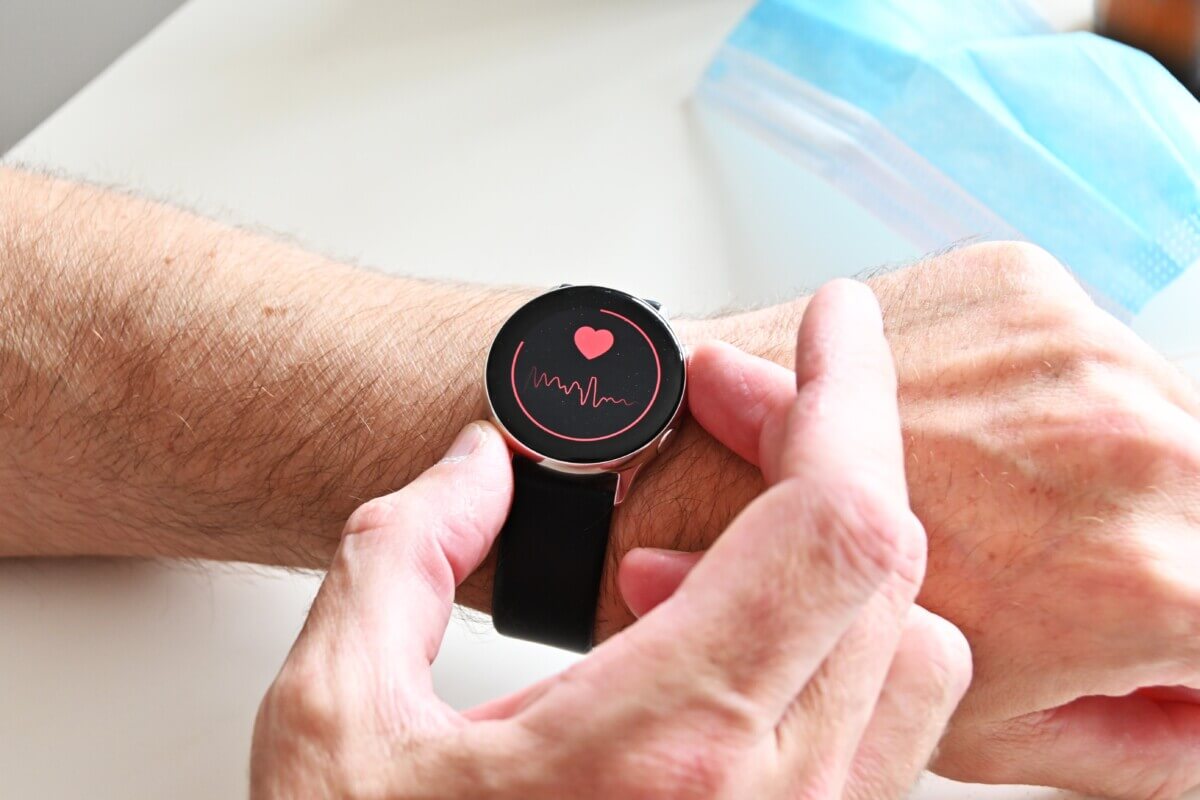
Concerns about privacy are stopping some people from being willing to share wearable tracker data with their doctor. (Dragon Images/Shutterstock)
In a nutshell
- Although 94% of fitness tracker users say they’re willing to share their data with healthcare providers, only 43% have actually done so.
- Privacy concerns, especially among people with chronic health conditions, are a major barrier to sharing wearable data during medical visits.
- Doctors often lack the tools and infrastructure to use fitness tracker data effectively, highlighting a missed opportunity in modern healthcare.
ADELAIDE, Australia — Millions of Americans strap on Apple Watches, Fitbits, and other fitness trackers every day, diligently monitoring their steps, heart rate, and sleep patterns. These devices generate a treasure trove of health data that could revolutionize how doctors treat patients, if only people would actually share it.
A new study from the University of South Australia reveals that while 94% of fitness tracker users say they’re willing to share their device data with healthcare providers, less than half have ever actually done so. Only 43% have directly shared their tracker information during medical appointments, despite the potential for this data to improve their care.
Published in the journal Healthcare, the research surveyed 447 current and former wearable activity tracker users across multiple countries to understand why there’s such a massive gap between good intentions and real-world behavior regarding health data sharing.
These numbers expose both an enormous opportunity and a fundamental problem in modern healthcare. Patients are increasingly taking charge of their own health monitoring through consumer devices, but this wealth of objective data isn’t making it into doctors’ offices where it could actually make a difference.
How This Impacts Healthcare
Traditional healthcare relies heavily on patients’ self-reported behaviors, such as how much they exercise, how well they sleep, and whether they’re taking their medications. But people are notoriously bad at accurately remembering and reporting these details. Fitness trackers, on the other hand, provide continuous, objective measurements that could give doctors a much clearer picture of their patients’ daily health behaviors.
The study found that people with chronic health conditions were more likely to have discussed or shared their tracker data with healthcare providers. Those patients typically have more frequent medical appointments and greater motivation to actively manage their health.
However, these same patients were also more likely to express concerns about sharing their data, creating a paradox where the people who could benefit most from data sharing are also the most worried about it.
Privacy Worries
Privacy emerged as the top concern among the 26% of participants who had reservations about sharing their tracker data. Only 10% of all participants cited privacy as a specific worry, but it was by far the most common concern mentioned.
Australian participants were significantly less likely to have shared their data with healthcare providers compared to Americans, while U.S. participants reported fewer privacy concerns overall. This suggests cultural attitudes toward health data sharing vary considerably, even among developed nations with similar healthcare systems.
People between 35 and 44 were more likely to have shared their tracker data than younger adults aged 18 to 24, while those aged 45 to 54 expressed the most concerns about data sharing. This pattern suggests that middle-aged adults may see the most immediate value in sharing health data, while older adults remain more cautious.
Researchers conducted their survey between February and May 2023, recruiting participants through Amazon Mechanical Turk and Facebook. They included adults who had used a fitness tracker within the past three years for at least one month, excluding those who only used smartphone apps without an actual wearable device.
The final sample was predominantly young (84% under 45), female (60%), and well-educated (75% had higher education qualifications). Most participants came from the United States (60%) or Australia (27%), with the remainder from 31 other countries.
Participants answered questions about whether they’d discussed or shared their tracker data with healthcare providers, their willingness to do so, and any concerns they had about such sharing. The survey also collected information about participants’ demographics, health status, and tracker usage patterns.
What People Actually Use These Devices For
Most participants used popular brands like Apple (45%), Fitbit (20%), and Garmin (20%). About 80% were current users, while 20% had stopped using their devices. Daily usage was common, with 66% using their trackers every day.
Most people reported that their fitness trackers actually helped them become more active. About 66% said they had either constantly increased their activity or increased and maintained higher activity levels since using their devices.
When participants did share data with healthcare providers, they most commonly did so through proprietary apps, verbally during appointments, or via direct messaging. The contexts usually involved tracking health metrics, setting goals, or discussing specific health concerns.

Many healthcare systems simply aren’t equipped to handle patient-generated data from consumer devices. Current fitness trackers often don’t meet healthcare systems’ stringent privacy and security requirements, and many doctors lack training on how to interpret and use this information effectively.
The researchers noted that developing secure data management solutions for wearable devices, including encryption or de-identification features, could help address privacy concerns and enable safer use of this data during clinical encounters.
The Missed Opportunity
The sheer volume of health data being generated but not utilized is overwhelming. The global wearable activity tracker market is valued at approximately $63 billion and projected to reach $352 billion by 2033. With roughly 20% of Australian adults and 39% of U.S. adults owning fitness trackers, there’s an enormous amount of objective health data being collected every day.
Unlike traditional medical data, which is collected sporadically during doctor visits, fitness trackers provide continuous monitoring. This real-time data could help doctors spot trends, adjust treatments, and provide more personalized care recommendations.
In order to implement tracker data effectively, we need to develop more secure data-sharing platforms, train healthcare providers on how to use tracker data effectively, and create clearer guidelines for when and how this data should be incorporated into clinical decision-making.
Patients are ready and willing to share their fitness tracker data with doctors, but the healthcare system isn’t ready to receive it. Bridging this gap could unlock significant improvements in how we monitor and manage health, but it will require investment in technology, training, and privacy protections to make it work.
Paper Summary
Methodology
Researchers conducted an international online survey from February to May 2023, recruiting participants through Amazon Mechanical Turk and Facebook. They included 447 adults aged 18 and older who had used a wearable activity tracker for at least one month within the past three years. Participants were excluded if they only used smartphone apps without physical devices or if their trackers didn’t measure physical activity. The survey asked about demographics, tracker usage patterns, experiences sharing data with healthcare providers, and willingness or concerns about data sharing. Statistical analysis used multivariate logistic regression to examine relationships between participant characteristics and data-sharing attitudes.
Results
Of 447 participants, 94% expressed willingness to share tracker data with healthcare providers, but only 47% had ever discussed their data with providers and 43% had directly shared it. About 26% had concerns about sharing, with privacy being the most common worry (cited by 10% of participants). People with chronic health conditions were more likely to both share data and express concerns. Geographic differences emerged, with Australian participants less likely to share data and U.S. participants reporting fewer privacy concerns. The sample was predominantly young (84% under 45), female (60%), well-educated (75% higher education), and from the U.S. (60%) or Australia (27%).
Limitations
Several limitations affected this study including potential self-selection bias since people interested in the topic may have been more likely to participate. The sample was not representative of the general population, being skewed toward younger, more educated, and tech-savvy individuals primarily from the U.S. and Australia. The survey design may have introduced recall bias, particularly among former tracker users who might not accurately remember past clinical encounters. Additionally, the model examining participant concerns had a low events-per-variable ratio, making those estimates less stable and requiring cautious interpretation.
Funding and Disclosures
The research received no external funding. The study was conducted in accordance with the Declaration of Helsinki and approved by the University of South Australia Human Research Ethics committee. The authors declared no conflicts of interest. Data from the study are available from the corresponding author upon reasonable request.
Publication Information
This study was published in the journal Healthcare, volume 13, issue 11, article number 1215, on May 22, 2025. The full citation is: Szeto, K.; Maher, C.; Curtis, R.G.; Singh, B.; Cain, T.; Beckett, D.; Ferguson, T. “User Experiences and Attitudes Toward Sharing Wearable Activity Tracker Data with Healthcare Providers: A Cross-Sectional Study.” The research was conducted by the Alliance for Research in Exercise, Nutrition and Activity at the University of South Australia.


