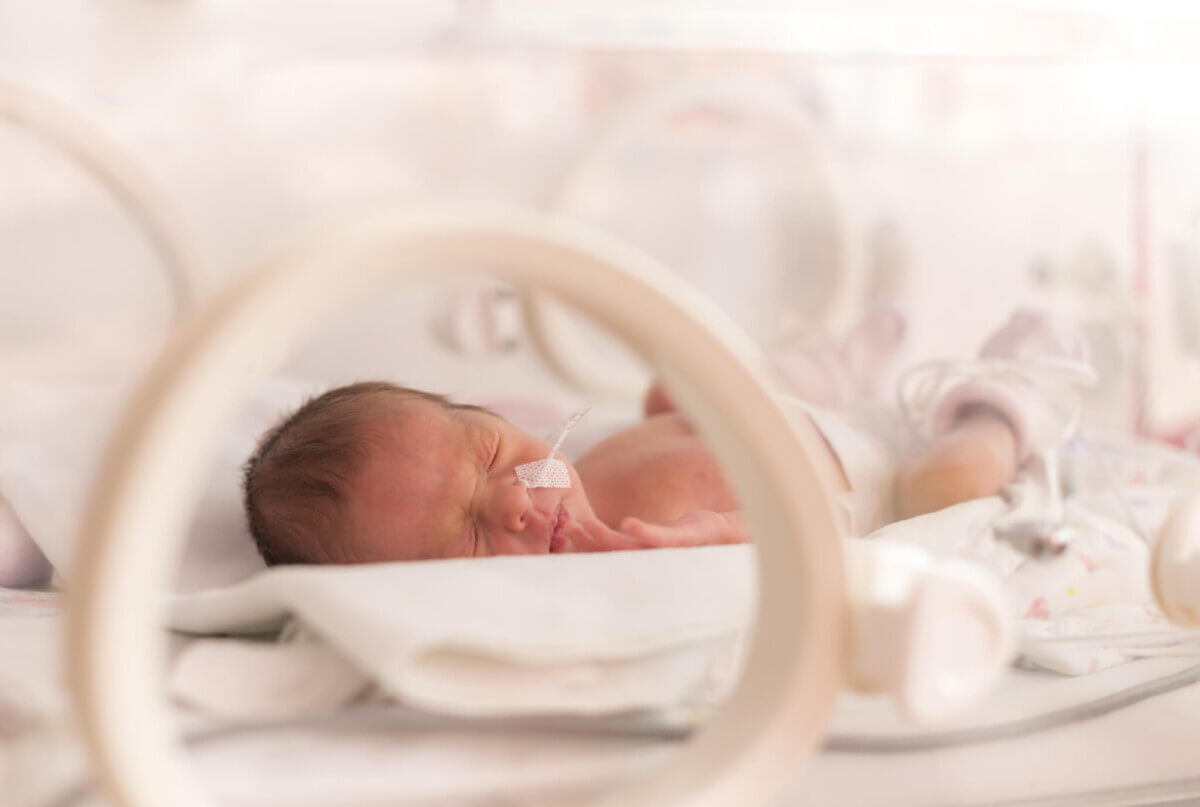
(© ondrooo - stock.adobe.com)
Regulators Banned a Plastic Chemical. Manufacturers Replaced It With One That May Be Just as Bad.
In A Nutshell
- A global analysis estimates that nearly 2 million premature births in 2018 were associated with DEHP, a chemical widely used in plastics, accounting for roughly 1 in 11 preterm births worldwide.
- DiNP, the compound manufacturers turned to after regulators restricted DEHP, was linked to a nearly identical toll in the same model, raising questions about whether swapping one plastic chemical for another reduces risk at all.
- The burden falls hardest on the Middle East, South Asia, and Africa, regions with high baseline rates of preterm birth, growing plastics industries, and weaker regulatory protections.
- Researchers estimate the financial cost of plastic-associated preterm birth mortality reached as high as hundreds of billions of dollars in 2018 alone.
Every year, millions of babies arrive early. Preterm birth, delivery before 37 weeks of pregnancy, is the leading cause of death in children under five globally. Now a first-of-its-kind global model estimates how much of that toll may be linked to chemicals in the plastic products people use every day.
Researchers at New York University Grossman School of Medicine, writing in eClinicalMedicine, estimate that nearly 2 million premature births in 2018 were associated with exposure to DEHP, a chemical widely used to make plastics soft and flexible. That figure translates to roughly 1 in 11 preterm births worldwide, along with more than 74,000 newborn deaths and 6.69 million years of life lost.
Then comes the twist. DEHP has been restricted by regulators in the United States, Europe, Canada, and several other countries after research linked it to reproductive harm. In response, manufacturers largely replaced it with a chemically similar compound called DiNP.
According to this model, that swap may not have helped. DiNP was associated with an estimated 1.88 million preterm births, 64,000 neonatal deaths, and 5.77 million years of life lost in the same year, numbers nearly identical to DEHP. “Regulating chemicals individually as compared to a class risks delaying progress in curbing health burdens,” the authors wrote.
How Plastic Chemicals Trigger Preterm Birth
DEHP and DiNP belong to a family of synthetic chemicals called phthalates, added to plastics to make them durable and pliable. Because they are not chemically bonded to plastic, they leach out over time and turn up in food packaging, medical tubing, vinyl flooring, personal care products, and a wide range of other common items. People absorb them through food, air, and skin contact, and phthalates have been detected in the urine of pregnant women, in amniotic fluid, and in umbilical cord blood.
Phthalates are what scientists call endocrine disruptors, meaning they interfere with the hormonal signals that guide fetal development. Studies suggest they may trigger inflammation, disrupt how the placenta forms, and damage cells in the reproductive system, each of which researchers have independently linked to preterm labor.

How Researchers Calculated the Preterm Birth Burden
To build the estimate, the research team pulled data from 203 countries and territories. Exposure figures for North America and Europe came from national health databases; for regions with less available data, including Africa, South Asia, and the Middle East, researchers drew on a review of prior monitoring studies. Risk estimates came from a large U.S.-based study that tracked phthalate levels in the urine of pregnant women and followed their birth outcomes.
That risk data was then applied to exposure levels across each region to calculate what share of preterm births could theoretically be attributed to phthalate exposure. Across all regions, DEHP exposure was associated with an estimated 1.97 million preterm births in 2018, nearly 9% of all preterm births recorded that year. Since roughly 98% of DEHP use is tied to the plastics industry, approximately 1.93 million of those cases were connected directly to plastics.
Who Bears the Preterm Birth Burden
Per this model, the toll falls overwhelmingly on the developing world. The Middle East and South Asia combined account for more than 54% of DEHP-linked preterm births globally, with Africa accounting for roughly 26%. High-income regions with stricter regulations showed a fraction of those figures: Canada was associated with approximately 1,480 DEHP-linked preterm births, Australia with roughly 2,190, and the United States with an estimated 16,700.
Sub-Saharan Africa and South Asia already have the world’s highest baseline rates of preterm birth, meaning phthalate exposure piles onto a risk that is already severe. Plastic production and industrial use are growing rapidly in many of those regions, often with fewer regulatory guardrails than in wealthier countries. Africa’s share of DEHP-linked deaths, roughly 34% of the global total, outpaced its share of preterm birth cases, about 26%. That gap reflects what happens when premature babies arrive in settings with fewer resources to keep them alive. Researchers describe it as a double burden, high chemical exposure layered on top of already-high neonatal mortality.
Researchers also put a price on the damage. Using standard approaches to value lost life-years, the projected cost of plastic-associated preterm birth mortality reached as high as hundreds of billions of dollars in 2018 alone, alongside a separately estimated $3.74 trillion in costs linked to DEHP-associated cardiovascular mortality. Taken together, those figures suggest that much of the health cost is borne by governments and families rather than producers.
Timing gives the DiNP numbers added weight. Many manufacturers had already moved away from DEHP in response to regulatory pressure, yet the analysis found that DiNP now exceeds DEHP in prevalence in some parts of the world. A binding global agreement on plastics remains elusive, and with manufacturers continuing to substitute one restricted phthalate for another, this analysis suggests what that approach could cost in babies born too soon.
Disclaimer: This article is based on findings from a disease burden model and reflects statistical associations, not proven cause-and-effect relationships. Phthalate exposure is one of many factors associated with preterm birth. Readers with questions about chemical exposure during pregnancy should speak with a qualified healthcare provider.
Paper Notes
Limitations
This analysis relied on a disease burden model rather than direct clinical observation, so the findings reflect statistical associations rather than established causation. Exposure estimates for regions outside North America and Europe were derived from a meta-analysis rather than direct biomonitoring data, which may introduce uncertainty in those regional figures. DiNP data had substantially more missingness than DEHP data, approximately 29% versus 3%, and Australian DiNP data could not be imputed at all, excluding that region from DiNP analysis. Hazard ratios used to calculate risk were drawn primarily from a U.S. study population, which may not fully reflect risk patterns in other parts of the world. The model used exposure estimates from the general population rather than from pregnant individuals specifically, since pregnancy-specific global data were not widely available. Additional factors that influence preterm birth risk, including access to prenatal care, preexisting health conditions, and co-exposure to other chemicals such as microplastics and bisphenols, were not incorporated. The authors also note that previous U.S.-based analyses estimated higher DEHP-attributable preterm birth counts than this model produced, a difference likely attributable to methodological variation.
Funding and Disclosures
Funding for this study was provided by Beyond Petrochemicals and the National Institutes of Health (grant number P2CES033423). Funding sources had no role in study design, data collection, analysis, interpretation, writing, or the decision to submit for publication. Lead author Leonardo Trasande, MD, MPP, has received royalties or licenses from Houghton Mifflin Harcourt, Audible, Paidos, and Kobunsha, and travel support from the Endocrine Society, the World Health Organization, the United Nations Environment Programme, Japan’s Environment and Health Ministries, and the American Academy of Pediatrics, all unrelated to this study. He has also served in leadership or fiduciary roles at Beautycounter, Ahimsa, Grassroots Environmental Education, and Footprint, also unrelated. Remaining authors declared no competing interests.
Publication Details
Title: “Preterm birth attributable to exposure to chemicals used in plastic materials: a global estimate” | Authors: Sara Hyman, Jonathan Acevedo, and Leonardo Trasande, Department of Paediatrics, NYU Grossman School of Medicine, New York, NY. Trasande also holds appointments in the Department of Population Health, NYU Grossman School of Medicine, and the Wagner School of Public Service, New York University. | Journal: eClinicalMedicine (The Lancet group) | DOI: https://doi.org/10.1016/j.eclinm.2026.103842 | Published: 2026


