(Credit: SergeyDV/Shutterstock)
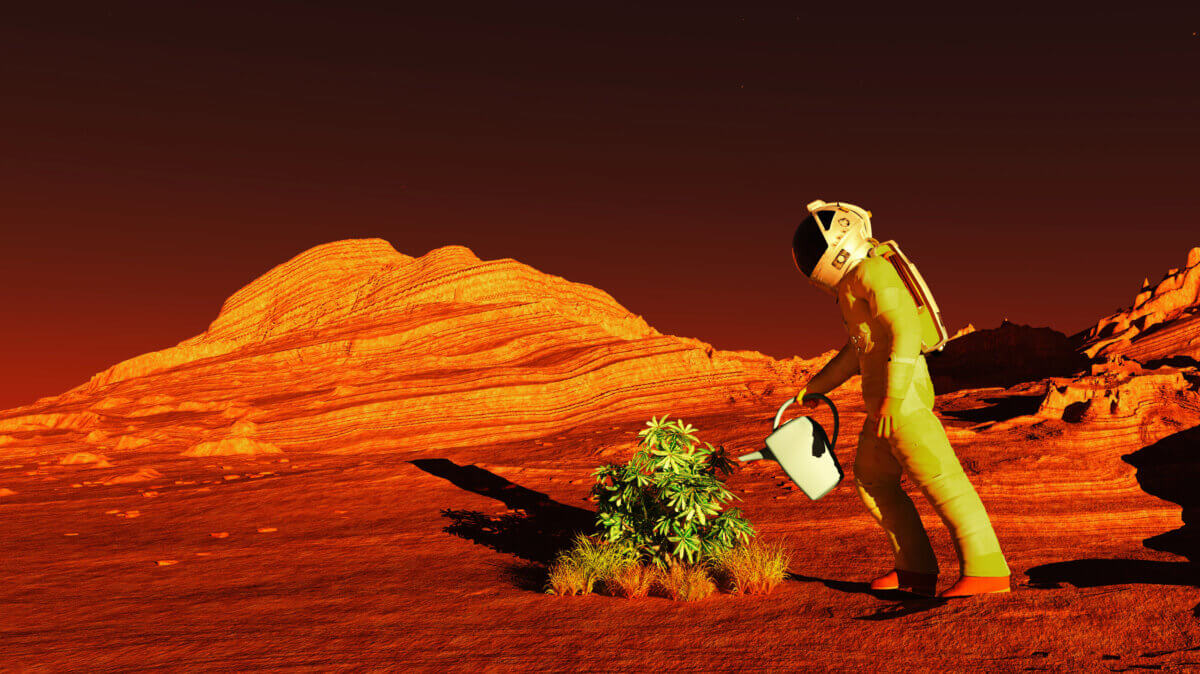
URUMQI, China — As humans wait to find out who will be the first person to land on Mars, a new study may have identified the first plant that will help colonize Mars. It’s not some hybrid flower or genetically engineered organism — it’s moss! Specifically, researchers say a desert-dwelling moss called Syntrichia caninervis can survive extreme conditions that would kill most other plants.
In a new study published in The Innovation, researchers put this tiny but tough plant through a gauntlet of tests simulating the harsh Martian environment. The results suggest S. caninervis could potentially grow on Mars, paving the way for future human settlements.
“Our study shows that the environmental resilience of S. caninervis is superior to that of some of highly stress-tolerant microorganisms and tardigrades,” according to the research team, who include ecologists Daoyuan Zhang and Yuanming Zhang and botanist Tingyun Kuang of the Chinese Academy of Sciences, in a media release. “S. caninervis is a promising candidate pioneer plant for colonizing extraterrestrial environments, laying the foundation for building biologically sustainable human habitats beyond Earth.”
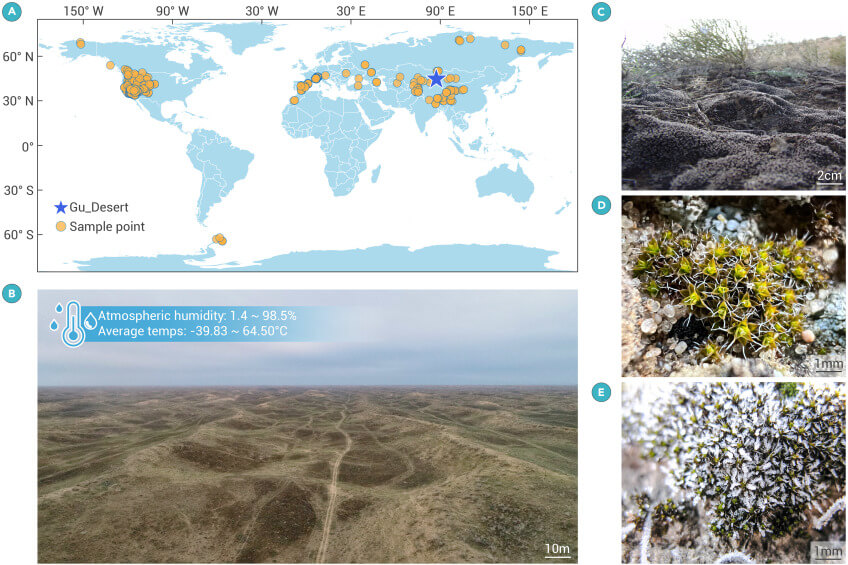
S. caninervis is found in some of Earth’s most inhospitable places, including scorching deserts and frigid mountain peaks. It forms crusty mats on the soil surface, helping to prevent erosion and retain precious water in arid regions.
The researchers subjected the moss to a battery of extreme conditions in the lab. They found it could lose over 98% of its water content and spring back to life within seconds of being rehydrated. It survived being frozen at -112°F for five years. Perhaps most impressively, it withstood radiation levels 2,000 times higher than what’s lethal to humans.
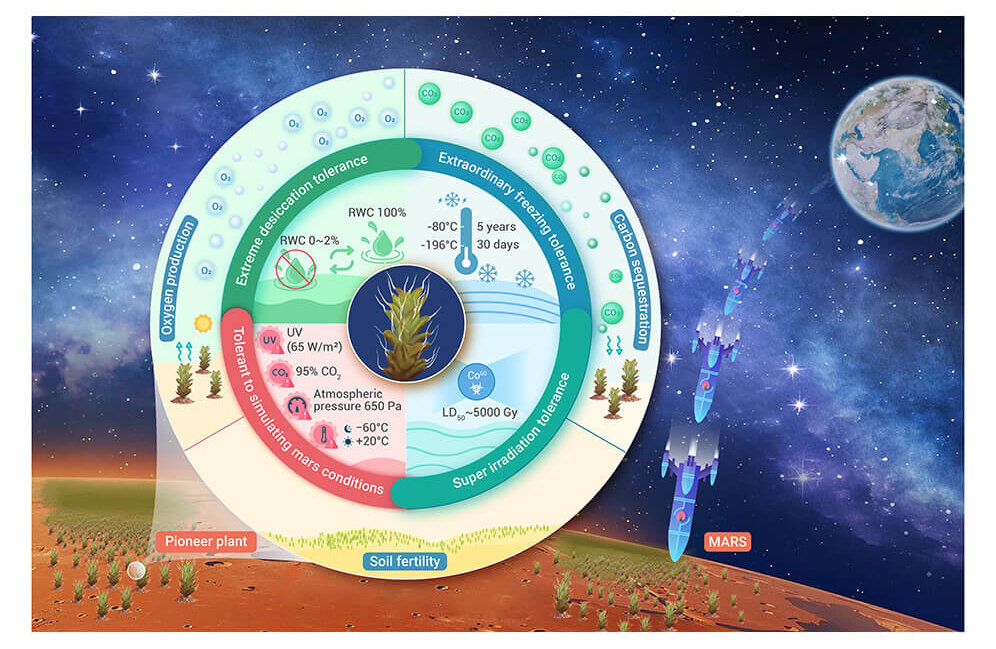
Finally, the team placed S. caninervis in a special chamber simulating multiple aspects of the Martian environment simultaneously – including low atmospheric pressure, extreme temperature swings, and intense UV radiation. The hardy moss survived up to a week in these Mars-like conditions.
“Our results indicate that S. caninervis is among the most radiation-tolerant organisms known,” the researchers write.
Those adaptations include tightly overlapping leaves that conserve water, and hair-like structures on the leaf tips that reflect excess sunlight. At the cellular level, the moss can rapidly shut down its metabolism when conditions are unfavorable, then quickly reactivate when things improve.
While no plant could survive indefinitely on the Martian surface as-is, S. caninervis could potentially grow in sheltered microhabitats or in greenhouse structures with some environmental controls. As a “pioneer species,” it could help transform the alien Martian landscape into something more hospitable for other organisms.
“Although there is still a long way to go to create self-sufficient habitats on other planets, we demonstrated the great potential of S. caninervis as a pioneer plant for growth on Mars,” the researchers conclude. “Looking to the future, we expect that this promising moss could be brought to Mars or the Moon to further test the possibility of plant colonization and growth in outer space.”
Of course, considerable technological hurdles remain before we can seriously contemplate Martian moss gardens. But this research highlights how Earth’s most resilient organisms might one day help us colonize other worlds. The first Martian settlers may find an unlikely ally in the humble moss.
Paper Summary
Methodology
The researchers conducted a series of experiments to test S. caninervis’s tolerance to extreme conditions. They measured how quickly the moss could recover from severe dehydration by tracking its water content and photosynthetic activity. For freezing tolerance, they stored moss samples at ultra-low temperatures for extended periods, then assessed their ability to regrow.
Radiation resistance was tested by exposing samples to increasing doses of gamma radiation. Finally, they placed moss in a special simulation chamber that recreated multiple aspects of the Martian environment simultaneously.
Key Results
S. caninervis demonstrated remarkable resilience across all tests. It recovered full photosynthetic capacity within minutes of rehydration after losing 98% of its water. It survived five years of storage at -80°C and one month in liquid nitrogen (-196°C). It withstood radiation doses up to 5,000 Gy – about 2,000 times the lethal dose for humans. In simulated Martian conditions, it survived for up to 7 days and was able to regrow afterwards.
Study Limitations
While impressive, these results don’t guarantee S. caninervis could thrive long-term on Mars. The simulation tests were relatively short (up to 7 days) compared to the timespan needed for colonization. The moss would likely require some form of environmental protection (e.g., greenhouses) to survive indefinitely. Additionally, introducing Earth organisms to Mars raises planetary protection concerns that would need to be carefully addressed.
Discussion & Takeaways
This study demonstrates that S. caninervis is among the most stress-tolerant plants known, with potential applications for space exploration. Its ability to withstand multiple extreme conditions simultaneously makes it a promising candidate for early Mars colonization efforts. The moss could potentially help transform the Martian environment by producing oxygen, retaining moisture, and building up organic matter in the soil.
However, significant technological challenges remain before such applications become feasible. This research also provides insights into the limits of terrestrial life, which could inform the search for life on other planets. Overall, the study highlights how Earth’s hardiest organisms might play a crucial role in humanity’s future beyond our home planet.


