
(© alonesdj - stock.adobe.com)
GUILDFORD, United Kingdom — Maybe there could be a future on Mars after all. Scientists from the University of Surrey in the United Kingdom have developed a groundbreaking eco-friendly paint that not only captures carbon dioxide (CO2) but also produces oxygen — which could potentially help humans live on the Red Planet. Named “Green Living Paint,” this creation utilizes a bacterium known as Chroococcidiopsis cubana, commonly found in harsh desert conditions and renowned for its ability to thrive with minimal water.
Biocoatings, the heart of this eco-paint, are a unique type of water-based paint that encapsulates live bacteria within its layers. These coatings have a multitude of applications, from carbon capture to acting as bioreactors and biosensors.
“With the increase in greenhouse gases, particularly CO2, in the atmosphere and concerns about water shortages due to rising global temperatures, we need innovative, environmentally friendly, and sustainable materials,” says Dr. Suzie Hingley-Wilson, a senior lecturer in bacteriology at the University of Surrey, in a university release. “Mechanically robust, ready-to-use biocoatings, or ‘living paints,’ could help meet these challenges by reducing water consumption in typically water-intensive bioreactor-based processes.”
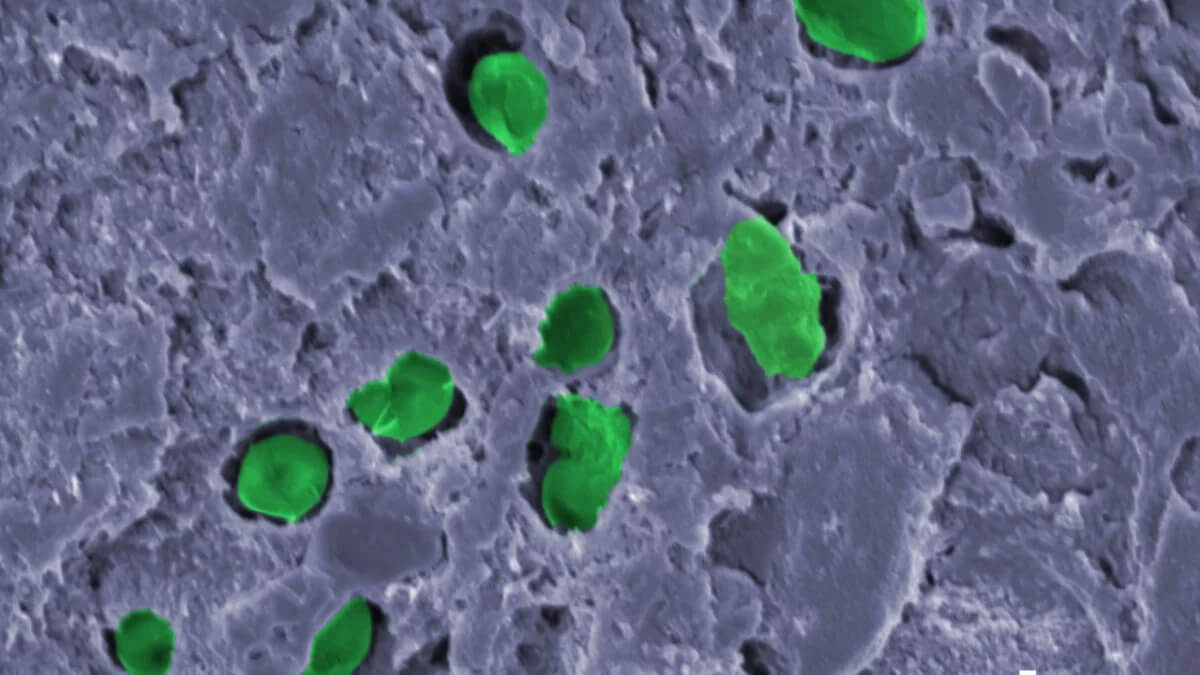
To test the potential of Chroococcidiopsis cubana as a biocoating, researchers immobilized these resilient bacteria within a robust biocoating made from polymer particles in water. After thorough drying and rehydration, they found that the bacteria within the biocoating could produce up to 0.4 grams of oxygen per gram of biomass per day while efficiently capturing CO2. Continuous oxygen measurements indicated that the bacteria maintained their activity levels consistently for over a month.
In a striking contrast, similar experiments were conducted using the bacterium Synechocystis sp., which is typically found in freshwater environments. Unlike its desert counterpart, this bacterium failed to produce oxygen within the biocoating.
“The photosynthetic Chroococcidiopsis have an extraordinary ability to survive in extreme environments, like droughts and after high levels of UV radiation exposure,” says study lead author Simone Krings, a former postgraduate researcher in the Department of Microbial Sciences at the University of Surrey. “This makes them potential candidates for Mars colonization.”
Joseph Keddie, professor of soft matter physics at the University of Surrey, expressed gratitude for the research grant from the Leverhulme Trust that enabled this interdisciplinary project.
“We envision our biocoatings contributing to a more sustainable future, aligning perfectly with the vision of our Institute for Sustainability, where both Dr Hingley-Wilson and I are fellows,” notes Keddie.
The study is published in the journal Microbiology Spectrum.


