(© New Africa - stock.adobe.com)
2 in 5 Respondents Admit They’d Be Willing To Eat Their Dog’s Food
In A Nutshell
- In a survey of 2,000 American dog owners, 45% rated their dog’s food as higher quality than their own meals, and 49% said they pay more attention to their dog’s diet than their own.
- More than half (56%) feed their dog off their own plate at least a few times a week, and 52% cooked a meal from scratch for their dog in the past month.
- Four in ten owners said they would try their dog’s food themselves, though 60% could name only one or two of its ingredients.
Plenty of people skip lunch, reheat last night’s leftovers, or call a handful of crackers dinner. Their dogs, meanwhile, might be getting a freshly cooked meal and a careful read of the ingredient label. A new survey suggests that in a lot of American households, dog owners believe the family dog is eating better than the humans who feed it.
Nearly half of dog owners, 45%, rated their dog’s food as higher quality than their own meals. Almost the same share, 49%, admitted they pay more attention to their dog’s diet and health than they do to their own. For nearly half of owners, in other words, feeding the dog may get more attention than feeding themselves.
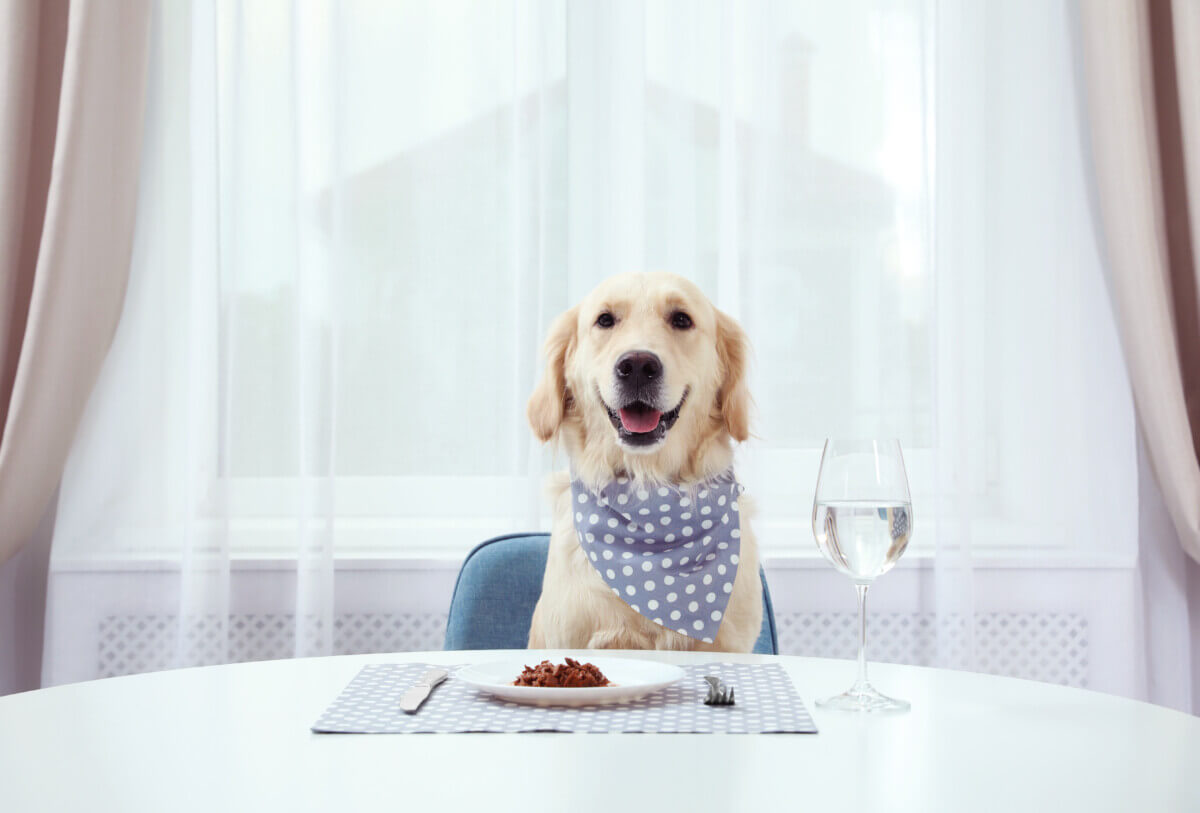
Commissioned by The Pets Table and conducted by Talker Research, the survey of 2,000 American dog owners paints a picture of pets moving from the food bowl on the floor to something closer to a seat at the table. More than half of respondents, 52%, said they had cooked a meal from scratch specifically for their dog within the past month.
Blended pantries and dog food off the family plate
Sharing food with a dog is no longer a once-in-a-while treat that happens under the dinner table. More than half of dog owners, 56%, said they feed their dog straight off their own plate at least a few times a week. Of those, 28% do it daily and another 28% a few times weekly. Sharing from the owner’s plate has become a regular habit for many respondents.
That blurring of the line between human food and dog food shows up in the pantry too. Roughly half of respondents, 51%, said they keep certain human foods around specifically because they are safe for their dog. A slightly larger group, 55%, said they stock ingredients meant for both the owner and the dog to share, a sign that many kitchens are turning into a single shared pantry rather than two separate supply chains.
Dovas Zakas, co-founder of The Pets Table, framed the shift as a change in how owners define what belongs in the bowl. “We’re seeing a real shift in how people think about feeding their dogs. It’s less ‘pet food’ and more ‘what’s good enough for my family.’ Owners want the same quality on their dog’s plate as their own,” Zakas said.
Would owners eat the dog food themselves? Many say yes
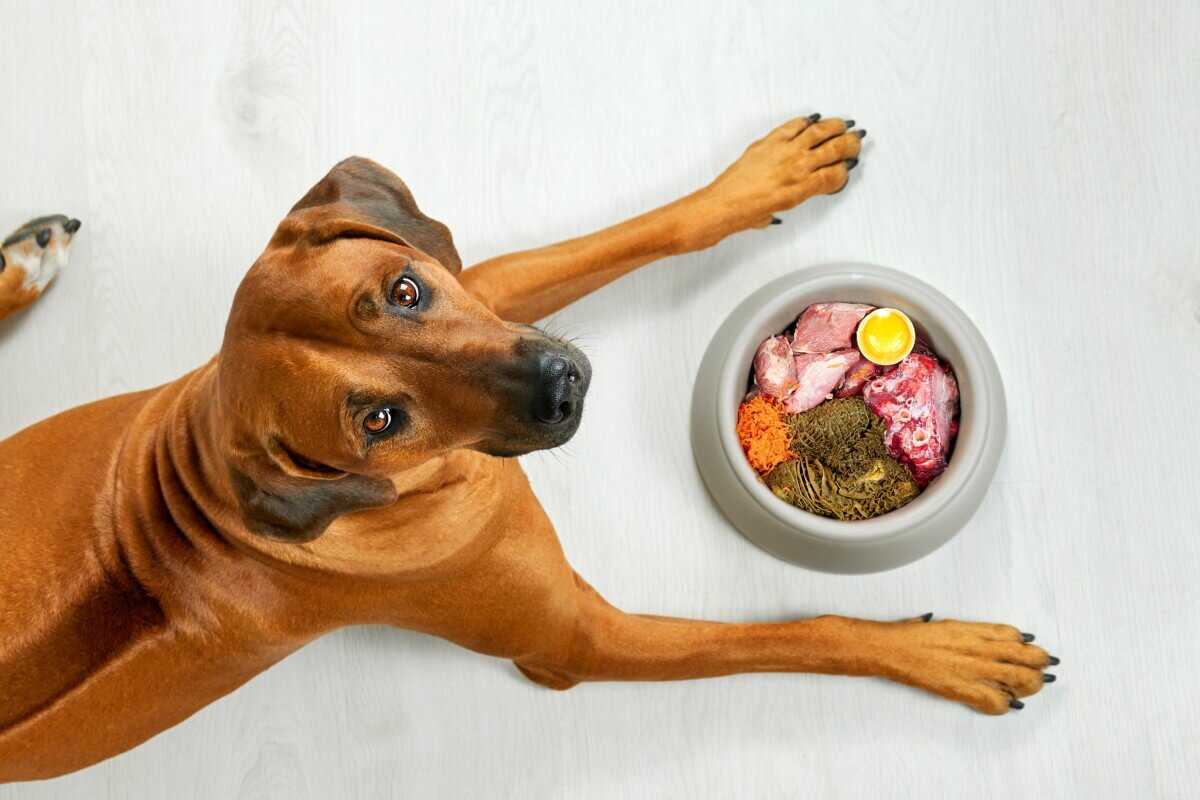
If pets are eating this well, a fair number of owners are curious enough to find out what they are missing. Four in ten dog owners said they would try their dog’s food, with 23% willing to dig in without hesitation and another 16% saying they would sample it “only once, out of curiosity.” Just 25% ruled it out entirely, saying they would “never try it in a million years.”
That willingness makes more sense against a backdrop where owners rate the food so highly. When someone believes the bowl on the floor holds better quality than what is on their own plate, tasting it starts to look less strange and more like reasonable research.
Trust in the food, however, does not always come with knowledge of what is actually in it. Even as owners rank their dog’s meals above their own, 60% admitted they could name only one or two ingredients in that food, at most. Confidence in the quality runs well ahead of familiarity with the contents. Rating a food as top-notch, it seems, does not require knowing much about what goes into it.
Longtime dog owners scored better on food safety
A similar gap appears around safety. About 70% of respondents felt “very” to “extremely” confident that they know which human foods are safe for dogs. Yet a quarter of all owners, 25%, said they had already fed their dog something they later learned was unsafe. Feeling sure and being right, it turns out, are not the same thing.
Length of ownership tracked closely with getting the answers right. Among owners with at least a decade of experience, 90% correctly identified chocolate as unsafe, 76% flagged grapes, 67% recognized onions as harmful and 59% named garlic. Newer owners lagged far behind, with just 53% recognizing chocolate as unsafe, 30% catching grapes, 30% flagging onions and 34% identifying garlic. Common kitchen items that veterans treat as obvious hazards slip past many first-time owners.
Length of ownership also tracks with what owners see as the main obstacle to feeding their dog well. Among people who had owned a dog for less than a year, 47% cited convenience as a barrier to feeding their dog the way they would truly prefer. Among those with 10 or more years, only 18% said the same. Convenience appears to be a bigger hurdle for newer owners than for veterans.
For all the home cooking and shared plates, most owners still want feeding their dog well to be easier. Half of respondents said they would feed their dogs exclusively human-grade fresh food if it were as convenient as regular kibble. For many respondents, convenience appears to be part of what is holding them back.
Zakas pointed to that same tension between doing right by a dog and getting through a busy day. “I hear from dog parents all the time who want to do right by their dog but feel overwhelmed trying to figure out what’s safe, what’s healthy, and what fits into their day. That’s the problem we set out to solve: convenience and health really don’t have to be at odds,” Zakas said.
Across the survey, the numbers describe a country where the family dog has been promoted. Owners cook for their pets, share their plates, stock a common pantry, and rate the results higher than their own dinners. Whether that says more about how well people are feeding their dogs or how little they are feeding themselves is a question the survey leaves owners to chew on.
Survey Notes
Methodology
Talker Research surveyed 2,000 American dog owners who have access to the internet. Commissioned by The Pets Table, the survey was administered and conducted online by Talker Research between July 23 and July 28, 2026. Talker Research publishes its complete methodology as part of AAPOR’s Transparency Initiative.
About the Findings
Results reflect self-reported responses from dog owners and were not independently verified against household behavior or veterinary records. As a commissioned survey rather than a peer-reviewed study, figures describe attitudes and reported habits among the 2,000 respondents and may not represent all American dog owners. Funding came from The Pets Table, a fresh dog food company that holds a commercial interest in findings favoring home-style and human-grade feeding.


