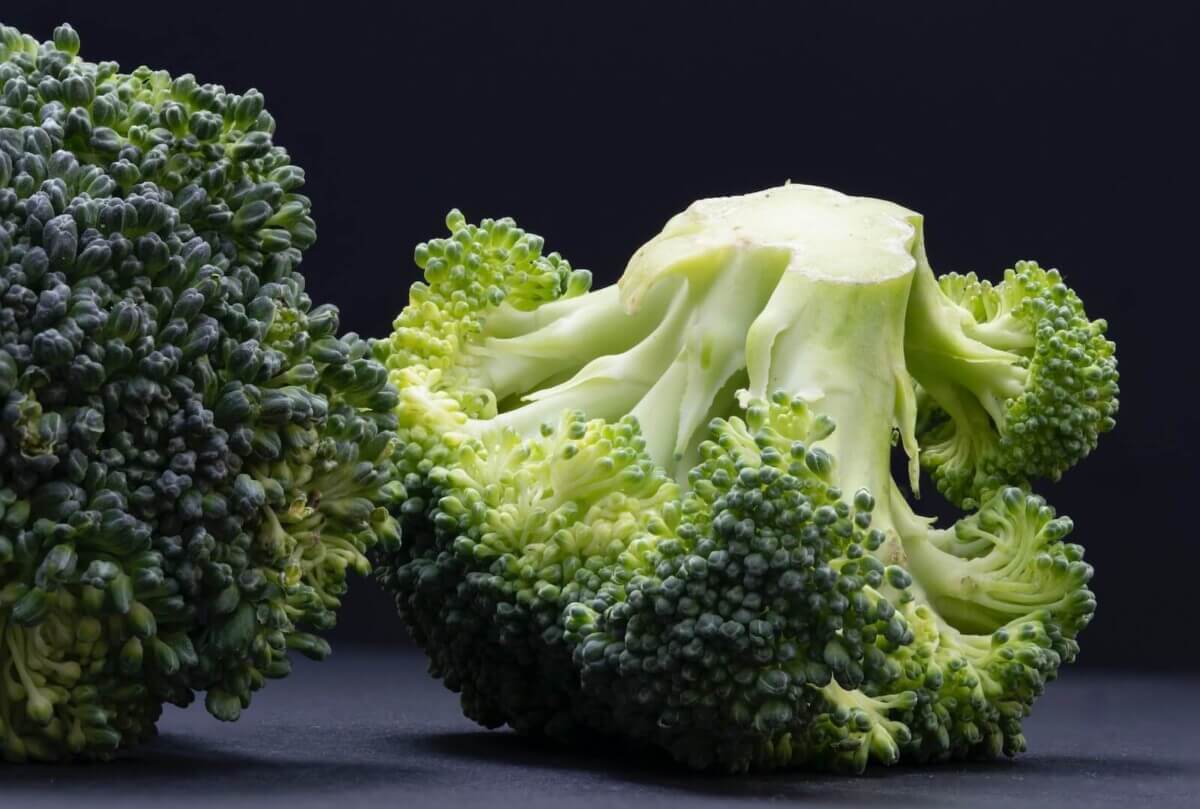
Broccoli (Photo by Miles Peacock on Unsplash)
Could East Coast Farms Save America’s Broccoli From California’s Drought?
In A Nutshell
- California grows more than 90% of America’s fresh broccoli, and worsening drought is putting that concentration at risk.
- A Cornell study built a computer model to see how the broccoli supply chain would respond to moderate and severe drought in California.
- Under severe drought, the model found that shifting more production to Eastern states could lower total supply chain costs by about 1.5%.
- Real-world hurdles like farm labor, storage, and packing capacity could still slow how fast that shift actually happens.
Most heads of broccoli on a grocery store shelf in New York, Boston, or Charlotte made a long journey west. California produces more than 90% of America’s fresh broccoli, a concentration that has held up for decades. Now, as droughts across California grow more frequent and severe, researchers are asking a pointed question: what happens to the broccoli supply chain when nearly all of it depends on one increasingly dry state?
A new study published in the journal Agribusiness by researchers at Cornell University offers a modeled answer, plus practical ideas for getting ahead of the problem before drought strains an already concentrated supply chain further. Using 20 years of shipping records and drought data, the team built a computer model simulating how the broccoli supply chain might respond to moderate or severe drought in California. The results suggest something both worrying and hopeful: East Coast farms could pick up meaningful slack, and under severe drought, the model found that shifting more production eastward could lower combined production and transportation costs overall.
Broccoli is no small crop. It generated more than $1 billion in value in 2024, according to federal agriculture statistics cited in the study, and demand keeps climbing nationally. Yet the land and water needed to grow it at scale in California face growing constraints. Since 2000, prolonged droughts have cut into the state’s crop yields, and broccoli yields and planted acreage there have both declined. California’s broccoli farms depend heavily on irrigation, leaving the crop especially exposed whenever reservoirs run low.
Drought Cuts California’s Broccoli Supply Chain Shipments by 20%
Cornell’s Bingyan Dai, Miguel Gomez, and Harry Kaiser, all from the university’s Charles H. Dyson School of Applied Economics and Management, gathered monthly broccoli shipment records from California spanning 2000 to 2019. They matched those records against a federal drought index tracking dryness across California’s major broccoli growing counties, letting them see how shipping volumes dropped as drought worsened.
From there, they built a model calculating the lowest cost way to move broccoli from farms to consumers nationwide. It accounted for 14 supply sources: California, Arizona, imports from Mexico and Canada, and 10 Eastern states: Maine, New York, New Jersey, Pennsylvania, Virginia, Maryland, North Carolina, South Carolina, Georgia, and Florida. Demand was modeled across 33 metro areas on the East Coast, California, and Arizona, calibrated to 2022 data, the most recent year with complete federal agriculture figures.
Researchers ran the model under baseline, moderate, and severe drought conditions. Severe drought means most of the growing region is experiencing serious drought at once. Under those conditions, California’s annual shipments averaged about 20% lower than normal historically, though individual years varied widely. Moderate drought brought shipments down roughly 9%.

Shifting the Broccoli Supply Chain East Could Lower Costs by 1.5%
Results shifted by season, a detail that matters a lot for food that spoils quickly. In spring and summer, California normally supplies the bulk of East Coast demand, about 87% and 83%. Under severe drought, that dropped to roughly 74% and 69%, with states like Florida, Georgia, and New York stepping in to cover the difference.
Fall showed the sharpest shift. Under severe drought, Eastern states’ share of broccoli supplied to their own regional markets rose from about 21% at baseline to more than 41%, as the model routed production toward whichever nearby farms could grow and ship broccoli most cheaply.
Perhaps the most counterintuitive result concerns cost. Growing broccoli in the East costs more per unit than growing it in California, so expanding Eastern production raises production costs. But those higher costs were more than offset by savings from shorter trucking distances. Under severe drought, total annual supply chain costs, production plus transportation combined, fell by about 1.5%. Fall transportation costs dropped nearly 20%, and annual food miles, the average distance broccoli traveled to reach Eastern consumers, fell by roughly 20% for the year, with an even bigger drop in fall, exceeding 31%.
Eastern Broccoli Expansion Faces Real World Limits
Researchers are careful about what their model cannot capture. It assumes broccoli from every source is identical in quality and shelf life, though buyers may prefer certain origins or Eastern grown broccoli may handle differently. It also leaves out bottlenecks like farm labor, refrigerated storage, and packing equipment needed at scale, constraints that could slow real expansion.
Because the model holds import supply from Mexico and Canada fixed across drought scenarios, it may overstate winter resilience if those imports were also disrupted. Its drought scenarios are built from historical patterns between 2000 and 2019, which may not perfectly predict future droughts if farming technology or water management shifts substantially.
There’s also a fairness problem built into the solution. Gains from moving production closer to Eastern consumers would flow mainly to distributors and buyers through lower shipping costs, while upfront costs and risks of building Eastern broccoli farms fall on growers and regional firms. That mismatch means the shift is unlikely without outside support. Researchers point to long term contracts, regional procurement programs, and public investment in cold storage and packing infrastructure as ways to close the gap.
America’s appetite for broccoli keeps growing even as California’s water supply grows less dependable. This study makes a clear case that, in the model, East Coast farms have the potential to carry more of the load season by season, at lower overall cost than the industry might expect. Whether that potential becomes reality depends on growers, retailers, and policymakers building the infrastructure to make it happen.
Disclaimer: This article is based on findings from a peer-reviewed study that uses a computer optimization model to project how the U.S. broccoli supply chain might respond to drought. Modeled results are projections, not guarantees, and real-world outcomes may differ as farming practices, water policy, and market conditions change.
Paper Notes
Limitations
Several important limitations are worth keeping in mind. The model treats broccoli from all growing regions as an identical product, ignoring potential differences in quality, shelf life, and buyer preferences that could affect real world sourcing decisions. It also does not model practical constraints on Eastern expansion such as harvesting labor availability, refrigerated storage capacity, and cold chain logistics infrastructure, all of which could slow how quickly Eastern production can actually scale up. The drought scenarios are built from historical shipment and drought data from 2000 to 2019 and represent an associational relationship rather than a proven cause and effect link between drought conditions and shipping volumes. Import supply from Mexico and Canada is held constant across drought scenarios, which may overstate system resilience during the winter months when imports are especially important. The model also does not account for how expanding broccoli acreage in Eastern states might affect what other crops are grown there, though the study notes that the predicted broccoli acreage increases appear small relative to total vegetable acreage in each state. The authors describe the expansion outcomes as a medium run potential rather than a near term prediction, given the investment and coordination lead times involved.
Funding and Disclosures
This research was funded by the USDA’s National Institute of Food and Agriculture through the Specialty Crops Research Initiative under award number 2016-51181-25402. The funders had no role in study design, data collection and analysis, the decision to publish, or preparation of the manuscript. The authors declare no conflicts of interest.
Publication Details
Authors: Bingyan Dai, Miguel I. Gómez, and Harry M. Kaiser, Charles H. Dyson School of Applied Economics and Management, Cornell University, Ithaca, New York. | Paper Title: “Reconfiguring Fresh Produce Supply Chains in Response to Drought Risk: Evidence From the U.S. Broccoli Market” | Journal: Agribusiness (published by Wiley Periodicals LLC) | Year: 2026 | DOI: 10.1002/agr.70114


