
The two bacteria that cause bacterial constipation, seen under an electron microscope. Left: Bacteroides thetaiotaomicron (Top: Transmission Electron Microscopy (TEM) image; Bottom: Scanning Electron Microscopy (SEM) image; Right: Akkermansia muciniphila (Top: TEM; Bottom: SEM). They work in sequence to destroy the intestinal mucus coating that keeps stool moist. (Credit: Tomonari Hamaguchi, Nagoya University)
In A Nutshell
- Researchers in Japan identified two common gut bacteria, Akkermansia muciniphila and Bacteroides thetaiotaomicron, that work together to thin the mucus layer lining the colon, leaving stool dry and difficult to pass.
- The researchers propose calling this “bacterial constipation” and suggest that measuring fecal levels of A. muciniphila, particularly alongside certain partner bacteria, could one day help identify patients whose constipation has a microbial cause.
- Neither bacterium causes constipation alone. The problem appears when both are elevated at the same time, a pattern found in patients with Parkinson’s disease and chronic idiopathic constipation.
- In mouse studies, deleting a single gene in one of the bacteria reversed constipation almost entirely, pointing to bacterial sulfatase activity as a potential treatment target.
For the millions of people whose constipation persists despite every laxative, fiber supplement, and dietary overhaul they throw at it, a new study may finally offer an explanation. Researchers have proposed what they call a new form of constipation, “bacterial constipation,” driven by a specific partnership between two common gut microbes, and they believe a simple fecal test could one day identify who has it.
The research, published in the journal Gut Microbes, centers on a finding that sounds almost unfair: two bacteria that are harmless on their own can team up to thin the protective mucus layer that keeps stool soft and moving. When both are elevated at the same time, the gut’s natural lubricant gets picked apart, leaving behind dry, hard, infrequent stools with no obvious cause.
Most treatments for chronic constipation target gut nerves or bowel contractions, the physical mechanics of moving waste through the intestine. Bacterial constipation, as the researchers describe it, operates through an entirely different mechanism, which would explain why so many patients get so little relief from standard care.
Two Gut Bacteria Are Teaming Up to Cause Constipation
The two bacteria at the center of the study, Akkermansia muciniphila and Bacteroides thetaiotaomicron, are everyday inhabitants of the human colon. Neither is a pathogen. Neither causes illness on its own. Together, though, they can quietly dismantle a critical layer of protection.
That layer is mucin, a thick, slippery gel that coats the intestinal wall. It retains water, lubricates stool, and keeps the gut lining from coming into direct contact with the bacteria living inside it. Colonic mucin carries chemical tags called terminal sulfates, and most bacteria cannot get past them. A. muciniphila feeds on mucin but lacks the enzyme needed to remove those tags, so the colonic variety is essentially off-limits without outside help.
B. thetaiotaomicron provides that help. It produces sulfatases, enzymes that strip the sulfate tags away, opening the mucin up for A. muciniphila to break down. Over time, the mucus layer thins, moisture drains from stool, and bowel movements slow. The researchers described this as “cooperative degradation of colonic mucins by sulfatases and glycosylases by two commensal bacteria,” one that “reduces lubrication and induces fecal dehydration, leading to the development of constipation.”

Constipation Patients Showed Elevated Levels of Both Bacteria
To see whether this bacterial pattern appeared in real patients, the research team analyzed fecal samples from 231 people with Parkinson’s disease, 54 patients with chronic idiopathic constipation (a diagnosis given when no secondary cause can be found), and 147 healthy controls. Both bacteria were elevated in the constipated groups. Fecal mucin levels were also lower across all three groups in patients who reported fewer than three bowel movements per week.
Parkinson’s disease entered the picture because patients with that condition often develop severe, treatment-resistant constipation up to 10 to 20 years before motor symptoms appear. Standard dopamine-based treatments do almost nothing for it. The fact that the same bacterial signature appeared in both Parkinson’s patients and those with no neurological diagnosis suggests the mechanism operates independently of the underlying disease, which is exactly what a new disease category would require.
Statistical analysis backed that up: mucin depletion tracked more closely with constipation itself than with any specific diagnosis, which strengthens the case that bacterial constipation is its own entity.
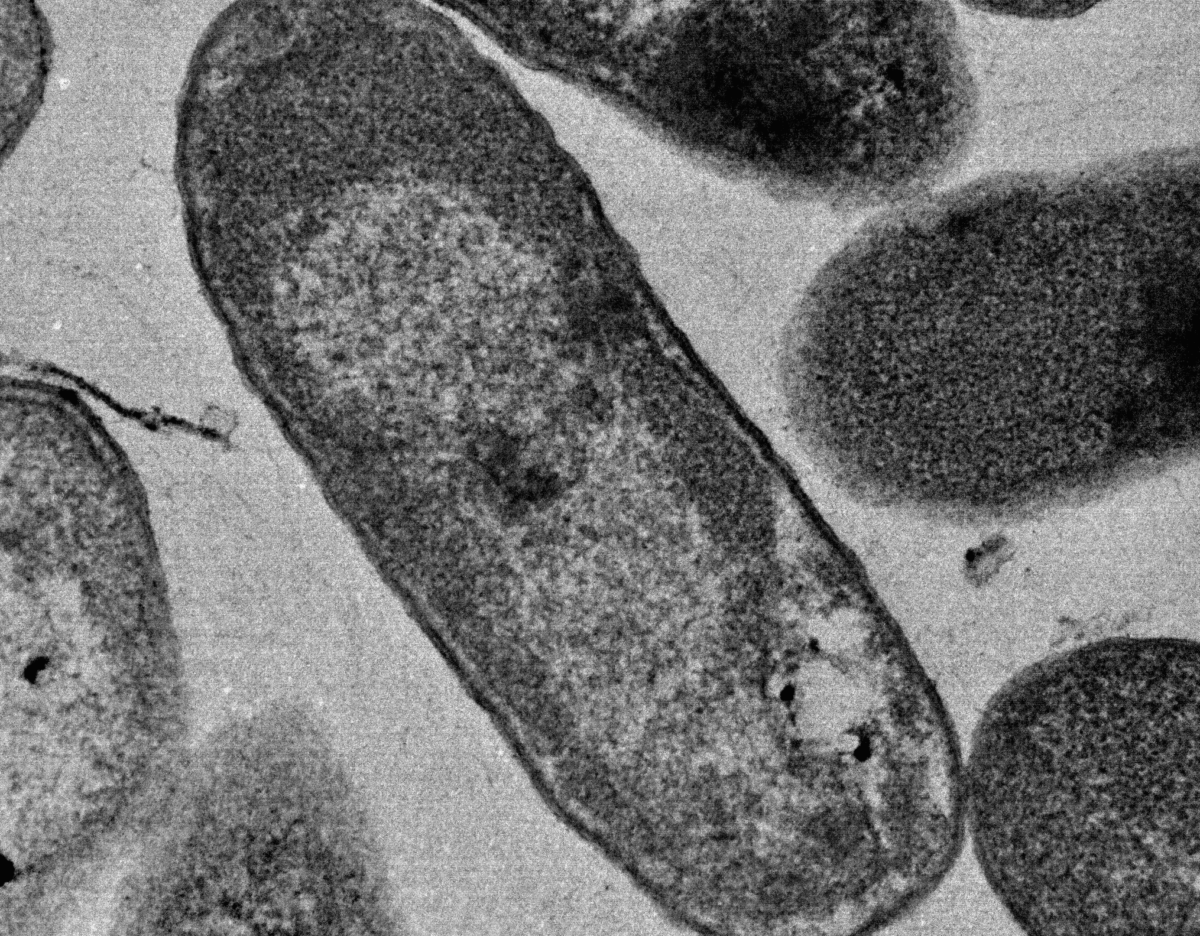
Tomonari Hamaguchi, Nagoya University)
A Single Deleted Gene Reversed Constipation in Mice
To confirm the mechanism, the team used germ-free mice, animals raised without any gut bacteria at all. Mice given only one of the two bacteria showed no signs of constipation. Mice given both developed it: fewer stool pellets, drier feces, lower mucin levels, and a gut lining that was becoming more permeable. Food intake, water intake, and urine output stayed the same in all groups, which ruled out dehydration as the cause.
The cleanest result came from a genetic experiment. The researchers engineered a version of B. thetaiotaomicron with a single gene deleted, the one responsible for activating its sulfatases. Without functioning sulfatases, B. thetaiotaomicron could no longer unlock mucin for its partner. Mice colonized with this modified bacterium alongside A. muciniphila showed almost no constipation. Stool output recovered, moisture content rose, and mucin levels came back. Taking out one gene in one bacterium broke the whole cycle.

Tomonari Hamaguchi, Nagoya University)
What a Bacterial Constipation Diagnosis Could Mean for Patients
The researchers propose that measuring fecal levels of A. muciniphila, especially when found alongside certain partner bacteria, could help identify patients in this new category. If levels are elevated and sulfatase-producing bacteria are present alongside it, the conditions for bacterial constipation exist. As a treatment path, they point to phage therapies (which use viruses to target specific bacteria) or small-molecule drugs designed to block bacterial sulfatase activity, either of which would aim to preserve the mucus layer without relying on laxatives.
As the authors put it: “Fecal abundance of A. muciniphila may serve as a biomarker for identifying such patients. In addition, phage-mediated bacterial suppression or small molecules to block bacterial sulfatases may preserve colonic mucus integrity, improve stool hydration, and alleviate constipation in these patients.”
That would be a meaningful shift. For people who have spent years managing a condition their doctors can explain but not reliably fix, a named mechanism and a targeted treatment approach offers something that fiber and stool softeners never could: an actual answer.
Disclaimer: This article is based on a single peer-reviewed study and does not constitute medical advice. Bacterial constipation is a proposed concept and has not been adopted as an official clinical diagnosis. Readers experiencing chronic constipation or changes in bowel habits should consult a licensed healthcare provider.
Paper Notes
Limitations
Sample sizes were unequal across groups, with far more Parkinson’s patients than chronic idiopathic constipation patients, which may have affected some statistical comparisons. The study assumed that a meaningful fraction of patients in both conditions share a bacterial origin for their constipation, but other unidentified bacteria may contribute to the same process. Human fecal samples could not be examined under a microscope because the material lost structural integrity during home-to-lab transport, so mucin was estimated through chemical analysis of glycans rather than direct imaging. Direct measurement of sulfatase activity in human stool was not feasible due to current technical limitations, leaving that specific link inferential in human subjects.
Funding and Disclosures
This research was supported by the Japan Agency for Medical Research and Development (AMED), grant JP23ek0109678, and the Japan Society for the Promotion of Science (JSPS), grants JP22K15394, JP22K17343, JP23H02794, JP23K18273, and JP23K06412. Additional funding came from the Hori Sciences and Arts Foundation and the Yakult Bio-Science Foundation. The authors declared no conflicts of interest.
Publication Details
Authors: Tomonari Hamaguchi, Noriaki Gibo, Misuzu Ohara, Mikako Ito, Tomoyuki Ogura, Jun-Ichi Takeda, Hiroshi Nishiwaki, Fei Zhao, Ryo Kinoshita-Daitoku, Masashi Hattori, Koji Nonogaki, Tetsuya Maeda, Kenichi Kashihara, Yoshio Tsuboi, Masaaki Hirayama, Mitsuhiro Fujishiro, Hiroki Kawashima, and Kinji Ohno. Affiliated institutions include Nagoya University Graduate School of Medicine, Iwate Medical University, Juntendo University, and the University of Tokyo, among others. | Journal: Gut Microbes, Volume 18, Issue 1, Article 2596809 (2026) | Title: “Bacterial constipation: Mucin-degrading intestinal commensal bacteria cause constipation” | DOI: 10.1080/19490976.2025.2596809 | Published online: February 18, 2026


