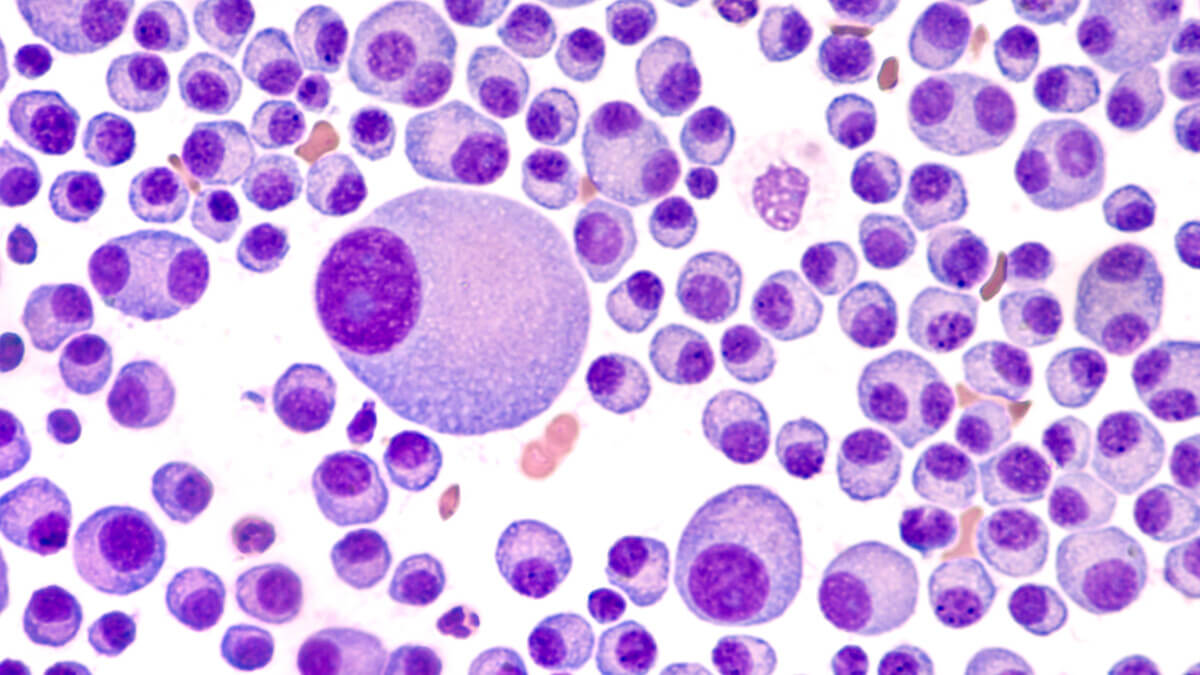
Bone marrow aspirate cytology of multiple myeloma, a type of bone marrow cancer of malignant plasma cells. (© David A Litman - stock.adobe.com)
PHILADELPHIA, Pa. — An over-the-counter immune-boosting drug called teclistamab is now showing serious promise as a treatment for aggressive and persistent cases of multiple myeloma. Administered via injection, researchers at the University of Pennsylvania report the drug evokes “safe and elicit responses in a majority of patients with relapsed or refractory multiple myeloma.”
The disease is a form of cancer that develops in the white blood cells called plasma cells. These cancerous cells build up in the bone marrow and crowd out healthy blood cells. A group of 22 multiple myeloma patients received an injection of teclistamab. The majority (74%) responded positively to the treatment.
So, what exactly is teclistamab? The drug works as a bispecific antibody activating T-cells that then go on to attack multiple myeloma cells.
“These are exciting results for multiple myeloma patients,” says Dr. Alfred L. Garfall, an assistant professor of Medicine in the division of Hematology-Oncology, in a university release. “To have a single, subcutaneous-injectable drug that is effective in patients whose disease had become resistant to so many prior therapies, is well tolerated, and often yields long-lasting responses is a promising achievement.”
Is teclistamab safe for multiple myeloma patients?
During the first phase of these trials, 65 patients received a teclistamab injection and 84 underwent a teclistamab infusion. Both groups reported typical side effects seen with immune drugs. For example, 53 percent of the injection group and 57 percent of the infusion group experienced grade 1-2 cytokine release syndrome.
Other common side effects included anemia (55%), neutropenia (57%), thrombocytopenia (40%), and leukopenia (28%). The team considered all of these adverse effects as manageable and usually went away within two weeks.
For patients dealing with persistent multiple myeloma, these findings will represent a new hope. Currently, many of these patients face a tough prognosis after exhausting available treatment options. The average survival time for these cases is eight months.
“Teclistamab takes a similar approach to cellular therapies, which genetically engineer a patient’s T cells to find and destroy cancer cells,” Garfall concludes. “Except, this is jumpstarting the immune system with a single, off-the-shelf drug that takes 15 minutes to administer, in contrast to cellular therapies that take several weeks to manufacture for each patient.”
This research was presented at the annual American Society of Hematology & Exposition Meeting on Dec. 5.


