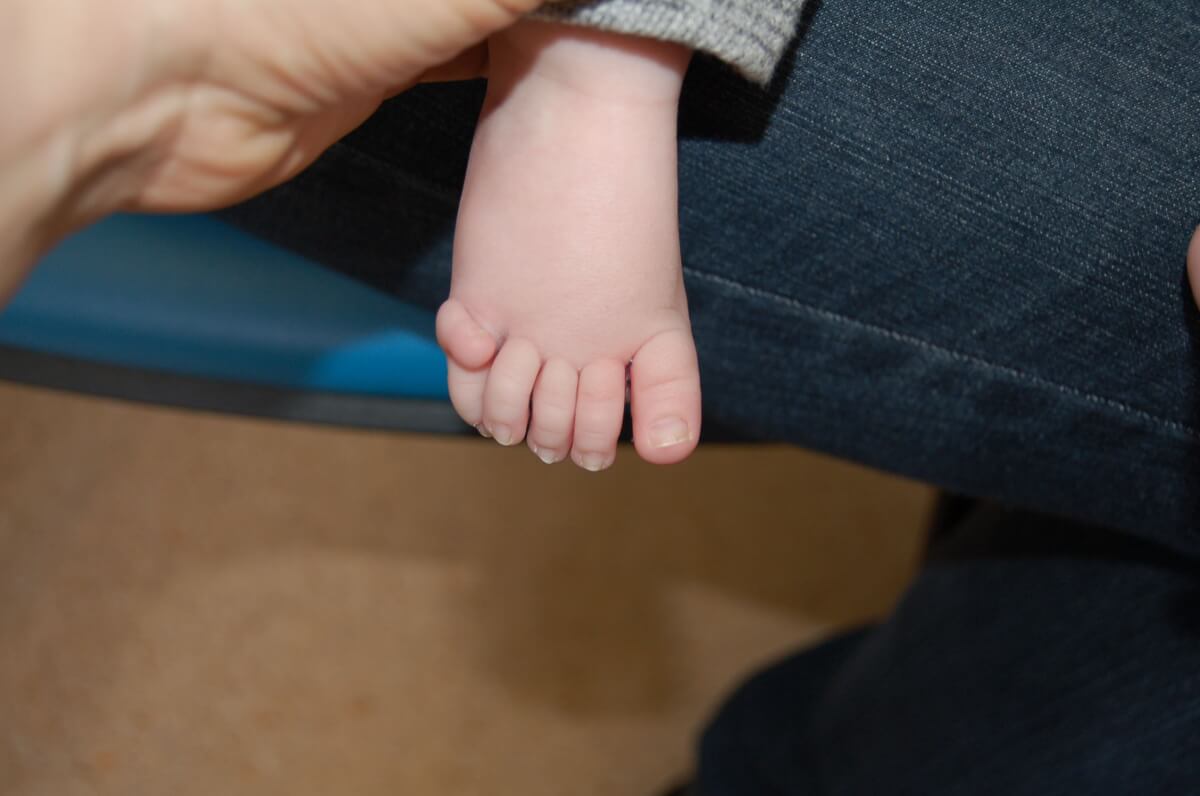
The foot of one of the children in the study, showing an extra toe. (CREDIT: University of Leeds)
???? Key Findings:
- A rare disorder causes infants to have extra fingers and toes at birth
- The unnamed condition affects the MAX gene
- Scientists have identified a molecule that may treat the genetic disorder
LEEDS, United Kingdom — A rare genetic disorder is causing infants to be born with additional fingers or toes. Scientists at the University of Leeds say this discovery, which has yet to be named, centers around a mutation in the MAX gene, marking the first time such a connection has been made. The mutation also causes a number of developmental challenges, including symptoms related to ongoing brain growth, like autism.
This rare condition, characterized not only by polydactyly (the medical term for having extra digits) but also by macrocephaly (an unusually large head) and delayed eye development leading to early vision issues, represents a significant stride in genetic research. The study detailed the genetic analysis of three individuals who exhibited these uncommon traits, revealing a shared mutation responsible for their conditions.
The research team, led by Dr. James Poulter of the University of Leeds, Dr. Pierre Lavigne from Université de Sherbrooke in Québec, and Professor Helen Firth at Cambridge University, has not only identified this genetic anomaly but has also pinpointed a molecule that shows promise in treating some of the neurological symptoms associated with the disorder. While the potential treatment appears promising, further investigation is necessary before doctors can consider it a viable therapeutic option.
“Currently there are no treatments for these patients. This means that our research into rare conditions is not only important to help us understand them better, but also to identify potential ways to treat them,” says Dr. Poulter in a media release.
“In this case, we found a drug that is already in clinical trials for another disorder — meaning we could fast track this for these patients if our research finds the drug reverses some of the effects of the mutation. It also means that other patients with a similar combination of features can be tested to see if they have the same variant we have identified in our study,” Dr. Poulter continues.
The significance of this research extends beyond the immediate discovery, underscoring the importance of interdisciplinary efforts in understanding and treating rare diseases. For families navigating the long and often uncertain diagnostic journey, these findings offer not only answers but also the possibility of life-changing treatments.
“Finding out the impact of the mutation on the function of MAX is the first step towards the development of a treatment for these children,” notes Dr. Lavigne.
Professor Firth celebrated the continued success of the Deciphering Developmental Disorders (DDD) study, which played a crucial role in this discovery.
“It’s exciting that in 2024, we’re still making new discoveries,” says Prof. Firth. “This new finding is a diagnosis for our DDD patients. Furthermore, this publication will now enable other children worldwide to be diagnosed with this novel disorder.“
Funded by a UK Research & Innovation Future Leaders Fellowship and a Canadian Institutes of Health Research project grant, this study utilized data from the DDD study and involved collaborations with several institutions, including the Leeds Teaching Hospitals Trust and the NHS Wales’ All Wales Medical Genomics Service.
The research team is now setting its sights on identifying more patients with MAX mutations to deepen their understanding of the disorder and refine potential treatments.
The study is published in the American Journal of Human Genetics.


