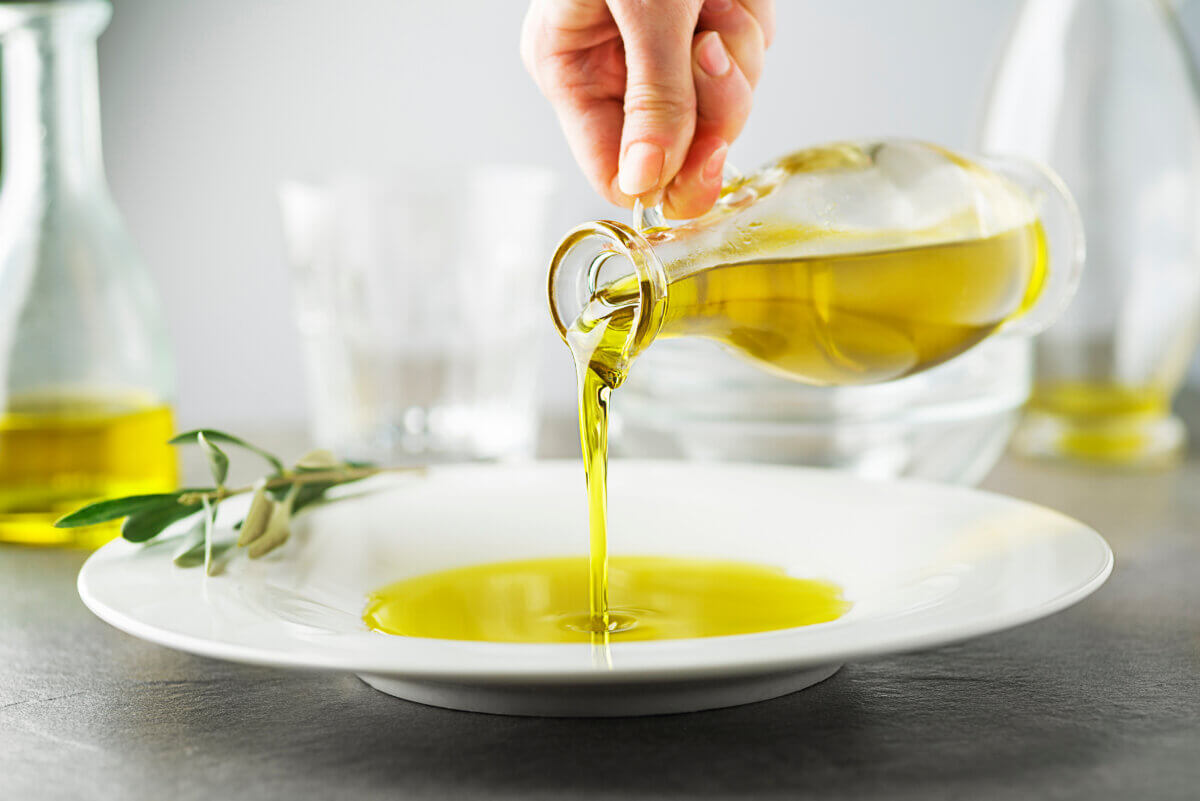
(Credit: DUSAN ZIDAR/Shutterstock)
GAINESVILLE, Fla. — In a surprising twist that may shake up conventional wisdom about heart-healthy diets, new research suggests that consuming less extra virgin olive oil (EVOO) – not more – could be better for your cardiovascular health.
This finding comes from a recent study published in the Journal of the American Heart Association, which compared the effects of high and low EVOO intake within a whole-food, plant-based vegan diet.
For years, the Mediterranean diet, rich in extra virgin olive oil, has been touted as a gold standard for heart health. Meanwhile, low-fat, plant-based diets have also shown promise in reducing cardiovascular disease risk. But which approach reigns supreme when it comes to lowering cholesterol and improving other heart health markers? That’s the question researchers at the University of Florida set out to answer with their “Recipe for Heart Health” trial.
The study involved 40 adults at risk for heart disease, with an average age of 64 and an average body mass index of 32, placing most participants in the obese category. The majority were well-educated, non-Hispanic White women. Participants were randomly assigned to follow two different diets for four weeks each: a whole-food, plant-based vegan diet with either high extra virgin olive oil intake (4 tablespoons daily) or low EVOO intake (less than 1 teaspoon daily).
Both diets eliminated animal products and heavily processed foods, focusing instead on whole plant foods like fruits, vegetables, legumes, whole grains, nuts, and seeds. The key difference was the amount of extra virgin olive oil consumed. During the high EVOO phase, participants got about 48% of their calories from fat, compared to 32% during the low phase.
Here’s where things get interesting: both diets led to improvements in participants’ cholesterol levels and other heart health markers compared to their baseline diets. However, the low EVOO diet appeared to have a slight edge, particularly when it came to lowering LDL cholesterol (often called “bad” cholesterol).
When participants started with the low extra virgin olive oil diet and then switched to higher amounts, their LDL cholesterol levels actually increased. On the flip side, those who began with high EVOO and then decreased their intake saw their LDL levels continue to drop.
This pattern held true for other important markers of heart health as well. Glucose levels, total cholesterol, and HDL cholesterol (often called “good” cholesterol) all increased when participants switched from low to high extra virgin olive oil intake.
These findings suggest that while both diets can improve heart health compared to a typical Western diet, consuming less extra virgin olive oil within a plant-based eating pattern may offer additional benefits for those at high risk of heart disease.
“This study suggested that while a whole-food, plant-based diet with or without extra virgin olive oil may lower heart disease risk factors compared to a standard omnivorous diet, a lower amount of extra virgin olive oil while incorporating other whole forms of dietary fat may yield greater risk reductions,” adds Andrea Krenek, the study’s lead author and a registered dietitian nutritionist with the UF/IFAS food science and human nutrition department, in a media release.
It’s important to note that this doesn’t mean extra virgin olive oil is inherently unhealthy. Rather, the study highlights the potential benefits of obtaining fats from whole plant sources like nuts, seeds, and avocados rather than refined oils – even one as revered as EVOO.
The researchers speculate that the fiber and intact phytochemicals found in whole plant foods may play a crucial role in cholesterol reduction. These components are often lost or diminished when oils are extracted from their whole food sources.
Another interesting finding was that participants lost more weight on the low EVOO diet, despite similar calorie intakes between the two phases. This suggests that the type and quality of calories consumed may be just as important as the quantity when it comes to weight management and heart health.
While these results are intriguing, they also raise new questions. How might these findings apply to people following other dietary patterns? Could the benefits of low EVOO intake persist over longer periods? And how do these results fit into the broader body of research on Mediterranean diets and heart health?
As we await further research, this study offers food for thought for anyone looking to optimize their diet for heart health. It suggests that when it comes to fats, whole plant foods may have an edge over even the most celebrated of cooking oils.
Paper Summary
Methodology
The study used a crossover design, meaning each participant tried both diets. They were randomly assigned to start with either the high or low EVOO diet for 4 weeks, followed by a 1-week “washout” period, and then 4 weeks on the other diet. Throughout the study, participants attended weekly virtual cooking classes to learn how to prepare meals that fit their assigned diet. They also completed food diaries and underwent blood tests and body measurements at the beginning and end of each diet phase.
Key Results
Both diets improved participants’ heart health markers compared to their baseline diets. However, the low EVOO diet led to greater reductions in LDL cholesterol, total cholesterol, and glucose levels. When participants switched from low to high EVOO intake, these markers tended to increase. The opposite occurred when switching from high to low EVOO intake. Participants also lost more weight on the low EVOO diet.
Study Limitations
The study was relatively small (40 participants) and short-term (9 weeks total). Most participants were well-educated white women, which limits how broadly the results can be applied. The study relied on self-reported food intake, which can be inaccurate. Additionally, the benefits seen might be due to the overall change to a plant-based diet rather than specifically the amount of EVOO consumed.
Discussion & Takeaways
This study challenges the idea that more EVOO is always better for heart health. It suggests that within a whole-food, plant-based diet, consuming fats from whole food sources (like nuts and avocados) may be more beneficial than consuming refined oils, even EVOO. However, both diets improved heart health markers compared to participants’ baseline diets, reinforcing the benefits of plant-based eating patterns. The researchers emphasize the importance of considering the overall dietary pattern and food quality, not just individual nutrients or foods.
Funding & Disclosures
The study was funded by the Purjes Foundation, Dr. Monica Aggarwal Prevention Foundation, and the University of Florida Food Science and Human Nutrition Department. Dr. Aggarwal reported participating in pharmaceutical research, speaking engagements, and receiving book royalties outside of this study. Several researchers are supported by the National Institutes of Health. The funders had no role in designing or conducting the study, analyzing data, or deciding to publish the results.


