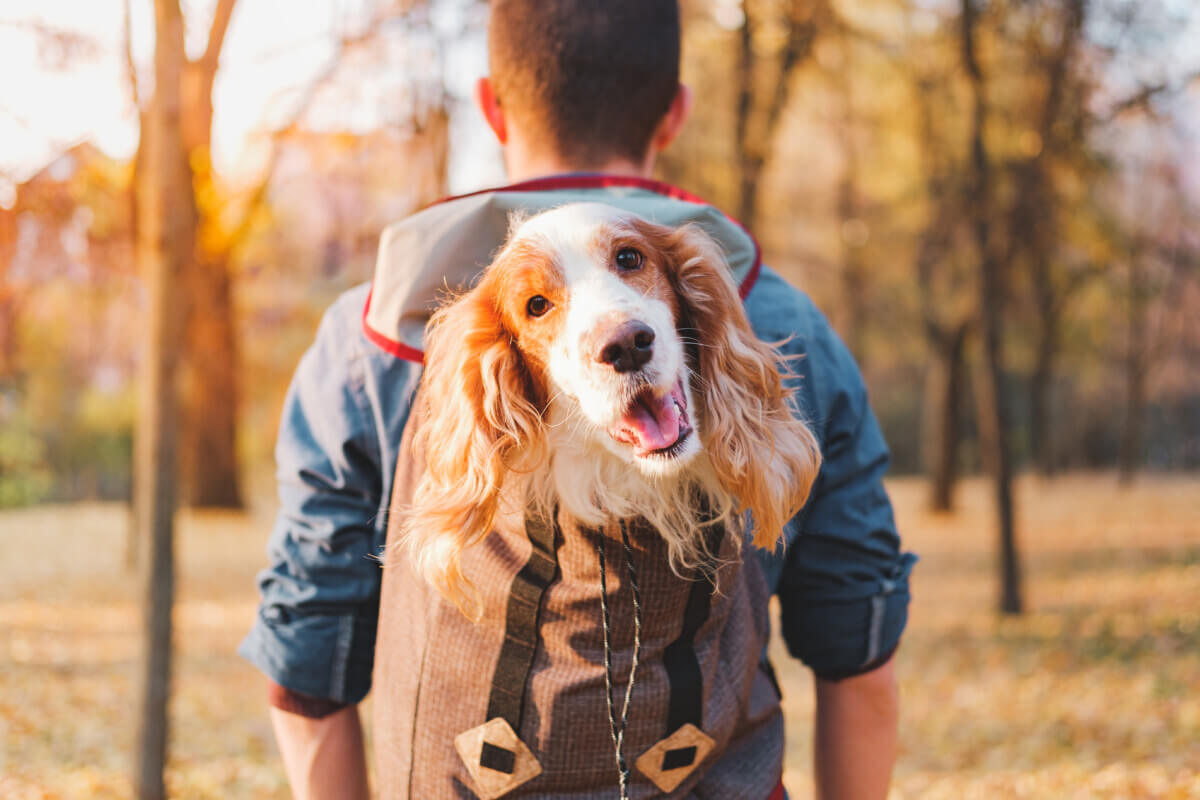
An owner carrying their dog in a backpack (Photo by Aleksey Boyko on Shutterstock)
NEW YORK — Do you know what to do if an emergency strikes your city? Perhaps more importantly, do you know what to do with your furry friends? Just one-third of Americans have a disaster preparedness plan that includes their pet, according to new research.
The survey of 2,000 dog or cat owners revealed half of Americans (52%) believe natural disasters are unavoidable — and 29% find themselves losing sleep worrying about natural disasters and their homes. Despite this fear about the occurrence of natural disasters, less than half (45%) of respondents have a natural disaster plan in place, and even then, their plan might not cover everything important — including resources for their pet.
Conducted by Talker Research on behalf of Hill’s Pet Nutrition, the survey results highlight the importance of preparing for natural disasters during National Preparedness Month in September. Eight in 10 Americans feel it’s important to have a disaster preparedness plan for their pet.
For respondents who do have a plan in place for their pet, their top concern is having enough food and water for their pet (73%). That was followed by physically being able to transport their pet and their belongings (60%) and ensuring that they have an up-to-date disaster preparedness pet kit (48%).
The survey asked respondents about creating a pet emergency kit, including what necessities and comfort items they’d pack for their pets to ensure they are prepared. Four in 10 have kits prepared for their pets. The top items they have included are food (85%), water (80%), and both water and food bowls (77% and 73%, respectively).
Treats are not forgotten, as 69% of pet owners make sure this is included in their pet’s kit. Over half (51%) also include their pet’s favorite toy, and a third (32%) will even put in clothes that smell like them, likely to help provide comfort to their pet in the case of an emergency.

“Disasters often strike with little warning, so it is crucial to have a plan in place to protect your family and your pets,” says Dr. Rebecca Tremble, Veterinarian and US Strategic Partnership Lead at Hill’s Pet Nutrition, in a statement. “For over a decade, Hill’s Disaster Relief Network has coordinated emergency deliveries of pet food for organizations caring for pets impacted by crises. We also want to ensure pet parents are prepared before disaster strikes. In addition to creating a disaster plan, preparing a pet emergency kit will help you act quickly when needed. This kit should include essentials such as a three-day supply of your pets’ food and water, basic first aid supplies, and a safety harness and leash.”
For respondents who have a plan in place for their pets, many still feel like they have areas in which to improve. When thinking about ways to improve their preparedness plans, 42% want to ensure they have enough resources on hand, while others are focused on having enough money for their plan (39%) or keeping their kit up to date (36%).
In addition to preparing disaster kits, some pet owners have also microchipped their dogs (45%) and cats (34%) to ease the efforts in finding their pets in times of crisis.
The top stressors pet owners struggled with when preparing a disaster plan for their pets include knowing what to do if they got separated from their pet during a natural disaster (49%), having enough funds on hand (39%), and having enough resources (37%).
Pet owners don’t face these stressors alone, as respondents also said that their partner (45%), their kids (26%), and their pet’s veterinarian (22%) are all involved in the creation and execution of their pets’ disaster preparedness plans.
“When creating a preparedness plan for your pet, remember to also consult experts like your pets’ veterinarian and your local animal shelter,” says Dr. Roberta Westbrook, Chief Animal Welfare and Medical Officer at Houston SPCA. “They can offer advice and resources to help coordinate a comprehensive plan including checking that your pets’ microchips are updated and identifying pet-friendly locations in case you have to leave home.”
Survey methodology
Talker Research surveyed 2,000 American cat and dog owners; the survey was commissioned by Hill’s Pet Nutrition and administered and conducted online by Talker Research between Aug. 2, 2024, to Aug. 6, 2024.


