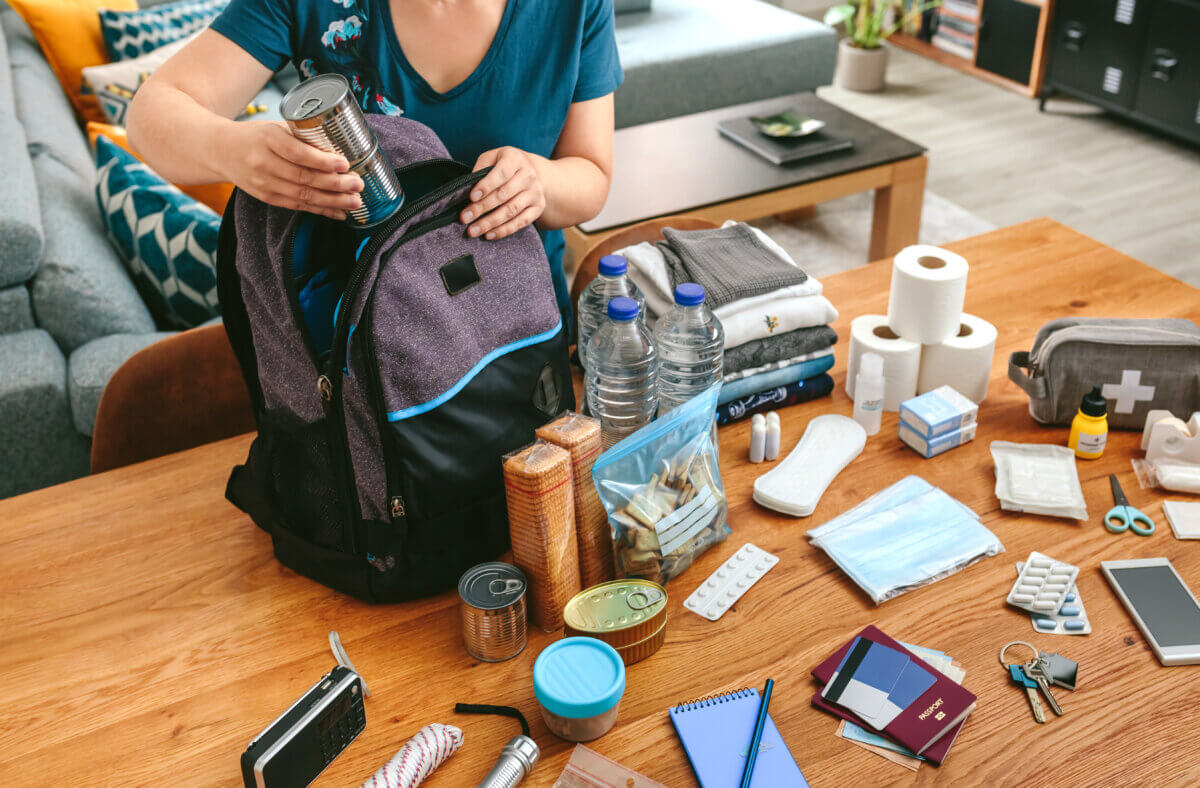
(© David Pereiras - stock.adobe.com)
NEW YORK — When disaster strikes and it’s time to evacuate, what valuables are you taking with you? A new survey finds that answer often differs depending on your age — and not everyone makes wise decisions.
It turns out Americans are more likely to grab their cell phone than their social security card during an emergency evacuation, according to the research. The survey of 2,000 U.S. adults, split evenly by generation, revealed that in an emergency situation, Gen Zers are more likely to grab their laptop (35%) or a pair of shoes (35%) than their prescription medications (30%) if they only have five minutes to pack.
Gen X, on the other hand, is the least likely to take clothing with them (33%) and would rather save their family photo albums (43%). Meanwhile, baby boomers are more likely to grab their jewelry, including engagement rings and wedding bands, than they are to take water (21%) or food (17%) during an emergency evacuation.
When asked about the most important item (not including people or pets) in their home, it’s clear that Americans are clinging to sentimental value. Respondents had unique answers for things they’d grab, such as “the heart necklace that was my grandmother’s,” “the urns, [one] holding my husband, the other holding my son,” “the flag from my father’s funeral for his service in the military,” and even a “painting of a dog that my mom did when I was a kid.”
In order to keep those items forever, two in five respondents would sleep on the floor for the rest of their lives, while 11% would happily drain their entire bank account. One in five millennials would even forgo marriage entirely if it meant they’d never lose their most important possessions.
In a more realistic sense, this may be why almost two-thirds of Americans (65%) take emergency preparedness more seriously today than they did 10 years ago. The top reasons for being more prepared include concerns over the increase in natural disasters as a whole (48%), as well as having a family (47%) and pets (36%) to worry about.
The survey, conducted by Talker Research on behalf of Master Lock for National Preparedness Month, gave respondents just 60 seconds to select items from the standard Federal Emergency Management Agency (FEMA) emergency preparedness checklist, mixed with a few other household items.
If a natural disaster was heading straight toward their home and respondents needed to evacuate quickly, Americans chose to grab:
- A cell phone with a backup charger and battery (50%)
- Important family documents, such as insurance policies and identification (45%)
- Prescription medications (36%)
- Food (36%)
- Water (33%)
Other items on FEMA’s list were left behind, as many Americans would take family photos or albums (30%) over a first aid kit (28%) and a flashlight (28%), both of which are recommended by FEMA. Overall, laptops (26%) also ranked above a complete change of clothing (24%), a sleeping bag or warm blanket (21%), and sturdy shoes (15%).
The good news is that some Americans already have these emergency preparedness items in their homes, including flashlights (50%), first aid kits (39%), extra batteries (39%), soap, hand sanitizer, or disinfectant wipes (38%), and a manual can opener (31%).
Still, very few respondents had items such as a dust mask (15%), local maps (10%), or a whistler (8%) — all of which are recommended items by government agencies.
No matter if they’re at home or away, security is on Americans’ minds. When traveling, Americans worry about the safety and security of the items in their home an average of four times each day.
“Oftentimes, there is little to no time to prepare when disaster or an emergency strikes. Nearly one-third of Americans would rather lose their home than their belongings inside and this underscores the importance of protecting what’s most valuable to you,” says Kevin Gannon, the VP of Category Management and Channel Marketing for Master Lock, in a statement. “Whether living in areas susceptible to natural disasters or looking to put an emergency plan in place, look to security and safety storage solutions such as safes, fire/water chests and fire bags to protect your irreplaceable valuables.”
Not only are Americans taking overall preparedness more seriously, but they’re also prioritizing the importance of having an evacuation plan (86%) and security products in their home, such as water or fireproof safes (81%). Almost all baby boomers (90%) emphasize the importance of having security products in their homes.
Currently, Americans keep their most important items in their wallet (24%), in a closet (24%), or in a drawer (22%), while a little more than one in 10 Gen Zers stash their valuables under their bed (14%) or under their mattress (11%). Still, 65% of Americans are more willing to purchase home security items than they were in the last decade to protect their most valuable items.
More than one-third (36%) even admit that they are the most prepared person they know, followed by their partner or spouse (14%) and their mom (11%).
“Results found that only about one in five people already keep their most valuable items in a regular safe inside their home (22%) or a water/fireproof safe (19%),” Gannon says. “With an increase in natural disasters and in overall preparedness, it’s important to ensure that the items you hold closest to your heart are safe in the event of an emergency.”
Survey methodology
Talker Research surveyed 2,000 Americans split evenly by generation (500 Gen Z, 500 millennials 500 Gen X and 500 baby boomers); the survey was commissioned by Master Lock and administered and conducted online by Talker Research between August 15 and August 21, 2024.


