(muratart/Shutterstock)
Climate Disasters Can Leave Countries Too Indebted to Fight Warming
In A Nutshell
- Researchers argue that debt, unrest and lost public trust after climate disasters could make runaway warming easier to trigger.
- The idea, called derailment risk, comes from a conceptual paper, not a new experiment or dataset.
- Disasters can push low-income countries into debt loops that drain money meant for clean energy and preparation.
- The authors urge planning ahead to protect societies’ ability to act, though they admit that will be difficult.
In a hypothetical case, a cyclone flattens a low-income country’s farms and roads. The government borrows heavily to rebuild, and interest payments start eating the budget meant for clean energy and disaster preparedness. When the next storm arrives, there is less money to meet it. A new paper argues that this kind of spiral, spreading from country to country, could bring the planet closer to a runaway “Hothouse Earth” state than temperature readings alone would suggest.
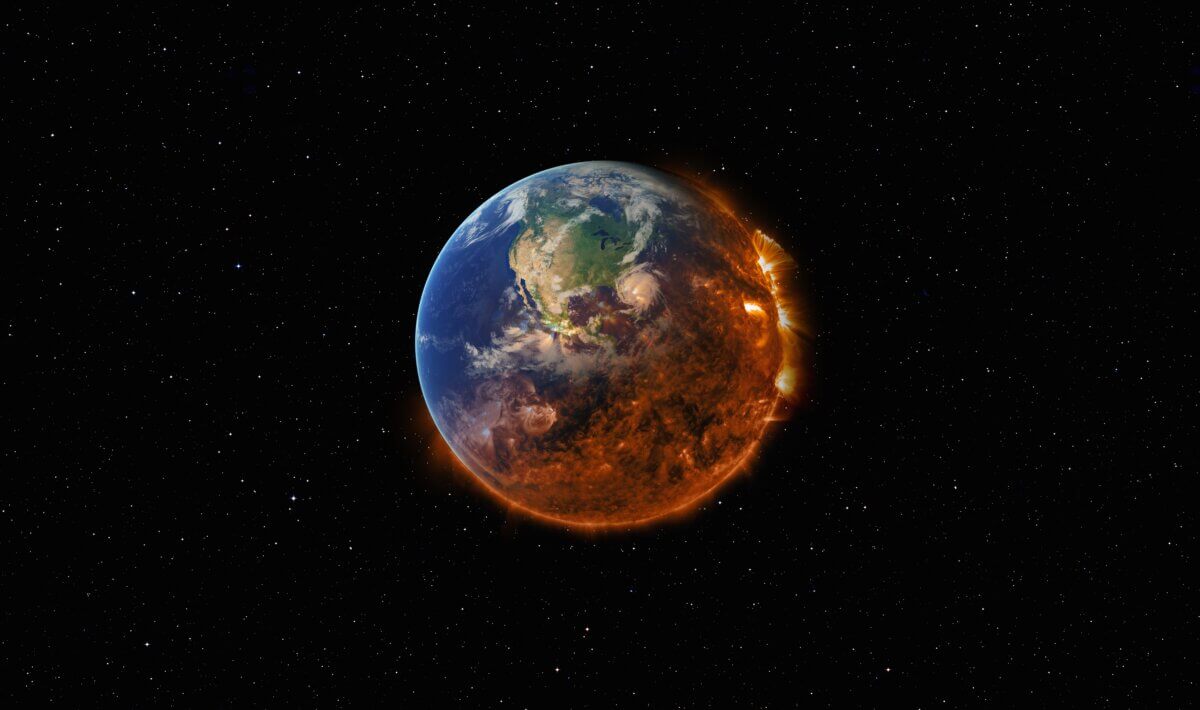
Hothouse Earth is a scenario in which warming passes 9 degrees Fahrenheit (5 degrees Celsius) because feedback loops, in which warming triggers changes that cause still more warming, keep temperatures climbing even without further human emissions. One suspected loop involves weakening carbon sinks, the forests and other land that absorb carbon dioxide. Earlier research raised the possibility that warming beyond 3.6 degrees Fahrenheit (2 degrees Celsius) could set Earth on that path.
Writing in Environmental Research Letters, James Dyke, Laurie Laybourn and Jesse Abrams of the University of Exeter’s Global Systems Institute argue that this picture overlooks how well societies hold up under the strain. Climate damage can wear down the societies expected to respond, a danger they call “derailment risk.” By their reasoning, social breakdown, such as debt crises, lowers the point at which warming becomes self-sustaining. The authors allow that a hothouse outcome may be unlikely but write that “it is not safe to ignore it.”
Hothouse Earth Risk Rests on Existing Research, Not New Data
This paper is not a lab experiment or a survey, so there are no participants or sample size to report. It is a conceptual argument built on existing research in climate science, economics and politics, with no new data created or analyzed. A worked example on food shows how the idea could play out.
Agriculture both drives climate change and sits among the systems most exposed to it. The authors cite the 2010 Russian heat wave and the wheat export ban that followed, which contributed to food price spikes that, together with other pressures, intensified unrest across the Middle East and North Africa. A 2022 disruption to Ukrainian grain exports showed how a regional shock can travel through global supply chains, causing acute food insecurity, meaning trouble getting enough to eat, in countries that rely on imports, particularly in sub-Saharan Africa and South Asia.

Debt Loops Can Drain a Country’s Climate Response
Debt plays a leading role in this kind of spiral. Low-income countries hit by disasters, crop failures or collapsing infrastructure often borrow in an emergency. Repeated borrowing raises debt payments, limits future policy choices and makes new loans costlier. The authors call the result a “doom loop,” in which debt payments consume a growing share of government revenue and climate investments get pushed aside. They describe this loop as well established.
Trouble in one country can spread. Nations are linked by goods, energy, finance and information, so a doom loop in one can weaken other countries’ money, political will and ability to carry out climate projects.
Trust Can Be Much Easier to Break Than to Rebuild
Trust is also fragile. The paper points to psychology research showing bad events affect people more strongly than good ones, which helps explain why trust inside a society can be much easier to destroy than create. Climate policy relies on working institutions, from political decision-making to financial stability, and the authors warn that worsening impacts can undermine them.
Resilience Could Outweigh Efficiency Against Hothouse Earth
Standard climate policy weighs the physical damage of warming against the economic cost of cutting emissions, then looks for the cheapest path. The authors call the failure to ask whether societies will keep the ability to act a “dangerous blind spot.” They argue strategy should aim to protect that ability, through resilience rather than cost efficiency, and they concede doing so is “likely to be extremely challenging.”
To get there, the authors lay out three stages. First is mapping how climate shocks spread into economic and political trouble in specific places. Second is building resilience in advance. For food, that means better irrigation, less food waste, a shift toward more plant-based diets that eases pressure on farmland, and citizens’ assemblies, which bring ordinary people together to weigh in on policy and can build political backing for these measures. Third is preparing rules that take effect during a crisis without new votes, such as regulations that stop governments from expanding farmland into carbon-rich land when harvests fall. Scientists’ long-range climate scenarios, the authors add, should allow for society’s ability to act to shrink as well as grow.
Warming is only part of the danger. A country buried in storm debt, with little public trust left, has few resources for cutting emissions or restoring ecosystems. Climate planning has long asked how much heat Earth can take. This paper adds a second question, how much strain the societies responding to that heat can take, and the authors reject the idea that “there will come a day when what we do no longer matters.”
Disclaimer: This article summarizes a published research paper for general informational purposes and is not professional, financial or policy advice. The paper presents a conceptual argument rather than tested predictions, so its claims are best read as proposals. Readers should consult the original paper for full details.
Paper Notes
Limitations
This is a conceptual paper rather than an experiment or survey, and its data availability statement says no new data were created or analyzed. The food security example is, in the authors’ words, “a structural mapping rather than a fully quantified analysis,” and turning each link in that chain into numbers would require country-specific data on import dependence, government finances and institutional strength. The authors do not calculate how far social breakdown lowers the point at which warming becomes self-sustaining or attach a temperature to it, so the paper offers a plausible mechanism rather than a forecast. They also say that building agency into future scenarios “will be challenging.” Debate over how vulnerable Earth is to hothouse dynamics continues as well, and one study the authors cite concluded that carbon-climate feedback loops may be more stable than previously assumed.
Funding and Disclosures
The paper as provided includes no funding statement and no competing-interests disclosure. Its author contributions section lists Dyke as lead on conceptualization, methodology and the original draft, Laybourn as an equal contributor on conceptualization and methodology, and Abrams as an equal contributor on review and editing.
Publication Details
The paper, “Manage derailment risks to avoid Hothouse Earth,” was written by James G. Dyke, Laurie Laybourn and Jesse F. Abrams of the Global Systems Institute, University of Exeter, Exeter, United Kingdom. Laybourn is also affiliated with the Strategic Climate Risk Initiative, Exeter. It appeared as a Letter in Environmental Research Letters, volume 21, article 204029, and is open access under a Creative Commons Attribution 4.0 license. It was received June 30, 2026, revised September 1, 2026, accepted October 8, 2026 and published November 6, 2026. Correspondence: [email protected]. DOI: https://doi.org/10.1088/1748-9326/aeb1de. Suggested citation: Dyke, J. G., Laybourn, L., & Abrams, J. F. (2026). Manage derailment risks to avoid Hothouse Earth. Environmental Research Letters, 21, 204029.


