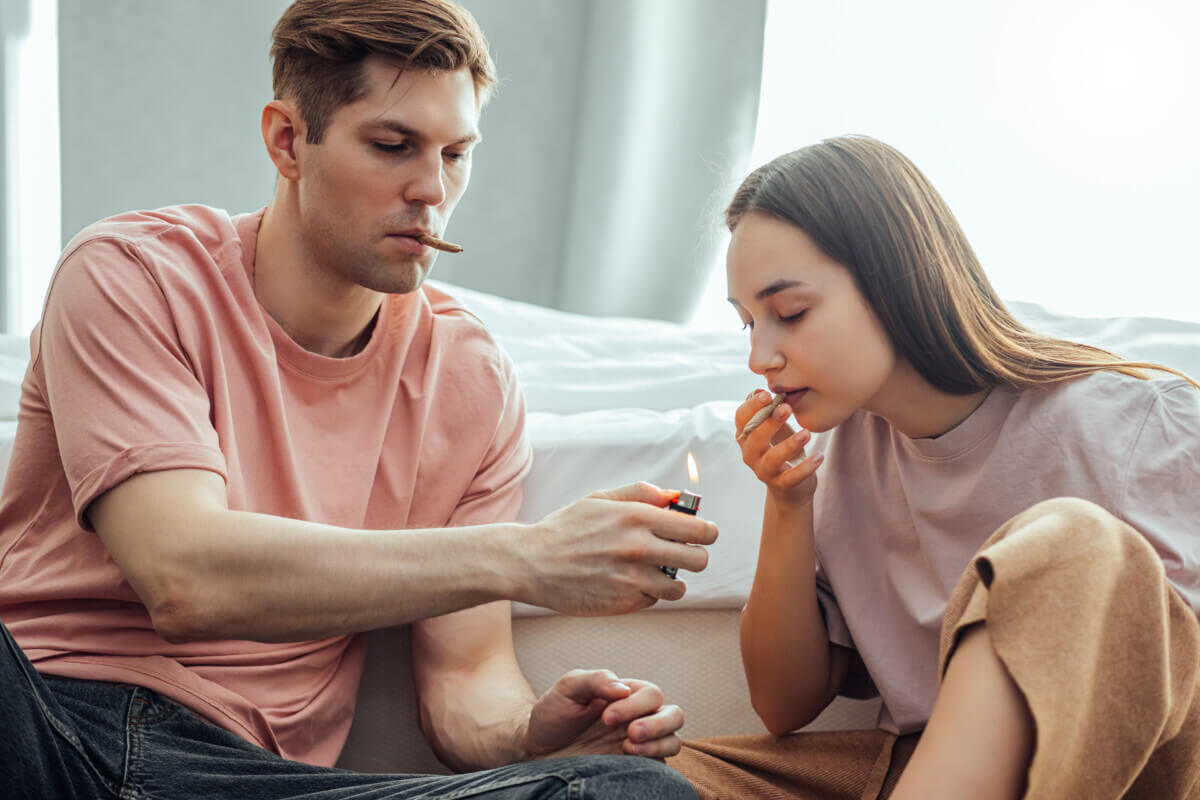
(© alfa27 - stock.adobe.com)
Occasional Cannabis Use May Not Be Gentle for Men
In A Nutshell
- Occasional male users reported some of the strongest highs and unpleasant feelings in a UCLA lab trial.
- Their blood THC levels were similar to occasional female users’, so extra drug did not explain it.
- Frequent users of both sexes showed a stronger pull toward more cannabis.
- With 44 volunteers and several follow-up results, a larger trial needs to confirm the pattern.
Using cannabis only a few times a week might sound like the gentle approach. In a new lab trial, men who did exactly that reported some of the strongest highs, sedation, and unpleasant feelings, even compared with women who use it as often and men who use it more. Blood tests did not explain it. Levels of THC, the ingredient that causes the high, were similar to those in occasional female users, so extra drug in the body did not appear to be the reason.
Researchers at the University of California, Los Angeles, had 44 adults smoke cannabis cigarettes of different strengths in a controlled setting. They tracked how high participants felt, measured THC in their blood, and watched whether participants paid to smoke more afterward. Frequent users, defined as more than four days a week, and occasional users, four days a week or less, were compared across both sexes. Results appeared in the journal Neuropsychopharmacology.
Animal studies and some human studies had pointed to females being more sensitive to THC. In this trial, sex alone did not predict who felt the strongest effects. How often someone used cannabis appeared to matter alongside sex.
Lab Trial Compared Cannabis Effects in 22 Men and 22 Women
Volunteers were healthy adults ages 21 to 55, split evenly between men and women. Within each sex, 12 used cannabis frequently and 10 used it occasionally. That let researchers compare sexes and use patterns together, a pairing earlier studies rarely examined.
Each volunteer came in for three sessions and smoked a cannabis cigarette with no THC, a moderate dose, or a stronger dose roughly three times as large, in random order and without knowing which. Blood draws tracked THC while volunteers rated how high, sedated, uncomfortable, or impaired they felt. About 2 hours and 45 minutes after smoking, they could spend study earnings, $1 each, on up to three more puffs of the same cannabis, a test of real wanting, not just what people said.
Women were tested in the middle to late part of their menstrual cycle, the window when hormones were expected to make sex differences easiest to spot.

Occasional Male Cannabis Users Reported Stronger Effects, Even at a Moderate Dose
Both cannabis strengths made volunteers feel higher than the no-THC cigarette did, as expected. At the moderate dose, occasional-use men rated their high roughly 30 points above occasional-use women and frequent-use men on a 100-point scale. That was a follow-up comparison, not one of the study’s main planned tests.
Occasional-use men also reported more sedation, impairment, and distress, a cluster of feelings that included anxiety and misery, and judged the drug’s effects as worse than their counterparts did. Only in this group did those ratings rise at either strength compared with the no-THC cigarette. After accounting for blood THC levels, heart rate rose only in these men too, another follow-up result. The mood and impairment findings came from self-ratings, not performance tests, so the trial cannot say how well anyone could actually function.
Frequent-use men, meanwhile, tended to carry the most THC of any group, especially at the moderate dose. Lower tolerance, meaning less adjustment to the drug from repeated use, is one possible explanation for the occasional-use men’s strong reactions. Researchers also noted that occasional-use women were, on average, slightly older and had used cannabis for more years, which could have built tolerance for reasons unrelated to sex.
Frequent Cannabis Users Wanted More Cannabis, Men and Women Alike
Frequent users of both sexes liked real cannabis more than the no-THC version and said they wanted more, a pattern that held for men and women alike. Their wallets agreed. Among frequent users, about 1 in 5 bought extra puffs after the no-THC cigarette, compared with nearly 4 in 10 after the moderate dose and more than half after the stronger one. Occasional users showed no such climb, and their peak, 1 in 5, followed the no-THC cigarette.
Researchers treat liking a drug and wanting more of it as misuse-related measures, but the trial followed no one over time, so it cannot show who went on to develop problems with cannabis.
Sex and Cannabis Tolerance May Shape Reactions Together
Researchers behind the trial wrote that sex and use history, along with how the two interact, are “critical considerations in improving our understanding of cannabis’ health effects.” Volunteers smoked cannabis containing 4% and 10% THC, below the 20% or more typical of commercial products, so the findings may not carry over to stronger store-bought cannabis.
Using cannabis only occasionally may not be as gentle as it sounds, at least for some men, and a dose that feels routine to a regular user could land very differently for someone who uses it less often. With only 44 volunteers and several results coming from follow-up comparisons, a larger trial needs to confirm the pattern before anyone builds product labels or health advice around it.
Disclaimer: This article summarizes one peer-reviewed study for general readers and is not medical advice. Cannabis affects people differently, and anyone with questions about their own use or health should talk with a doctor.
Paper Notes
Limitations
Main caveats cited by the authors include a modest sample size and the potential for unmeasured confounding, and they note the findings did not extend to every outcome measured. The most notable results, including those for occasional-use men and frequent-use men, came from follow-up analyses rather than the study’s main planned comparisons. The authors did not apply statistical corrections for multiple comparisons, writing that “the potential for false-positive findings remains, and the results should be interpreted against that limitation.” Mood and impairment effects were measured through self-ratings rather than performance tests. Occasional-use men had a lower average body mass index than frequent-use men (22.5 versus 26.5), though adjusting for it did not meaningfully change the findings, and occasional-use women were, on average, slightly older and had used cannabis longer than occasional-use men, which could affect tolerance. Women were tested during only one phase of their menstrual cycle. Self-administration was collapsed into a yes-or-no measure because of limited variation, which reduced its precision, and the cannabis strengths were lower than typical commercial products. Smoking pace and amount were controlled, but puff volume was not measured, and participants may have adjusted how they smoked, which could have influenced how much THC they absorbed.
Funding and Disclosures
Funding came from the US National Institute on Drug Abuse, the National Center for Complementary and Integrative Health, the UCLA Clinical and Translational Science Institute, and the Semel Charitable Foundation. Individual researchers received fellowship support from the US National Institute of General Medical Sciences, the National Institute on Drug Abuse, and the Canadian Institutes of Health Research. The National Institute on Drug Abuse and RTI supplied the cannabis. Last author Ziva D. Cooper reported, outside this work, receiving study drug from Canopy Growth Corp and True Terpenes and study-related materials from Storz & Bickel. Her research is funded by grants from the National Institute on Drug Abuse, the National Center for Complementary and Integrative Health, the California Department of Cannabis Control, the Center for Medicinal Cannabis Research, and the California Highway Patrol, and she is an Associate Editor of Neuropsychopharmacology. Co-author Conor H. Murray founded Psynautics Inc., which the paper says has no financial interest in the research outcomes and provided no financial support. Co-author Margaret Haney is a stockholder of and on the scientific advisory board for PleoPharm. The remaining authors reported nothing to disclose.
Publication Details
Study title: “Sex- and frequency-dependent acute pharmacokinetic and pharmacodynamic effects of smoked cannabis: a randomized controlled trial.” Authors: Stephanie Lake, Elisa Pabon, Samantha L. Baglot, Alisha Eversole, Conor H. Murray, Katherine Hampilos, Timothy Fong, Holly Middlekauff, Margaret Haney, Suzette M. Evans, Adren Tran, Alexa Torrens, Daniele Piomelli, and Ziva D. Cooper. Journal: Neuropsychopharmacology, published online October 29, 2026 (received June 6, 2026; accepted September 16, 2026), open access under a Creative Commons Attribution 4.0 license. DOI: https://doi.org/10.1038/s41386-026-02571-3. Clinical trial registration: NCT04385082. The research was conducted at the Cannabis and Cannabinoid Research Laboratory at the University of California, Los Angeles. Corresponding author: Stephanie Lake ([email protected]). Data are available from the corresponding author upon reasonable request.


