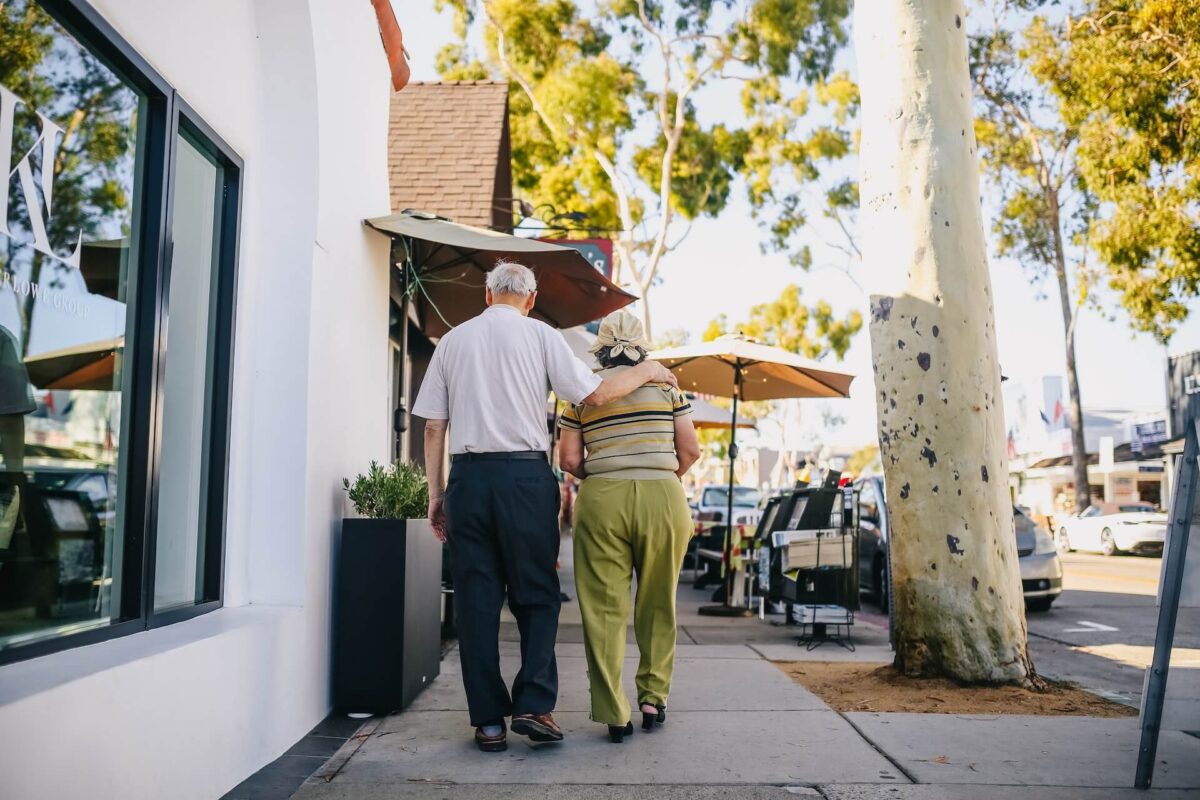
(Credit: Photo by RODNAE Productions from Pexels)
In a Nutshell
- When one spouse is diagnosed with dementia, the other partner’s risk of developing it runs about 70 percent higher, roughly 74 percent for wives and 69 percent for husbands.
- The pattern held across dementia types, including Alzheimer’s disease and vascular dementia, and looked much the same for women and men.
- Spouses with lower incomes and fewer children faced the widest gaps in absolute risk, likely reflecting thinner caregiving support.
Marriage means sharing a home, a bed, daily routines, and decades of memories. A large new study out of Taiwan points to something far less welcome that some couples may share: a raised risk of dementia itself.
Researchers who followed nearly a million married people found that when one spouse was diagnosed with dementia, the other partner became markedly more likely to develop it too, on the order of 70 percent more likely. Published in JAMA Network Open in July 2026, the work ranks among the largest ever done on what scientists call spousal dementia concordance, and it raises a pressing question for families and doctors: once one partner receives a diagnosis, should the other be watched more closely?
Dementia is not contagious in any ordinary sense. Researchers instead point to several overlapping causes, among them shared homes, similar lifelong diets and habits, and the heavy strain of caring full-time for a partner whose brain is failing. Stress, lost sleep, depression, and isolation all wear on brain health, and caring for a spouse with dementia can pile on all of them at once for years.
How the Study Tracked Dementia Risk Across Couples
To reach these conclusions, the team drew on Taiwan’s National Health Insurance Research Database, a nationwide system that covers close to 99 percent of the population. Using records from 1998 to 2022, researchers identified spouses of people newly diagnosed with dementia and compared them with a carefully matched group whose partners had no such diagnosis. In all, 955,105 people were included, matched by birth year, sex, income, and where they lived so that comparisons stayed fair.
Results were sobering. Among women whose husbands had dementia, the risk of developing it themselves ran 74 percent higher than in the comparison group. Among men whose wives had dementia, the figure was 69 percent higher. Those numbers held even after researchers accounted for a long list of other health conditions, and they looked much the same for women and men. The pattern also showed up across dementia types, including Alzheimer’s disease and vascular dementia.
What the Numbers Mean in Everyday Terms
Percentages can mislead without context, so researchers also worked out how many more people actually developed dementia over five years. Among women, the five-year risk was about 6.5 percent for those with an affected spouse versus about 3.7 percent for those without, a gap of roughly 2.75 percentage points. Among men, the figures were about 9.2 percent versus about 5.75 percent, a gap of about 3.49 percentage points.
Those absolute numbers may look small on paper. Spread across the millions of older married couples in a country, though, they add up to a meaningful number of extra dementia cases.

Who Faces the Highest Dementia Risk
Curiously, the sharpest relative jump appeared among younger spouses, those under 55, even though older spouses carried the heavier burden in raw terms simply because dementia grows more common with age. Researchers offer a few possible reasons for the younger-age pattern, among them shared health vulnerabilities within a couple and the stress of caregiving, though the study could not directly test those explanations.
Family and money mattered too. Spouses with lower incomes and fewer children faced the widest gaps in absolute risk. Lower-income households have less cash for hired help, researchers note, and partners with fewer children may have fewer relatives to share the load, though the number of children is only a rough stand-in for family support rather than a direct measure of it. A modest wrinkle showed up among couples without children, where wives carried a somewhat higher relative risk than husbands, possibly reflecting the hands-on caregiving that often falls to women. Researchers caution that this was a small subgroup pattern, not a sign that sex drives the overall risk.
As for why any of this happens, several forces likely overlap. People tend to marry partners with similar schooling, habits, and finances, so some shared risk is baked in from the start. Couples also eat alike, exercise alike, and weather the same money and social pressures over the years. Then there is caregiving, the pathway that troubles researchers most because it kicks in after one partner falls ill. Watching a spouse’s mind slip away while managing their care on little rest is well documented as hard on both body and mind. Because insurance records do not capture caregiving hours, sleep, or stress, the study could not measure that pathway directly. What it could measure was a steady, statistically solid link between a spouse’s dementia and a person’s own odds of developing it later.
Rethinking Dementia as a Family Matter
For decades, dementia has been handled as one person’s diagnosis. Someone forgets names, loses track of time, gets diagnosed, and from then on medical attention stays fixed on that individual. These results argue for a wider lens. If the partner of someone with dementia carries a real, raised risk, then a diagnosis in one household member may be a signal worth acting on for the whole family, through closer check-ins with the caregiving spouse, more support and respite, and a broader rethink of how the health system spots people at risk before they, too, hear the same news.
Disclaimer: This article summarizes findings from a peer-reviewed observational study for general information and is not medical advice. Observational research can identify links between factors but cannot prove that one causes the other. Anyone concerned about dementia risk for themselves or a spouse should consult a qualified healthcare professional.
Paper Notes
Limitations
Study authors flag several caveats. Dementia was identified from insurance claims rather than clinical exams with brain scans or biological markers, so some cases may have been misclassified. Subtypes such as Alzheimer’s disease were sorted by billing codes without lab or imaging confirmation, meaning subtype-specific results deserve caution. Marital status came from a government registry that may miss changes such as divorce; had some couples split during follow-up, the true link might be even stronger than measured. Education data were unavailable, and income stood in for socioeconomic status, an imperfect swap. Lifestyle factors including diet, exercise, and smoking were also absent from the records. Most important, the caregiving-related factors most likely to explain the pattern, among them caregiver stress, sleep, and hours spent caring, could not be measured directly. Because the study took place in Taiwan, its findings may fit best with populations that share similar health systems and caregiving customs.
Funding and Disclosures
Support came partly from the National Science and Technology Council (grants NSTC114-2314-B-400-031-MY3 and NSTC111-2628-B-400-004-MY3, principal investigator Shi-Heng Wang) and the National Health Research Institutes, Taiwan (grant CG-114-GP-02, principal investigator Chi-Shin Wu). Funders had no role in the design, conduct, analysis, or reporting of the work. Authors reported no conflicts of interest.
Publication Details
Authors: Shi-Heng Wang, PhD; Mei-Chen Lin, MS; Chun Chieh Fan, MD, PhD; Wei-Lieh Huang, MD, PhD; Chih-Cheng Hsu, MD, PhD; and Chi-Shin Wu, MD, PhD. Affiliations include the National Center for Geriatrics and Welfare Research at the National Health Research Institutes, Taiwan; China Medical University Hospital, Taichung; the Laureate Institute for Brain Research, Tulsa, Oklahoma; the University of California, La Jolla; National Taiwan University Hospital; and the Institute of Population Health Sciences, National Health Research Institutes, Taiwan. Corresponding author: Chi-Shin Wu, MD, PhD ([email protected]).
Journal: JAMA Network Open, Volume 9, Issue 7 (July 20, 2026).
Paper Title: “Spousal Dementia Exposure and Risk of Dementia.”
DOI: 10.1001/jamanetworkopen.2026.24175
Published open access under the CC-BY-NC-ND License.


