
Mice colon. Credit: INRAE - Rebeca Martín Rosique
In A Nutshell
- A new mouse study found that C-section birth affects gut bacteria and intestinal health differently in males and females.
- Male mice born by C-section were more vulnerable to recurring intestinal inflammation in adulthood than their vaginally born counterparts; females were not.
- Most prior research grouped all C-section babies together, potentially masking important sex-based differences.
- Researchers say future gut-health interventions after C-section birth may need to account for biological sex to be effective.
A baby’s first moments outside the womb set the stage for a lifetime of health, and how that baby arrives may matter more than many people realize. A new study in mice has found that the long-term gut effects of being born by C-section look very different depending on biological sex. Males and females born surgically carried different gut bacteria into adulthood and showed different levels of vulnerability to intestinal inflammation. The results highlight potential gaps in how scientists have studied C-section births for years.
C-section delivery is one of the most common surgeries in the world, accounting for about 21% of births worldwide, and rates are projected to keep rising. Scientists have long known that babies born surgically miss out on bacteria they would normally pick up from their mothers during vaginal delivery. That early difference in gut bacteria has been linked to higher rates of asthma, allergies, obesity and inflammatory bowel disease later in life, though much of that evidence comes from observational studies in humans and the exact biological pathways are still being investigated. Most of those studies, however, treated all C-section babies as a single group, never asking whether sex might reshape the outcomes.
A team of researchers led by Bruna Maitan Santos and colleagues decided to pull that thread by reanalyzing existing mouse data through the lens of sex. Their findings were published in Gut Microbes.
Males and Females Showed Different Gut Changes After C-Section Birth
Researchers compared mice born vaginally with those delivered by C-section, tracking them into adulthood. They split their analysis by sex, examining males and females separately rather than grouping them together. Scientists looked at three things: the makeup of gut bacteria, the health of the gut lining, and how prone the animals were to colitis, a form of intestinal inflammation.
Both male and female mice born by C-section showed differences in their gut bacteria compared to mice born vaginally, but those differences were not the same between the sexes. Bacterial populations that shifted in males were not the ones that shifted in females, suggesting biological sex plays a role in determining which bacterial changes persist into adulthood after a surgical birth.
The gut lining was also affected differently across the sexes. This matters because the gut lining helps separate the contents of the intestine from the rest of the body, and problems with that barrier can be part of intestinal inflammation.
The colitis results were particularly telling. When researchers triggered intestinal inflammation in the mice, the severity of the response depended on both birth method and sex. C-section-born males showed colitis recurrence in adulthood along with signs of stronger inflammatory responses. Females, by contrast, did not show the same pattern of weight loss or inflammation markers after colitis recurrence. A C-section birth appeared to prime the gut for inflammation in a sex-specific way, though other factors such as genetics and hormonal environment may also contribute.
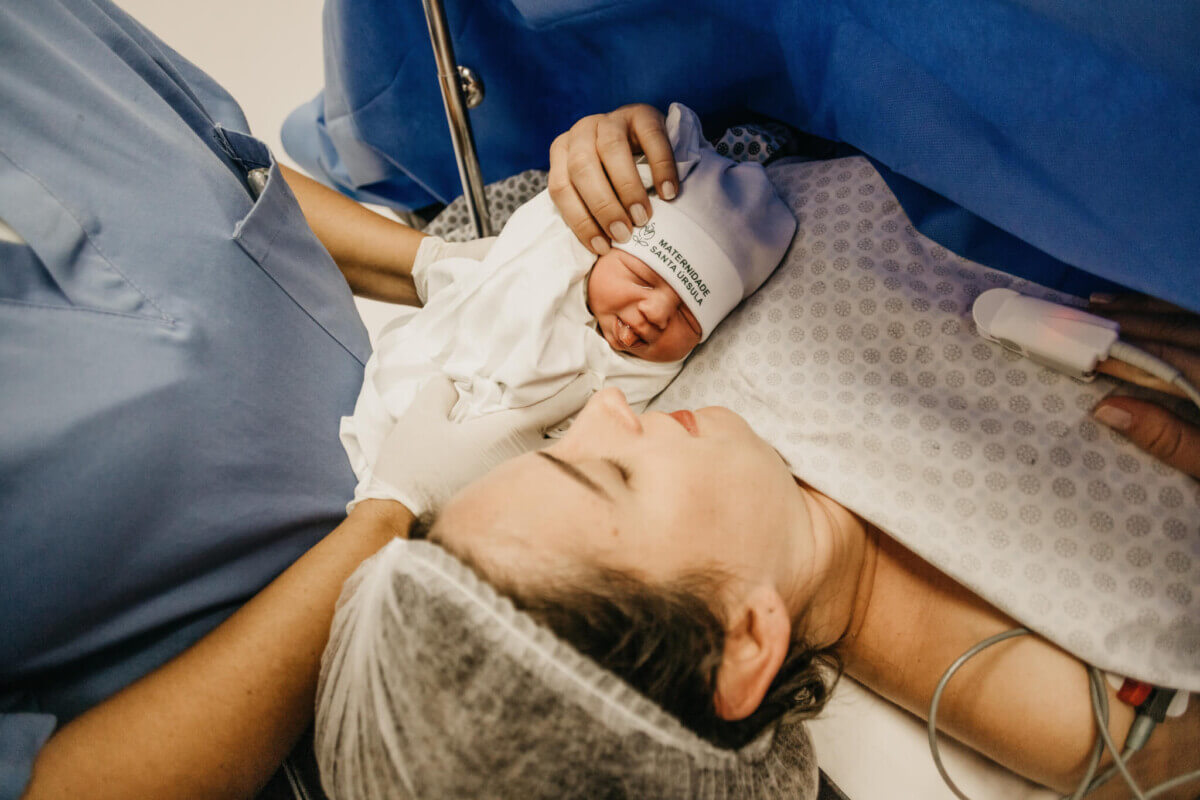
Why Sex Differences in C-Section Effects Matter
For decades, doctors have recognized that C-section deliveries, while often lifesaving and medically necessary, come with trade-offs. What this study adds is a dimension that has been largely absent from the conversation. Most earlier work asked whether C-section birth changes the gut. This study asks a sharper question: does it change the gut differently in males and females? In mice, the answer appears to be yes.
That distinction could eventually matter for efforts to restore healthy gut bacteria after a C-section delivery. If the bacterial and gut-lining consequences of surgical birth differ by sex, corrective strategies, whether probiotics, dietary changes or other approaches, might someday need to be tailored by sex to work well. Such applications remain speculative and would require substantial research in humans before reaching the clinic.
Gut health is an area where sex differences are already known to matter. Rates of inflammatory bowel disease, irritable bowel syndrome and other gut-related conditions differ between men and women. Hormonal differences shape immune function, which in turn affects the gut. Adding birth method to that equation introduces another variable that interacts with sex in ways researchers are only beginning to map.
Mouse Findings Can’t Yet Confirm the Same Effects in Humans
This research was conducted in mice, not humans. Mouse models are useful for studying biological processes in controlled conditions, but results do not always translate directly to people. Importantly, the study reanalyzed pre-existing preclinical data rather than designing a new experiment from scratch. Additional limitations noted by the authors include modest sample sizes, no monitoring of hormonal cycles in female mice, and the fact that bacterial network findings do not automatically confirm what those bacteria are actually producing. Still, mouse studies are often a first step in identifying biological pathways that can then be investigated in human populations.
For the millions of babies born by C-section each year, this research is a reminder that the effects of birth method may be more individual than anyone appreciated. C-sections remain a life-saving medical procedure. But understanding the full scope of their effects, and who is most affected, requires a sharper lens than scientists have typically used, and this study makes a compelling case that gender belongs in that lens.
Disclaimer: This study was conducted in mice, not humans, and the findings should not be interpreted as medical advice or a reason to avoid medically necessary C-section deliveries. Results from animal studies do not always translate directly to human health outcomes.
Paper Notes
Limitations
This study was conducted using a mouse model and reanalyzed pre-existing preclinical data in which sex had not originally been considered as a biological variable. Mouse biology does not perfectly replicate human biology, and translating these findings to human health will require follow-up research in human populations. Additional limitations acknowledged by the authors include modest sample sizes and intragroup variability at certain timepoints, no monitoring of female estrous cycles, no measurement of circulating sex hormone levels, and the fact that microbiota analyses were based on bacterial abundance and network inference rather than direct functional measurement. Causal validation through methods such as fecal microbiota transplantation or cohousing studies was not conducted. All experiments used a single inbred mouse strain, which limits the generalizability of the results.
Funding and Disclosures
The authors declared no competing interests. This work was supported by the Biostime Institute for Nutrition and Care (BINC, Geneva) and the Institut National de Recherche pour l’Agriculture, l’Alimentation et l’Environnement (INRAE, France).
Publication Details
Title: Sex modulates the long-term effects of delivery mode on microbiota–gut barrier crosstalk and colitis susceptibility in mice Authors: Bruna Maitan Santos, Jordi Estellé, Yuliaxis Ramayo-Caldas, Sead Chadi, Monica Barone, Florian Chain, Camille Kropp, Patrizia Bridigi, Philippe Langella, Rebeca Martín Journal: Gut Microbes Year: 2026 DOI: 10.1080/19490976.2026.2658276


