
(Photo by Dragana Gordic on Shutterstock)
In A Nutshell
- Molecules called piRNAs, found in blood plasma, predicted whether adults 71 and older would survive the next two years with strong accuracy in a study of 1,271 people.
- A model combining five piRNAs with two standard health measures performed as well as or better than the most complex clinical tools doctors currently use.
- Older adults who lived longer had consistently lower levels of these nine piRNAs, a counterintuitive finding that points to a poorly understood biological pathway.
- Age alone was a surprisingly weak predictor of short-term survival once molecular markers were included, suggesting biology matters more than birthdays.
Most people would rather not know when they’re going to die. But a doctor armed with the right blood test might one day have a meaningful answer. New research published in the journal Aging Cell found that a small set of molecules circulating in the bloodstream showed strong accuracy in predicting whether an older adult would be alive two years later, performing better than age alone and models built only on standard clinical variables.
The study, led by researchers at Duke University and the University of Minnesota, analyzed blood samples from more than 1,200 adults aged 71 and older. The key turned out to be a largely overlooked class of molecules called piRNAs, tiny genetic fragments scientists had long assumed operated mainly in reproductive cells. Instead, they may help regulate biological processes linked to aging, and their levels in a person’s blood may be telling a story doctors have never been able to read before.
What makes the results particularly noteworthy is how poorly age performed once molecular markers were included. Chronological age alone was a weak predictor of two-year survival in this cohort. These results suggest that biological markers may tell us more about short-term survival than chronological age alone.
What a piRNA Blood Test Could Predict
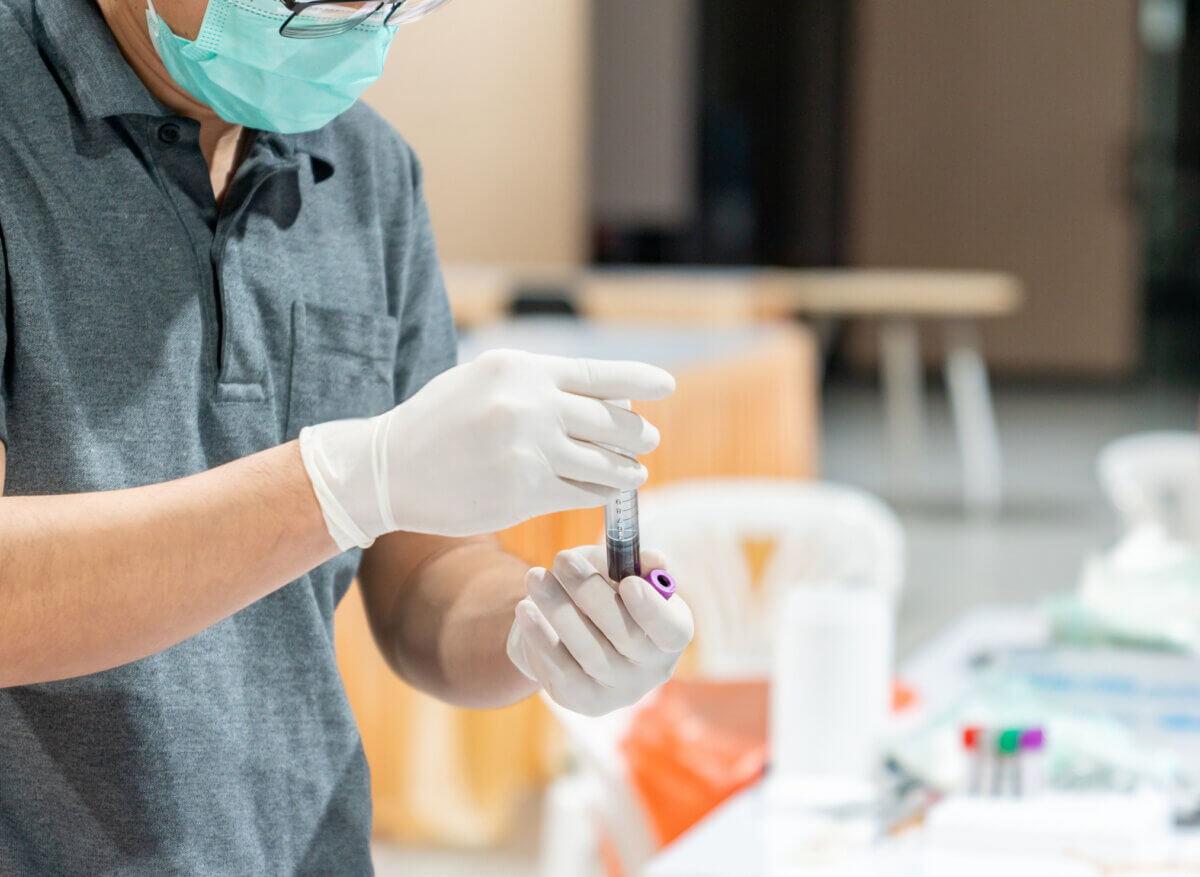
Researchers used blood samples drawn in the early 1990s from 1,271 community-dwelling adults across five counties in North Carolina’s Central Piedmont region, all participants in the Duke-Established Populations for Epidemiologic Studies of the Elderly, a long-running study funded by the National Institute on Aging. More than half of the participants were Black, making the cohort one of the more racially diverse in aging research. Scientists measured 828 small non-coding RNA molecules in each sample, then tracked which participants survived over the following two, five, and ten years.
To guard against inflated results, the team divided participants into separate groups for building and testing the models. The validation group’s blood samples were sequenced in a separate batch from those used to build the predictive model, using the same technical platform but processed independently, an important check against the kind of protocol bias that can make research findings look stronger than they are. The accuracy held up anyway.
A model built on six piRNAs substantially outperformed age alone in predicting two-year survival, and age alone performed only slightly better than chance in external testing. A slightly larger model, combining five piRNAs with two additional measures, a physical function score and a count of high-density lipoprotein particles (commonly called good cholesterol), performed comparably to, or better than, more complex clinical models currently used by doctors, most of which rely on 6 to 25 physician-reported factors.
Nine Molecules That Separate Longer-Lived Adults From Shorter-Lived Ones
Nine specific piRNAs stood out across the analysis. All nine were consistently lower in participants who lived longer, which surprised the researchers. Since piRNAs are known to suppress genetic instability, the intuitive expectation would be that higher levels protect health. The opposite pattern held, and it held across independent data sets.
To gauge potential therapeutic significance, the team ran a theoretical simulation. Under statistical modeling assumptions, shifting a high-risk person’s piRNA levels toward those seen in longer-lived individuals was associated with the probability of surviving the next two years jumping from 47 percent to 90 percent. These are purely model-based projections under statistical assumptions, not results from a real treatment or clinical trial, and should not be read as a roadmap for immediate medical intervention.
Evidence from other species adds biological plausibility to the idea. In C. elegans, a tiny roundworm widely used in aging research, disrupting the system that produces piRNAs doubled the animal’s lifespan. In fruit flies, shutting down related genes in specific tissues extended how long the insects lived. The study’s authors are careful to note that results in worms and flies do not guarantee the same in humans, but the consistency across species is worth noting.
Why piRNA Drug Targets Could Change Aging Medicine
For scientists, one of the most consequential findings is the identification of these nine piRNAs as potential drug targets, meaning compounds might one day be designed to modify their levels. No treatment has yet altered piRNA levels in humans, and any therapeutic application remains hypothetical at this stage.
Biological age tests already exist commercially, products like MyDNAge and TallyAge, most relying on chemical changes to DNA. None currently use piRNAs or any other small RNA measurements. If this study’s signal holds up in broader and more diverse populations, a new generation of aging biomarkers could follow.
The researchers also identified biological pathways the piRNAs appear to influence, including those governing cellular stress responses, programmed cell death, and immune regulation. These are mechanisms scientists already connect to aging and age-related disease. Whether piRNAs actively drive these processes or reflect them remains to be confirmed through laboratory experiments, but the authors argue the statistical evidence points toward a causal role, pending that experimental confirmation.
It is also important to mention where the models were weaker. Predictions grew less reliable at five- and ten-year horizons, and all participants were 71 or older and drawn from one region of the United States. Whether these findings translate to younger adults or different populations is still unknown.
Translating a research finding into a clinical blood test takes years of additional validation and regulatory review. But this study offers a validated model across sequencing batches and a set of specific molecular targets to pursue. For a field that has spent decades hunting for the biological levers of human longevity, that is a meaningful place to start.
Disclaimer: This article is for informational purposes only and does not constitute medical advice. The findings described are based on a research study and have not been approved for clinical use. Consult a qualified healthcare provider with any questions regarding your health or medical conditions.
Paper Notes
Study Limitations
All participants came from a single community-based cohort in North Carolina, so the findings reflect a specific population and geographic region. Replication in broader, more diverse groups is needed before any clinical application could be considered. The predictive strength of the small RNA models was highest for two-year survival and declined substantially at the five- and ten-year marks, limiting the test’s usefulness for long-range forecasting. The piRNA target gene predictions used in pathway analysis are based on computational modeling and should be treated as preliminary, since the interactions between these molecules and their predicted gene targets have not yet been confirmed in the laboratory. The researchers also note that scientific tools for identifying and mapping piRNAs are still evolving, and some findings reflect current limits in detection and annotation technology.
Funding and Disclosures
The study was supported by the National Institutes of Health through several grants: NIH/NIA R01AG054840, the Duke Claude D. Pepper Older Americans Independence Center (NIH/NIA P30-AG028716), NIH/NCATS UL1TR002494, NIH U54AG076041, and NIH/NHLBI 1UM1TR004405. Co-author Constantin F. Aliferis is co-inventor on several patents related to machine learning modeling methods but reports receiving no income from them. All other authors declared no conflicts of interest. Written informed consent was obtained from all participants, and the study received annual approval from the Duke University Institutional Review Board (approval number Pro00010226).
Publication Details
Title: Select Small Non-Coding RNAs Are Determinants of Survival in Older Adults | Authors: Virginia Byers Kraus, Sisi Ma, Syeda Iffat Naz, Xin Zhang, Christopher G. Vann, Melissa C. Orenduff, William E. Kraus, Steven Shen, Janet L. Huebner, Ching-Heng Chou, Erich Kummerfeld, Harvey Jay Cohen, Constantin F. Aliferis | Journal: Aging Cell (published by Anatomical Society and John Wiley & Sons Ltd.) | Volume/Issue: 2026; 25:e70403 | DOI: https://doi.org/10.1111/acel.70403 | Published: 2026 (received June 25, 2025; accepted January 26, 2026)


