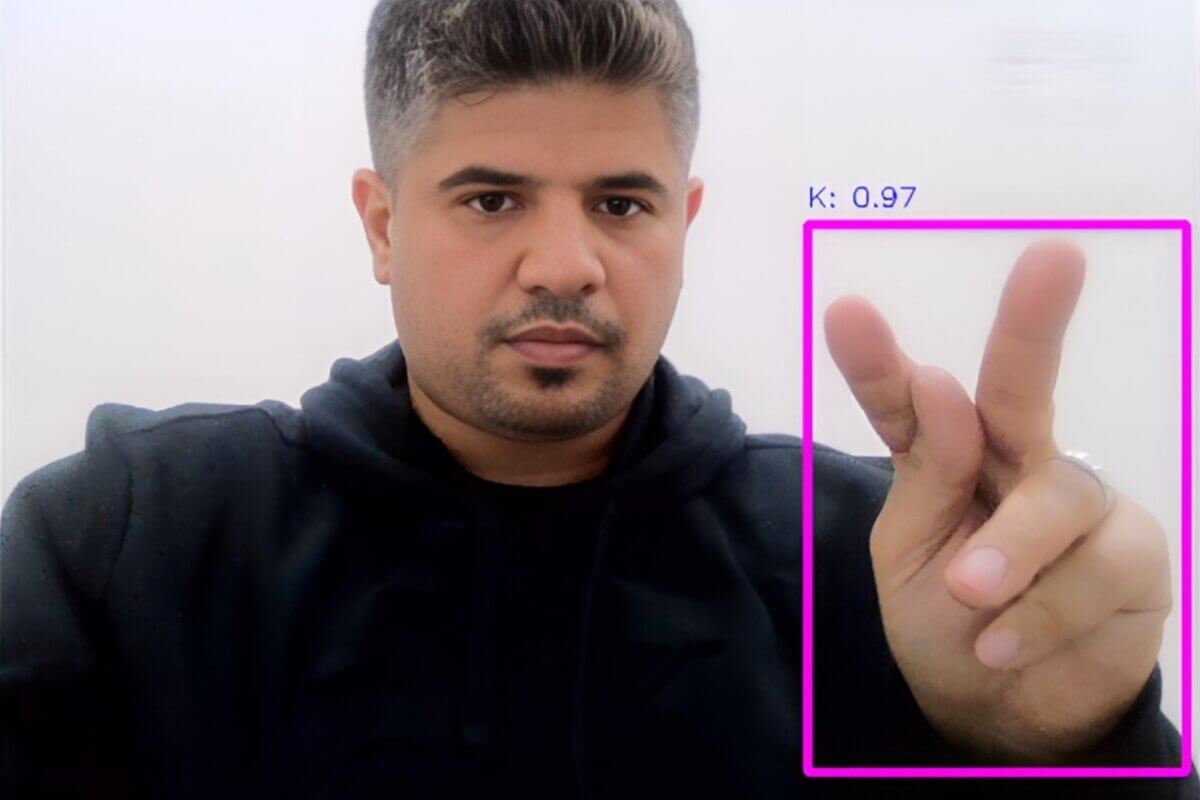
Bader Alsharif, first author and a Ph.D. candidate in the FAU Department of Electrical Engineering and Computer Science. (Credit: FAU)
BOCA RATON, Fla. — In an amazing leap forward for communication technology, researchers at Florida Atlantic University have developed an artificial intelligence system that can recognize American Sign Language (ASL) with remarkable precision. This could potentially transform how deaf and hard-of-hearing individuals interact with technology and the world around them.
Imagine a world where every hand gesture could be instantly understood, where the nuanced language of sign becomes as easily readable as spoken words. This is no longer just a dream. Using cutting-edge computer vision technology, the research team has created an AI model that can accurately interpret ASL alphabet gestures with an astounding 98% accuracy.
The study, published in the journal Franklin Open, tackled a complex challenge: teaching a computer to understand the intricate movements of sign language. The researchers built a massive dataset of 29,820 static images of hand gestures, using a sophisticated tracking technology called MediaPipe to annotate each image with 21 precise landmark points that capture the subtle details of hand positioning.
“Combining MediaPipe and YOLOv8, along with fine-tuning hyperparameters for the best accuracy, represents a groundbreaking and innovative approach,” says Bader Alsharif, the study’s lead researcher and a Ph.D. candidate, in a university release.
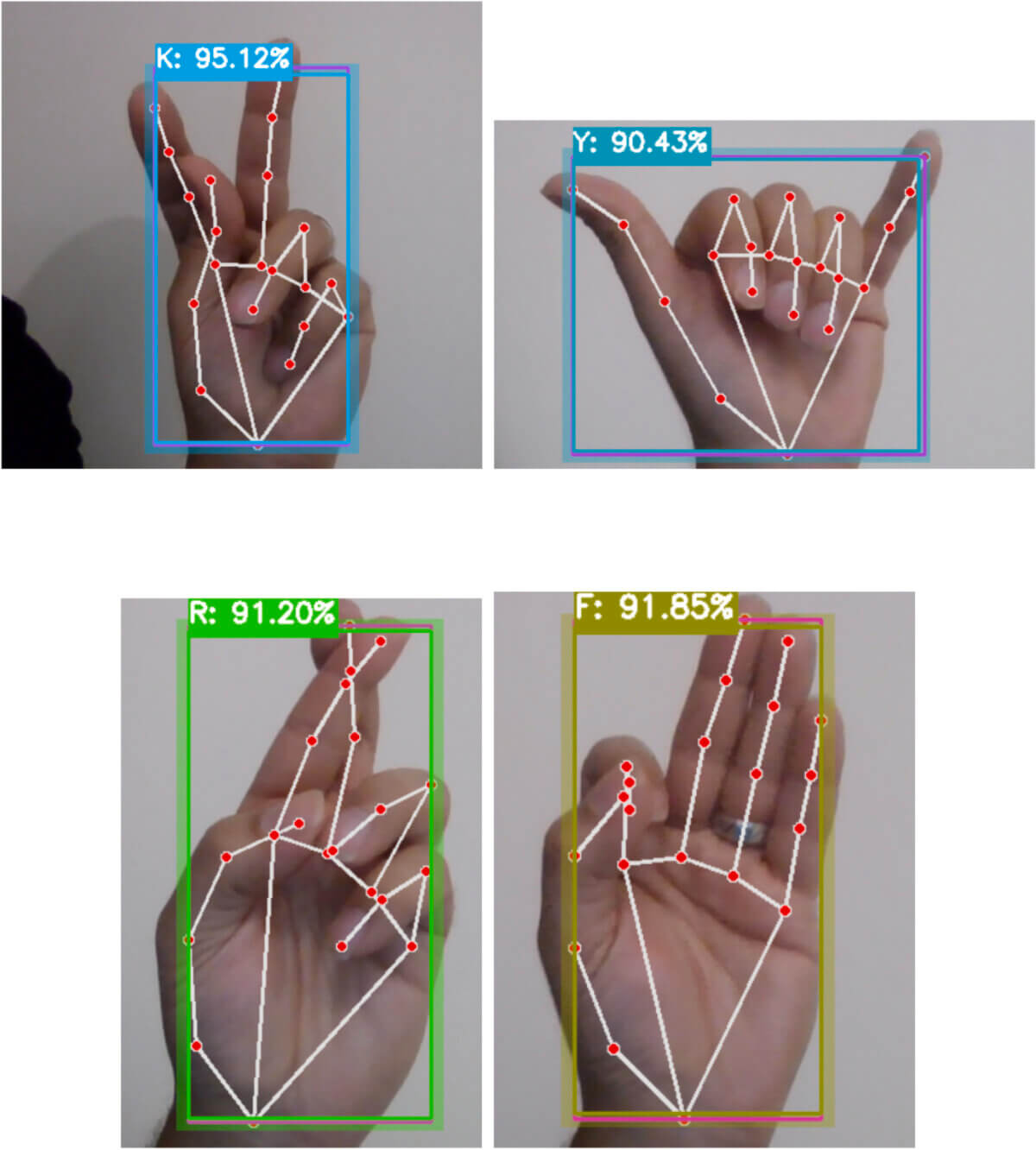
This approach allows the AI to recognize even the most minute differences between similar hand shapes.
The AI model achieved a 98% accuracy rate in identifying ASL alphabet gestures, with a near-perfect overall performance score of 99%. This means the system can reliably translate hand movements into recognizable letters, opening up new possibilities for communication technology.
While the results are nothing short of impressive, the researchers aren’t stopping here. Future plans include expanding the dataset to include an even wider range of hand shapes and gestures and optimizing the system to work on smaller, portable devices. The ultimate goal is to create a tool that can provide real-time translation of sign language, breaking down communication barriers for deaf and hard-of-hearing individuals.
“By improving American Sign Language recognition, this work contributes to creating tools that can enhance communication for the deaf and hard-of-hearing community,” says Dr. Stella Batalama, Dean of the FAU College of Engineering and Computer Science.
Dr. Batalama emphasizes that this technology could make daily interactions in education, healthcare, and social settings more seamless and inclusive.
This breakthrough represents more than just a technological achievement. It’s a step towards a more accessible world where communication knows no bounds. As technology continues to evolve, projects like these remind us of the profound impact innovation can have on human connection.
Paper Summary
Methodology
The study employed a two-step methodology using YOLOv8 and MediaPipe for real-time recognition of American Sign Language (ASL) alphabet gestures. Initially, YOLOv8 was used to detect and localize hand gestures. Following detection, MediaPipe annotated each hand gesture image with key landmarks to precisely analyze hand poses. The integration of these technologies ensured accurate and efficient recognition, leveraging the strengths of both YOLOv8’s detection capabilities and MediaPipe’s detailed landmark tracking.
Key Results
The study achieved impressive accuracy in real-time ASL gesture recognition. YOLOv8, coupled with MediaPipe, facilitated an effective real-time ASL recognition system, achieving a precision and recall rate of 98%, with an F1 score of 99%. This high level of performance underscores the system’s capability to reliably recognize and interpret ASL gestures quickly, even under varying conditions.
Study Limitations
While the study demonstrated high accuracy, it primarily focused on ASL and may not directly translate to other sign languages due to structural differences. Additionally, the study’s reliance on sophisticated technology like YOLOv8 and MediaPipe might limit its application in low-resource settings where such technologies are not readily available or affordable.
Discussion & Takeaways
This research highlights the potential of integrating advanced object detection and landmark tracking technologies for enhancing communication accessibility. It suggests that similar methodologies could be applied to other sign languages and gestures, possibly improving interaction for the broader deaf and hard-of-hearing community. Future research could explore adapting these techniques for other complex gesture-based languages and improve model robustness against diverse backgrounds and lighting conditions.
Funding & Disclosures
The study did not specify funding sources or any conflicts of interest, suggesting an independent research effort.


