(© WavebreakMediaMicro - stock.adobe.com)
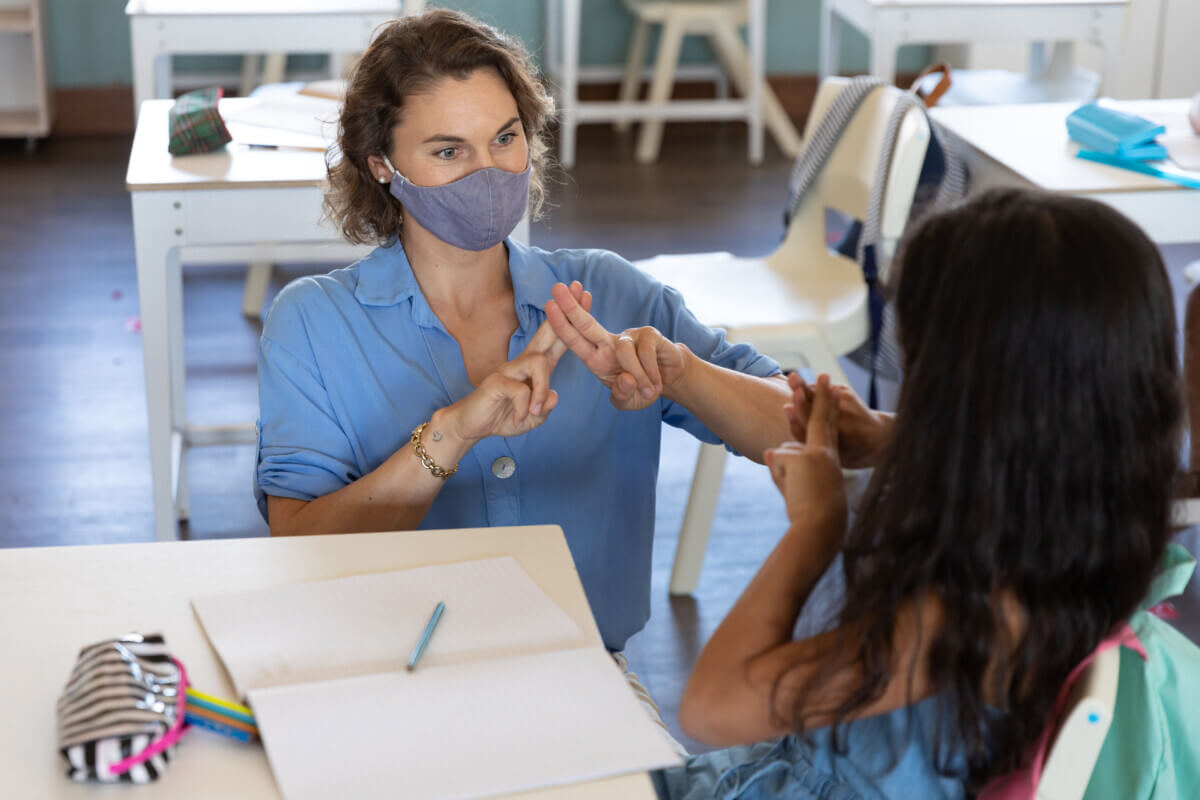
COLCHESTER, United Kingdom — Mask wearing was essential at the start of the pandemic, but that doesn’t mean it was an easy transition for many, especially those in the deaf community. A new study has found that over 90 percent of deaf people had trouble communicating with others during this time.
Beyond sign language and other audio aids, many deaf people rely on mouth movements (lip reading) to understand what people are saying. Masks make it difficult to read lips and judge facial expressions. Study authors from the United Kingdom say people who had the most trouble communicating while wearing masks were deaf and over the age of 55.
While the whole world felt isolated as people stayed inside, 59 percent of deaf people felt highly disconnected from society. The study also revealed that 76 percent missed vital information in conversation while people wore face coverings. Feeling disconnected from society had tremendous effects on deaf people’s mental well-being, the study finds.
“Mask mandates were vital in fighting the spread of the deadly coronavirus but meant some of our most vulnerable communities were left isolated. The pandemic lockdowns were hard for everyone but even more so for the deaf and hard-of-hearing,” explains Eva Gutierrez-Sigut, a psychology researcher at the University of Essex, in a university release. “This research exposes the unexpected consequences policies can have in a fast-moving international emergency and how people can fall through the cracks.”
Clear masks provide the most support
The study team invited 400 deaf people to participate in a survey — accessible through different sign languages — on their experience during the COVID-19 pandemic when mask mandates were in effect. Almost all deaf participants reported issues with communication because of masks, and there was no easy solution to overcome the masking problem. People still faced problems with communication even when they used other techniques such as sign language and speech reading. The most preferable option was for people to wear a clear mask that allowed others to see their entire mouth and lower face.
“Most deaf people we spoke to agreed these masks made a real difference and made everything from a trip to the shops to a vital doctor’s appointment easier,” adds Dr. Gutierrez-Sigut.
She says that if another pandemic occurs, governments need to learn how to balance public health with being inclusive to other communities that suffer from masking policies.
“The deaf and hard-of-hearing are not a homogenous group and have different needs,” the researcher concludes. “One thing is clear though, more needs to be done to engage with them.”
The study is published in Cognitive Research: Principles and Implications.


