
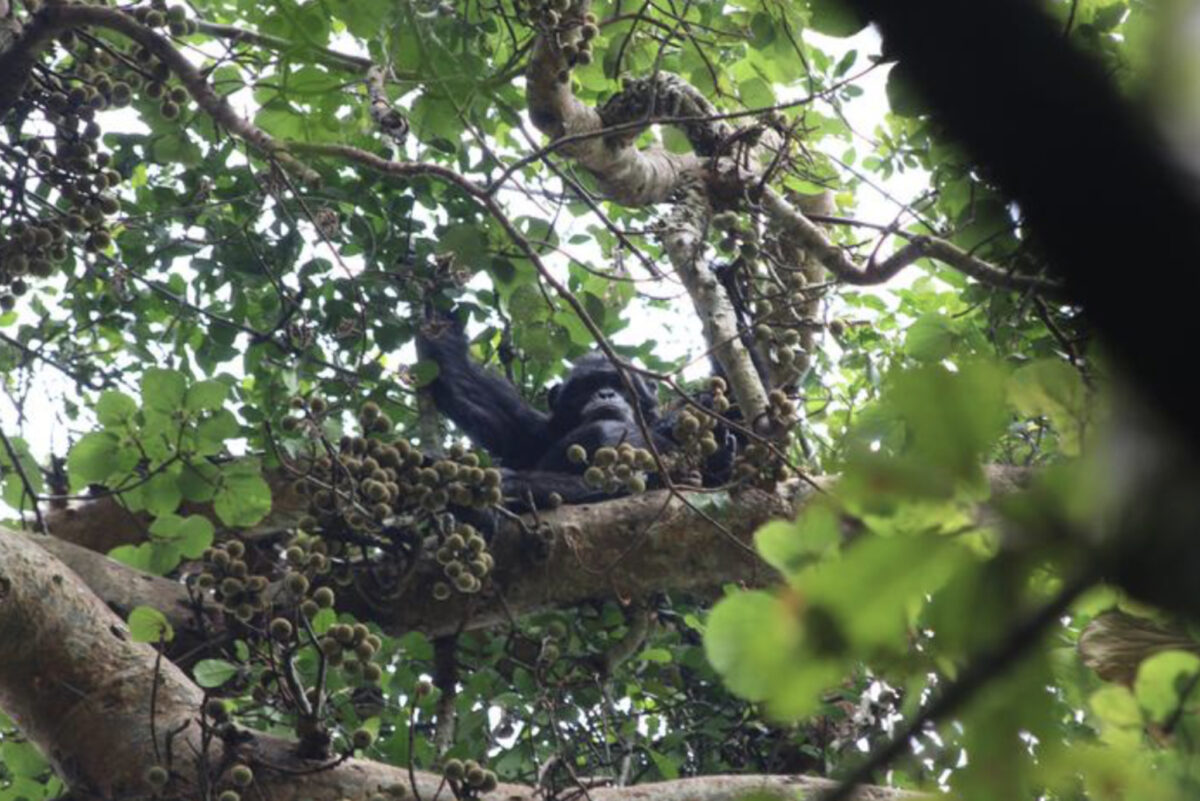
Two male chimpanzees eating the plum-like fruit of the evergreen Parinari excelsa tree at Taï National Park in the Ivory Coast in 2021.
The study suggests humans’ attraction to alcohol may trace back to our primate ancestors’ search for ripe, energy-rich fruit.
Table of contents
In A Nutshell
- Wild chimps ingest natural alcohol from fermented fruit every day.
- Average intake equals about 14 g ethanol—1–2 human drinks.
- Some fruits, like figs, carry higher alcohol levels than others.
- Findings back the “drunken monkey hypothesis” of alcohol’s deep roots.
BERKELEY, Calif. — Chimpanzees in the wild may be getting a daily dose of alcohol without even trying. Research out of the University of California, Berkeley that the fruit they eat naturally contains low levels of alcohol, thanks to fermentation by wild yeasts. When you add it up, a chimp’s daily fruit consumption delivers about the same amount of alcohol as a human would get from one to two drinks.
That finding supports an idea biologists have debated for years, nicknamed the “drunken monkey hypothesis.” The theory suggests that humans’ long-standing attraction to alcohol didn’t start with beer, wine, or spirits. Instead, it may have begun millions of years ago when our primate ancestors learned that the smell of fermenting fruit was a signal of ripeness and nutrition.
A Common Ingredient in Chimp Diets
Chimpanzees spend much of their lives foraging for fruit. At Ngogo in Uganda and Taï in Côte d’Ivoire, scientists followed local chimp communities and sampled the fruits they ate most often. In total, they tested nearly 500 ripe fruits across 20 species.
The results were consistent: the average alcohol content was about 0.3% by weight. That’s far weaker than beer or wine, but chimps eat a lot of fruit — around 4.5 kilograms a day. Multiply that out, and it equals about 14 grams of pure ethanol daily, the same as roughly one and a half human standard drinks.
Some fruits carried more alcohol than others. A fig species called Ficus mucuso made up a large portion of the diet in Uganda and sometimes reached about half a percent alcohol in one field season. In Côte d’Ivoire, Parinari excelsa topped the menu with a similar alcohol level. The key point: the very fruits chimps eat most often are also the ones that carry more alcohol.
How Much Is That in Human Terms?
For a chimp weighing 35 to 40 kilograms, those 14 grams pack a punch. Adjusted for body weight, it’s as if a human drank about 2.2 to 2.6 drinks per day.
Interestingly, the study didn’t report drunken behavior. Chimps weren’t stumbling around or acting unusually. Still, during heavy feeding bouts, like gorging on dozens of ripe figs at once, the short-term alcohol intake could spike much higher. The authors estimate that 75 ripe figs could deliver about 10 grams of ethanol in a single sitting, but they note the effects of that in wild chimps are still unknown.
Why Fruit Ferments
So why does fruit carry alcohol at all? The answer lies in yeast. These microbes live naturally on fruit skins and feast on sugars as the fruit ripens. The byproduct is ethanol, the same alcohol found in wine or beer.
For animals living in fruit-rich forests, the faint whiff of ethanol could be a reliable clue: this fruit is ripe, sweet, and worth eating. Over millions of years, fruit, yeast, and fruit-eating animals have evolved together in this way. Plants benefit because animals spread their seeds. Yeasts benefit because they hitch a ride to new fruits. Animals benefit because they find high-energy food.
What It Means for Humans
The genetic evidence backs up this long partnership. Both humans and great apes carry multiple versions of alcohol dehydrogenase genes, which make enzymes that help break down ethanol. One shared genetic tweak makes these enzymes far more efficient, an adaptation that suggests alcohol exposure has been a routine part of primate diets for a very long time.
For humans, that exposure later took on new forms. Archaeologists have found evidence of deliberate fermentation at least 9,000 years ago in China and 13,000 years ago in the Middle East. But this latest study suggests our relationship with alcohol began long before brewing: it was built into the fruit our ancestors ate.
Not About Getting Drunk
It’s tempting to imagine chimps as forest party animals, but that misses the point. The study makes clear that their alcohol intake is a side effect of eating fruit, not a deliberate search for intoxication. Regular low doses are simply part of a fruit-heavy diet.
For scientists, this research matters because it shows that attraction to alcohol may be deeply rooted in biology. If our ancestors evolved to associate the smell of ethanol with nutritious food, that could help explain why humans today still find alcohol appealing, even when modern drinks contain much higher concentrations than any wild fruit.
Caveats and Open Questions
Like all field studies, this one has limits. Researchers collected fruit that looked recently fallen or freshly eaten. If chimps actually prefer fruit that’s more fermented, the real alcohol levels in their diets might be even higher. Daily intake estimates also relied on published figures about how much fruit chimps typically eat, not direct observation of the same individuals.
The study, published in Science Advances, didn’t measure seasonal shifts in fruit fermentation, nor did it track behavioral effects of different doses. So while we now know chimps are ingesting alcohol regularly, we still don’t know exactly how it shapes their daily behavior.
Looking Forward
For chimpanzees, steady exposure to alcohol isn’t unusual. It’s baked into their diets, as natural as sugar in ripe fruit. For humans, it offers perspective. Our fascination with alcohol may not just be cultural or historical. It may be biological, tied to ancient survival strategies in tropical forests.
The next time you peel a banana or bite into a ripe fig, consider this: you’re tasting the same faint signal that may have guided our ancestors and still shapes behavior in our closest relatives today.
Paper Summary
Methodology
Researchers collected 499 ripe fruit samples from 20 different angiosperm species consumed by chimpanzees at two African field sites: Ngogo in Uganda (Eastern chimpanzees) and Taï in Côte d’Ivoire (Western chimpanzees). They used three different ethanol measurement methods across multiple field seasons from 2017–2021: metal oxide semiconductor sensors, gas chromatography, and dichromate chemical assays. Fruits were collected opportunistically from crops being consumed by chimpanzees, with care taken to exclude overly damaged or aged specimens. Ethanol concentrations were weighted by the annual percentage of feeding time chimpanzees spend consuming each fruit species at each site. Daily ethanol ingestion was calculated using published data on chimpanzee fruit consumption rates (approximately 4.5 kg daily) and body mass data to determine mass-specific dosages comparable to human alcohol consumption.
Results
Ripe fruit samples contained average ethanol concentrations of 0.31–0.32% by weight across both sites, remarkably consistent despite geographic separation. The 13 species studied at Ngogo represented 65% of annual fruit feeding time, while 6 species at Taï represented 32% of feeding time. The most frequently consumed fruit species at each site (Ficus mucuso at Ngogo and Parinari excelsa at Taï) also contained some of the highest ethanol concentrations. Researchers calculated that chimpanzees consume approximately 14 grams of pure ethanol daily, equivalent to 1.4 standard alcoholic drinks for humans. When adjusted for body mass, both female and male chimpanzees consume the equivalent of about 2.2–2.6 standard drinks daily, depending on site.
Limitations
The study used different ethanol measurement methods across field seasons, limiting direct comparisons between some data sets. Daily fruit consumption estimates were based on previously published studies rather than direct observation of the specific chimpanzees whose fruit was sampled. Researchers likely collected less desirable fruit specimens if chimpanzees were preferentially selecting the most fermented fruits, potentially underestimating actual ethanol consumption. The study didn’t assess behavioral effects of ethanol consumption or seasonal variations in fermentation levels. Sample sizes varied among species, and some analysis was limited to species with at least three fruit samples.
Funding and Disclosures
The research was supported by the Department of Integrative Biology Summer Research Award, Museum of Vertebrate Zoology Karl Kroford Research Funds, and Berkeley Sigma Xi Grants In Aid of Research Award to lead author Aleksey Maro. Authors declared no competing interests. Permits were obtained from Uganda National Council for Science and Technology, Uganda Wildlife Authority, and Office Ivoirien des Parcs et Réserves of Côte d’Ivoire.
Publication Information
“Ethanol ingestion via frugivory in wild chimpanzees” by Aleksey Maro, Aaron A. Sandel, Bi Z. A. Blaiore, Roman M. Wittig, John C. Mitani, and Robert Dudley was published in Science Advances, Volume 11, on September 17, 2025. The paper was submitted January 23, 2025, accepted August 19, 2025, and published online September 17, 2025, with DOI: 10.1126/sciadv.adw1665.


