
Coming upon a bear in the forest will immediately put your brain into fight or flight mode. (© Татьяна Макарова -stock.adobe.com)
DUBLIN — From a menacing bear in the forest to a smiling friend at a party, our brains are constantly processing emotional stimuli and guiding our responses. But how exactly does our brain transform what we see into appropriate actions? A new study sheds new light on this complex process, revealing the sophisticated ways our brains encode emotional information to guide behavior.
Led by Prof. Sonia Bishop, now Chair of Psychology at Trinity College Dublin, and Samy Abdel-Ghaffar, a researcher at Google, the study delves into how a specific brain region called the occipital temporal cortex (OTC) plays a crucial role in processing emotional visual information. Its findings are published in Nature Communications.
“It is hugely important for all species to be able to recognize and respond appropriately to emotionally salient stimuli, whether that means not eating rotten food, running from a bear, approaching an attractive person in a bar or comforting a tearful child,” Bishop explains in a statement.
The researchers used advanced brain imaging techniques to analyze how the OTC responds to a wide range of emotional images. They discovered that this brain region doesn’t just categorize what we see – it also encodes information about the emotional content of images in a way that’s particularly well-suited for guiding behavior.
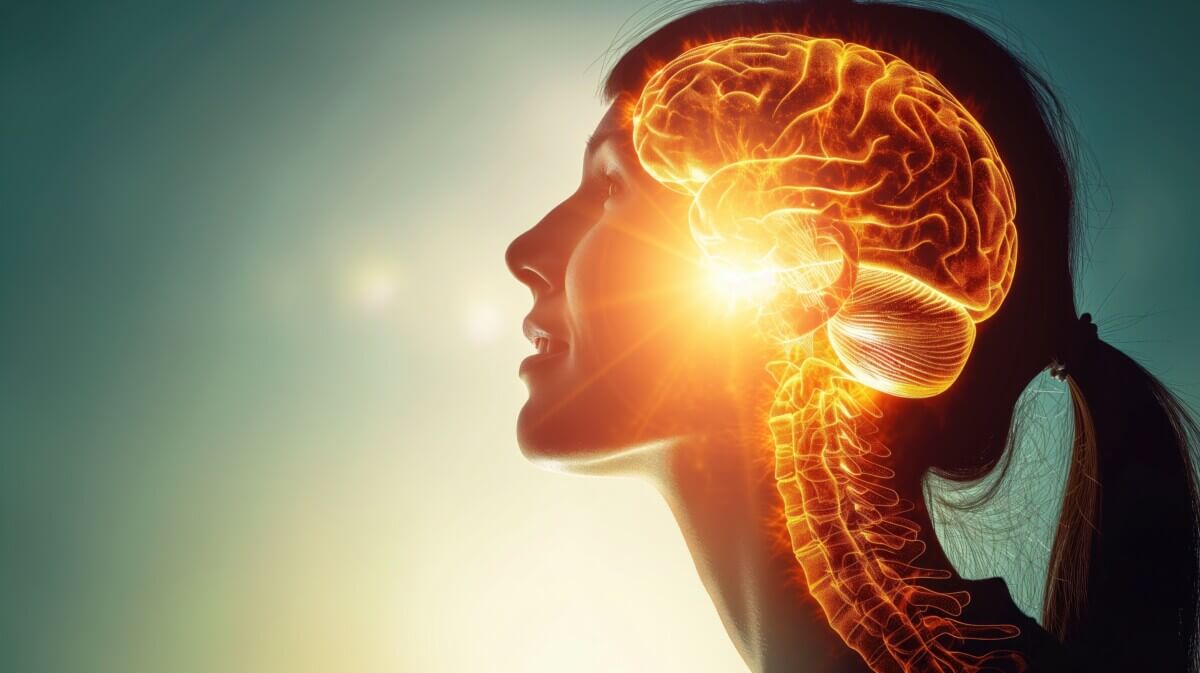
One of the study’s key insights is that our brains don’t simply process emotional stimuli in terms of “approach” or “avoid.” Instead, the OTC appears to represent emotional information in a more nuanced way that allows for a diverse range of responses.
“Our research reveals that the occipital, temporal cortex is tuned not only to different categories of stimuli, but it also breaks down these categories based on their emotional characteristics in a way that is well suited to guide selection between alternate behaviors,” says Bishop.
For instance, the brain’s response to a large, threatening bear would be different from its response to a weak, diseased animal – even though both might generally fall under the category of “avoid.” Similarly, the brain’s representation of a potential mate would differ from its representation of a cute baby, despite both being positive stimuli.
The study employed a technique called voxel-wise modeling, which allowed the researchers to examine brain activity at a very fine-grained level. “This approach let us explore the intertwined representation of categorical and emotional scene features, and opened the door to novel understanding of how OTC representations predict behavior,” says Abdel-Ghaffar.
By applying machine learning techniques to the brain imaging data, the researchers found that the patterns of activity in the OTC were remarkably good at predicting what kinds of behavioral responses people would associate with each image. Intriguingly, these predictions based on brain activity were more accurate than predictions based solely on the objective features of the images themselves.
This suggests that the OTC is doing more than just passively representing what we see – it’s actively transforming visual information into a format that’s optimized for guiding our actions in emotionally-charged situations.
These findings not only advance our understanding of how the brain processes emotional information but could also have important implications for mental health research. As Prof. Bishop points out, “The paradigm used does not involve a complex task making this approach suitable in the future, for example, to further understanding of how individuals with a range of neurological and psychiatric conditions differ in processing emotional natural stimuli.”
By unraveling the ways our brains encode emotional information, the study brings us one step closer to understanding how we navigate the complex emotional landscape of our world. From everyday social interactions to life-or-death situations, our brains are constantly working behind the scenes, using sophisticated neural representations to help us respond appropriately to the emotional stimuli we encounter.
Paper Summary
Methodology
The researchers used functional magnetic resonance imaging (fMRI) to scan the brains of volunteers as they viewed over 1,500 emotionally-charged images. Participants categorized the images as positive, negative, or neutral and rated their emotional intensity. A separate group of participants matched behavioral responses to each image.
The team applied a technique called voxel-wise modeling to analyze the brain scan data. This involves examining the activity of tiny 3D pixels (voxels) in the brain and using machine learning to determine how each voxel responds to different features of the images. They created models to predict brain activity based on semantic categories, emotional valence and arousal, and combinations of these features.
Results
The study found that the occipital temporal cortex (OTC) integrates information about both what an image depicts and its emotional content. Three main patterns of activity were identified across the OTC:
- A pattern distinguishing animate from inanimate objects and encoding overall emotional intensity
- A pattern encoding the emotional intensity specifically of animate objects
- A pattern encoding the positive/negative valence specifically of animate objects
These patterns of brain activity were better at predicting behavioral associations than models based directly on image features, suggesting the OTC transforms visual input into a format suited for guiding behavior.
Limitations
The study was conducted on a small group of volunteers and relied on static images rather than dynamic real-world scenes. The behavioral predictions were based on ratings from a separate group, not observed behaviors. While the study shows correlations between brain activity and behavioral associations, it doesn’t prove causation.
Discussion and Takeaways
This research provides evidence that the OTC doesn’t just categorize visual stimuli but also encodes emotional information in a way that could guide nuanced behavioral responses. The integrated representation of semantic and affective information appears particularly strong for living things, which aligns with evolutionary perspectives on the importance of quickly distinguishing friend from foe.
The finding that OTC activity patterns predict behavioral associations better than image features alone suggests the brain is extracting and emphasizing information most relevant to behavior. This efficient coding could help explain how we rapidly respond to emotional stimuli in our environment.
The study opens up new avenues for understanding how this OTC processing interacts with other brain regions involved in emotion and decision-making. It also has potential implications for understanding and treating disorders involving atypical emotional responses to visual stimuli, offering a new approach to studying how individuals with various neurological and psychiatric conditions process emotional stimuli.


