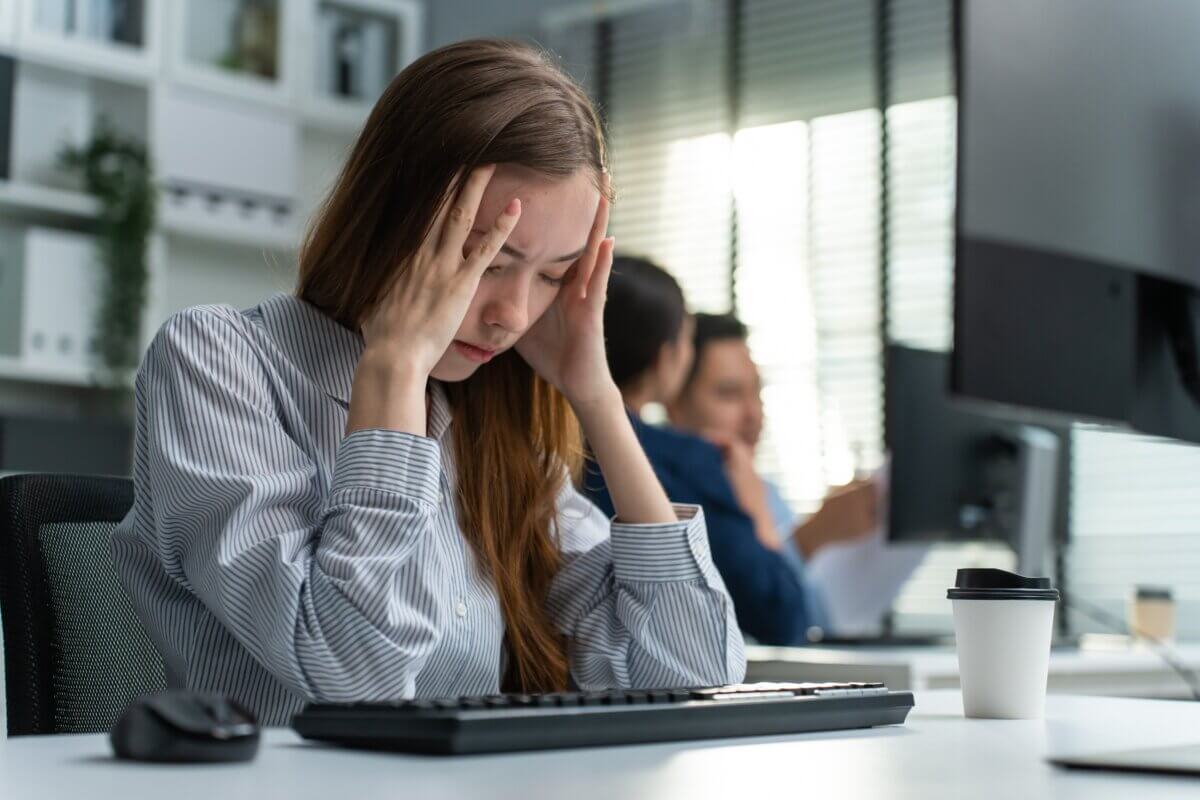
(Photo by Hananeko_Studio on Shutterstock)
Imagine you wake up one morning with a scratchy throat and a slight fever. You have an important meeting at work that you’ve been preparing for weeks. Do you call in sick, potentially disappointing your colleagues and jeopardizing your professional reputation? Or do you pop a few painkillers, put on a brave face, and hope for the best? According to recent research, many of us would choose the latter option, even if our symptoms were more severe or if we believed we might be contagious.
In a world still reeling from a global pandemic, the study uncovers a surprising trend: people are still choosing to hide their illnesses from others, despite the fact that doing so could put others at risk. This phenomenon, known as “disease concealment,” is more common than you might think and has far-reaching implications for public health and social behavior.
Perhaps most stunning is the revelation that people are more likely to conceal their illnesses when their symptoms are more severe and when the risk of transmission to others is higher. This counterintuitive finding challenges our assumptions about human behavior during times of illness and raises important questions about the factors that drive us to keep our health status a secret.
The research, conducted at the University of Michigan, found that a staggering 75% of the 4,110 participants across several studies reported either hiding an infectious illness from others at least once or said they might do so in the future. Many participants admitted to boarding planes, going on dates, and engaging in other social interactions while secretly sick. Even more alarming, more than 61% of healthcare workers participating in the study said they had concealed an infectious illness.
“Healthy people forecasted that they would be unlikely to hide harmful illnesses—those that spread easily and have severe symptoms—but actively sick people reported high levels of concealment regardless of how harmful their illness was to others,” says lead author Wilson N. Merrell, a doctoral candidate at Michigan, in a statement.
This tendency to conceal illness goes beyond the common cold or flu. The study’s findings, published in the journal Psychological Science, suggest that people may be more likely to hide their health status even when dealing with more serious conditions. This behavior can have serious consequences, not just for the individual, but for public health as a whole.

How to explain this sick behavior
But why do people choose to hide their illnesses? The researchers propose several potential explanations. One is the desire to avoid stigma. In many societies, being ill is seen as a sign of weakness or moral failing. People may fear judgment or discrimination if others know they are sick. Another factor is the need to maintain social connections. Humans are inherently social creatures, and the prospect of isolation due to illness can be daunting.
Finally, there are practical considerations, such as financial pressures or work obligations, that may push people to conceal their health status.
“This suggests that sick people and healthy people evaluate the consequences of concealment in different ways, with sick people being relatively insensitive to how spreadable and severe their illness may be for others,” notes Merrell.
In an era where infectious diseases can spread rapidly across the globe, understanding the factors that lead people to conceal their illnesses is crucial for developing effective public health strategies. It suggests that simply educating people about the risks of disease transmission may not be enough to change behavior.
Ultimately, letting people know you’re sick might be embarrassing, but it’s respectful and goes quite a long way. Staying home because you might expose someone who could have cancer or heart problems to your ailment is simply the right thing to do. The study shows, unfortunately, that sadly this is easier said than done.
Paper Summary
Methodology
The researchers conducted several studies involving over 4,000 participants. In one key experiment, they asked people to imagine being sick in different scenarios, varying the severity of symptoms and the risk of transmission to others. Participants then rated how likely they would be to hide, conceal, or cover up their illness in each situation. By comparing these responses across different scenarios, the researchers were able to identify patterns in people’s likelihood of concealing illness.
In another study, they recruited 399 university healthcare employees and 505 students, asking them to report on their actual illness experiences and concealment behaviors since the start of the COVID-19 pandemic in March 2020.
Results
The study found that people were more likely to say they would conceal their illness when:
- Their symptoms were more severe (for example, needing to take days off work versus just having trouble concentrating)
- The risk of transmitting the illness to others was higher
However, when looking at real-life behavior, those who were actually sick reported high levels of concealment regardless of how harmful their illness was to others. More than 70% of participants in one study reported covering up their symptoms, often citing conflicts with social plans as the reason.
Limitations
Like all research, this study has its limitations. Some of the scenarios were hypothetical, so people’s responses might not perfectly match how they would behave in real life. The study also focused primarily on U.S. participants, so the findings might not apply equally to all cultures. Additionally, much of the research was conducted during the COVID-19 pandemic, which may have influenced people’s attitudes towards illness and concealment.
Discussion and Takeaways
The researchers suggest that disease concealment might be a kind of “costly signal” – a behavior that comes at a personal cost but serves a social purpose. By hiding their illness, people might be trying to show that they’re strong, reliable, or committed to their social group. This could explain why concealment increases with symptom severity and transmission risk – the higher the stakes, the more important it becomes to prove one’s worth to the group.
The study also highlights the complex trade-offs people make when deciding whether to disclose their health status. On one hand, concealing illness can help maintain social connections and avoid stigma. On the other hand, it can put others at risk and potentially worsen one’s own health. Understanding these trade-offs could help design more effective public health messages and policies.
As Merrell points out, “After all, people tend to react negatively to, find less attractive, and steer clear of people who are sick with infectious illness. It therefore makes sense that we may take steps to cover up our sickness in social situations. This suggests that solutions to the problem of disease concealment may need to rely on more than just individual good will.”
Funding and Disclosures
This research was supported by the University of Michigan. The authors declared no conflicts of interest, meaning they didn’t have any financial or personal relationships that could have inappropriately influenced their work.


