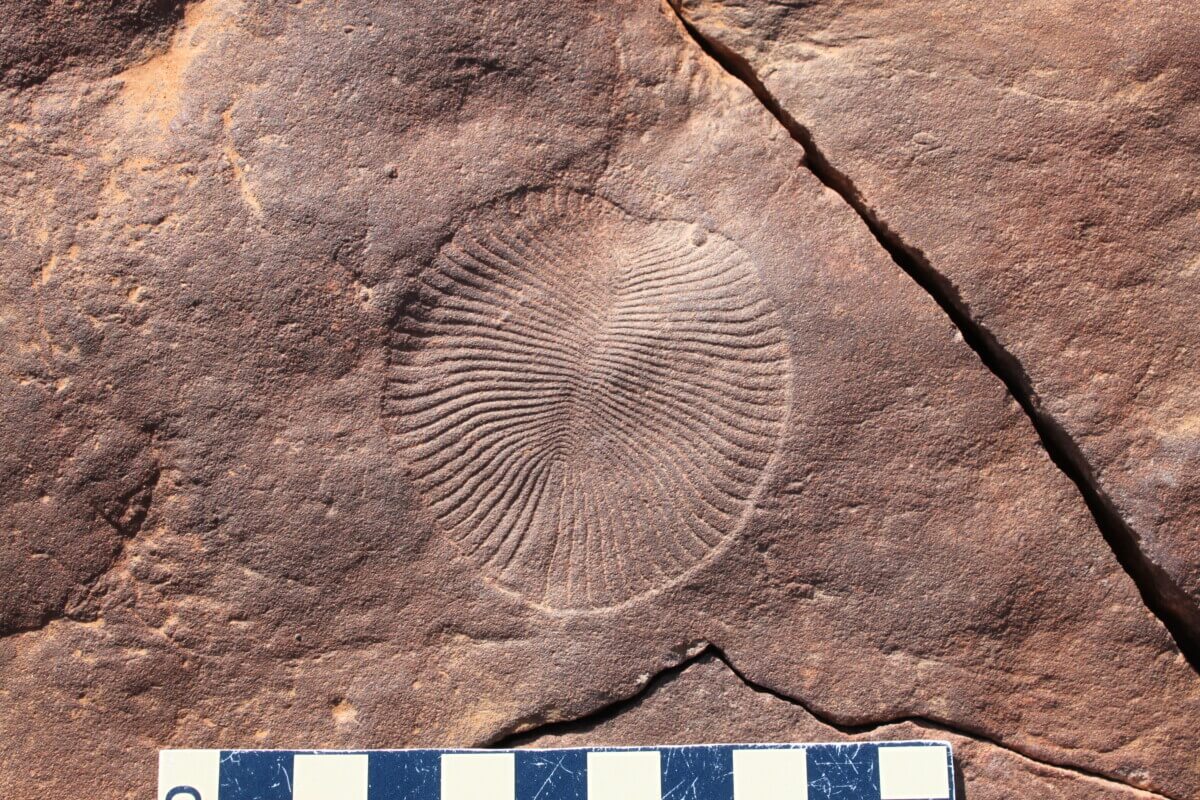
Dickinsonia, one of the oldest animal fossils from the Ediacara Biota, Ediacaran Rawnsley Quartzite Formation, Australia. 560–550 million years old. (Credit: Lidya Tarhan)
OXFORD, England — When did animals appear on Earth? It’s a question that has puzzled naturalists since Charles Darwin. Now, a groundbreaking study led by the University of Oxford sheds light on the timing of the appearance of animals in Earth’s history. The Cambrian period, spanning from 539 to 485 million years ago, witnessed a remarkable burst of animal diversity, often referred to as the “Cambrian explosion.” However, researchers have long wondered why the fossil record lacks evidence of animals prior to this geological period.
“Many scientists believe that the first animals actually evolved long before the Cambrian period, but they cannot explain why they are missing from the fossil record,” acknowledges the study’s lead author Dr. Ross Anderson in a media release.
To unravel this mystery, the research team conducted a comprehensive assessment of the preservation conditions necessary for capturing early animal fossils. By examining samples from Cambrian mudstone deposits, they identified a particular type of preservation called Burgess Shale-Type (BST). This exceptional preservation is characterized by the fossilization of even soft and fragile animal tissues. The team hypothesized that if these conditions also occurred during the early Neoproterozoic era, the absence of fossils would indicate the genuine absence of animals at that time.
Analyzing samples from various fossil-rich Neoproterozoic mudstone deposits, the researchers discovered that the presence of certain clays played a crucial role in BST preservation. Specifically, the antibacterial clay called berthierine was found to be enriched in fossils with exceptional BST preservation. Additionally, kaolinite, another antibacterial clay, appeared to bind to decaying tissues, forming a protective halo during fossilization. These clays acted as a barrier, preventing the breakdown of organic materials by bacteria and microorganisms.
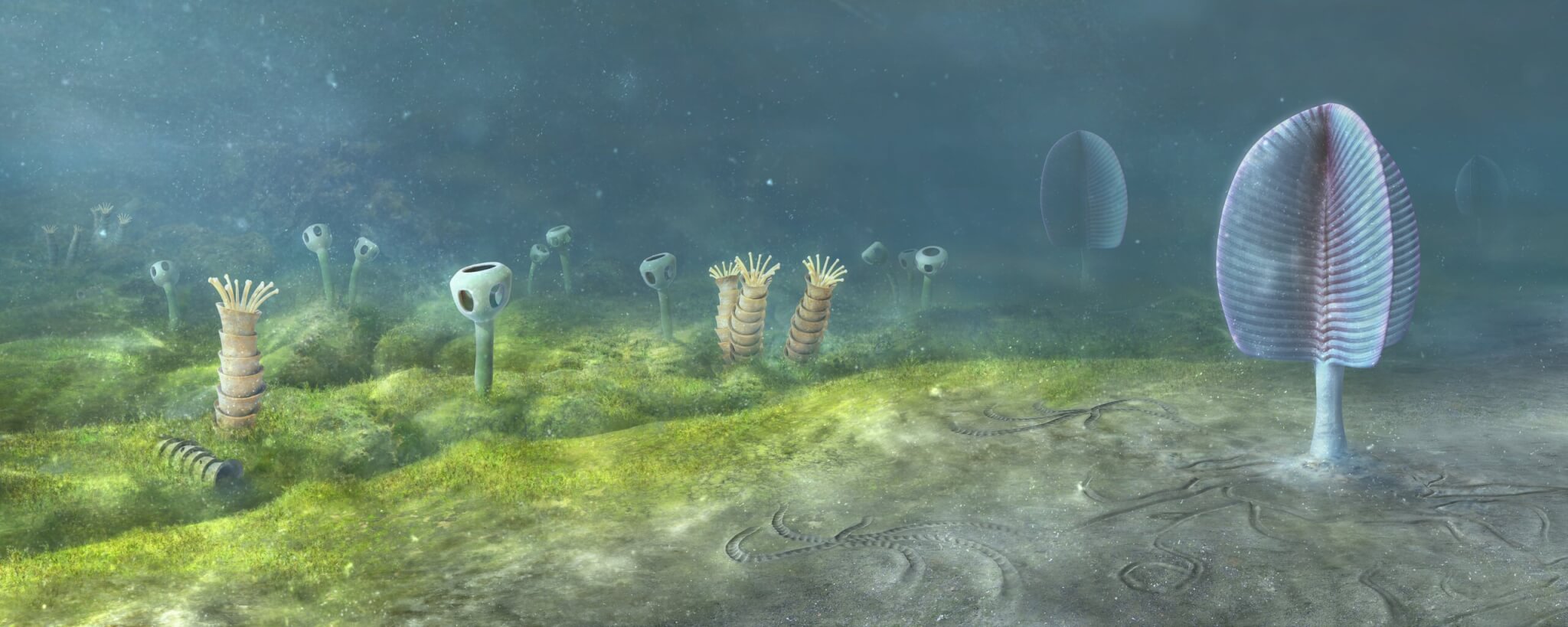
Based on the analysis, most Neoproterozoic deposits lacked the necessary compositions for BST preservation. However, three deposits in Nunavut (Canada), Siberia (Russia), and Svalbard (Norway) shared similar compositions with Cambrian BST rocks. Surprisingly, these three deposits did not yield any animal fossils, despite favorable preservation conditions. This “evidence for absence” suggests that animals had not yet evolved during the early Neoproterozoic era, challenging previous molecular clock estimates.
Moving forward, the research team plans to explore progressively younger Neoproterozoic deposits that possess conditions for BST preservation. By confirming the absence of animals in these rocks, they aim to distinguish between true absence and fossilization limitations. Furthermore, laboratory experiments will be conducted to understand the mechanisms underlying clay-organic interactions in BST preservation. These insights may revolutionize our understanding of biodiversity and the biases inherent in the fossil record across different geological eras.
This groundbreaking study brings us closer to unraveling the enigma surrounding the origins of animals on Earth. By investigating the unique conditions necessary for fossilization, scientists have established a new maximum point for the evolution of animals and raised intriguing questions about life’s emergence in our planet’s ancient history.
The study is published in the journal Trends in Ecology & Evolution.


