
Vegetarians' revulsion to meat may derive from evolutionary instincts. (Tibanna79/Shutterstock)
In a nutshell
- People reject meat and vegetables for fundamentally different reasons: meat is often rejected due to disgust (a contamination-based emotional response), while vegetables are rejected due to distaste (a reaction to unpleasant taste or texture).
- Meat rejection patterns in the study closely resembled those of universally revolting substances like human flesh and feces, with strong associations to core disgust, including nausea and feelings of contamination.
- Understanding these differences could help tailor strategies to promote plant-based diets, emphasizing moral or emotional appeals for reducing meat intake and improving flavor and preparation for increasing vegetable consumption.
EXETER, England — Your brain treats a bitter Brussels sprout completely differently than a perfectly cooked steak, even if you hate both equally. New research from the University of Exeter shows we use separate biological alarm systems for plants versus animals; one that says “this tastes awful” and another that screams “this will contaminate me.” This may help explain why some vegetarians find the idea of eating meat so revolting, even more than just disliking the taste.
A new study published in the journal Appetite has uncovered that people reject meat based on “disgust,” an emotional response tied to contamination fears, while vegetables get rejected because of “distaste,” a purely sensory reaction to bad taste or texture. This distinction isn’t just academic nitpicking; it could explain why some people can go from loving hamburgers to becoming disgusted by all meat, while others might always hate the taste of onions but never feel truly revolted by them.
Two Kinds of Food Rejection
Using surveys and sophisticated analysis techniques, the team studied how 309 people responded to various foods they didn’t want to eat. Most of us use the word “disgusting” pretty loosely, whether we’re talking about a burnt pizza or the idea of eating insects. But scientists make a crucial distinction between distaste and disgust.
Distaste is your immediate “yuck” reaction to something that tastes bad, smells funky, or feels gross in your mouth. Think bitter medicine or slimy okra. Disgust, on the other hand, is an emotional response based on what the food represents—its contamination potential, where it comes from, or moral concerns about consuming it.
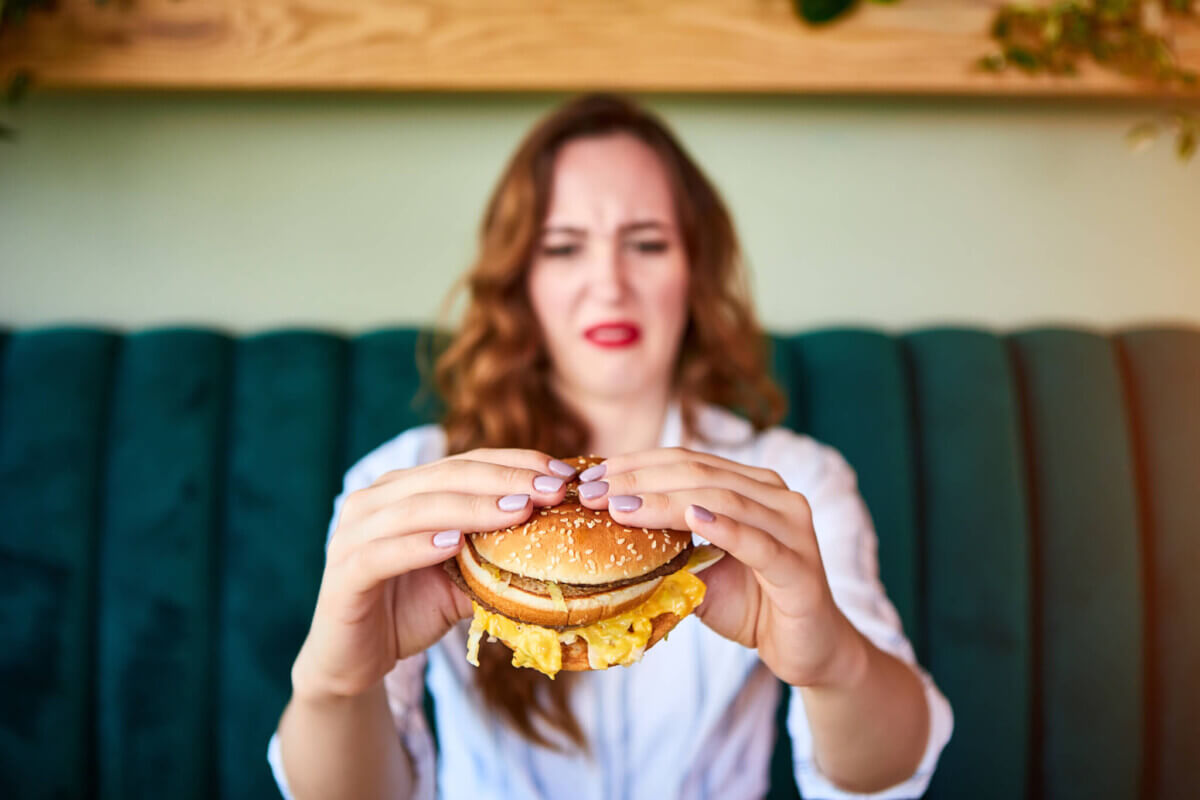
The researchers explain that while both disgust and distaste lead to similar outward reactions, like rejecting the food or making a face, disgust can go further, sometimes causing nausea or even vomiting in more intense cases. The key difference? Bad taste isn’t necessary for disgust; you might find the thought of perfectly prepared dog meat revolting regardless of how it tastes.
This distinction matters because distaste evolved to protect us from plant toxins (which often taste bitter), while disgust developed to keep us safe from pathogens found in contaminated meat and other animal products.
The researchers recruited two groups of participants from the UK. The main group consisted of 252 people, mostly vegetarians who had already shown some negative reaction to meat. A smaller control group of 57 omnivores was also included to provide comparison data.
Participants viewed images of various foods and rated them on twelve different criteria designed to tease apart distaste from disgust. For vegetables, they looked at commonly disliked options like raw onions, green olives, Brussels sprouts, beetroot, and raw eggplant. For meat, they used images of cooked chicken, pork, and beef. Control group members also rated genuinely disgusting items like human flesh, human feces, and dog meat to establish what a true disgust response looks like.
Each person rated how much they objected to the taste, appearance, and the idea of having the food in their mouth or stomach. Participants also answered questions about whether the food reminded them of death or made them feel contaminated, key markers of different types of disgust.
Vegetables Taste Bad, Meat Feels Gross
When people rejected vegetables, they primarily complained about taste—exactly what you’d expect from distaste. Rejected meat, however, showed response patterns nearly identical to universally disgusting items like feces and human flesh. People weren’t just saying the meat tasted bad; they were reporting feelings of contamination, nausea, and moral offense.
Using a statistical technique called multidimensional scaling, the researchers created a visual map showing how different foods clustered together based on rejection patterns. Meat and disgust-inducing items formed one tight cluster, while rejected vegetables formed their own separate group.

Digging deeper into meat rejection, the researchers identified three types of disgust at play. “Core disgust” dominated. This is the pathogen-avoidance response that makes you worry about contamination. But “animal-reminder disgust” (thinking about death and body parts) and “moral disgust” (ethical concerns about eating animals) also played roles.
According to the study, core disgust criteria like “presence in mouth” and nausea received the highest ratings for all meat stimuli, while animal-reminder criteria like death reminders received the weakest ratings.
Understanding the psychology behind food rejection could help develop better strategies for encouraging healthier eating or supporting people transitioning to plant-based diets. Getting people to eat more vegetables might require different approaches, like improving preparation methods or gradually introducing new flavors rather than addressing contamination concerns.
This study focused on meat-rejecting individuals, but future research could explore whether these patterns hold for the general population. The findings raise intriguing questions about how our evolutionary past continues to shape our modern dining choices.
Sometimes, being picky is a result of millions of years of evolution designed to keep our ancestors alive. Our relationship with food runs much deeper than taste buds; it’s written in our DNA, shaped by evolution, and still calling the shots at every meal.
Paper Summary
Methodology
Researchers conducted online surveys with 309 UK participants split into two groups: a main sample of 252 people (mostly vegetarians) who had shown negative reactions to meat, and a control group of 57 omnivores. Participants rated various foods on twelve criteria designed to distinguish between distaste (sensory-based rejection) and disgust (emotion-based rejection). They used images of commonly disliked vegetables, cooked meats, universal disgust elicitors (human/dog meat, feces), and bread as a neutral control. Statistical analyses including correlations and multidimensional scaling were used to identify patterns in food rejection responses.
Results
The study confirmed that meat rejection follows a disgust pattern while vegetable rejection follows a distaste pattern. Rejected meat showed response profiles nearly identical to universal disgust elicitors, with strong ratings across all rejection criteria. Rejected vegetables primarily showed negative responses to taste-related criteria. Core disgust (pathogen avoidance) was the primary type experienced with meat, though animal-reminder disgust and moral disgust also played significant roles. Multidimensional scaling analysis revealed three distinct clusters: disgust stimuli (including meat), rejected vegetables, and neutral bread.
Limitations
The study focused primarily on meat-rejecting individuals rather than the general population, limiting generalizability. Both samples had a female bias (77-81%), which could affect results since women typically show higher disgust sensitivity. The questionnaire design heavily weighted disgust-related criteria (4 of 5 basic questions), potentially biasing results. Sample sizes varied significantly across different foods, and the correlation analysis had limited statistical power due to necessary data averaging. The study only examined rejection responses, not acceptance patterns.
Funding and Disclosures
This work was supported by research allowance from a PhD grant to Elisa Becker from the University of Exeter Psychology Department. The authors declared no competing financial interests or personal relationships that could have influenced the research. They acknowledged using ChatGPT version 4 to assist with shortening and refining sections of the manuscript.
Publication Information
The paper “Disgust and distaste – Differential mechanisms for the rejection of plant- and animal-source foods” is authored by Elisa Becker and Natalia S. Lawrence from the Psychology Department at the University of Exeter. It was published in the journal Appetite in 2025.


