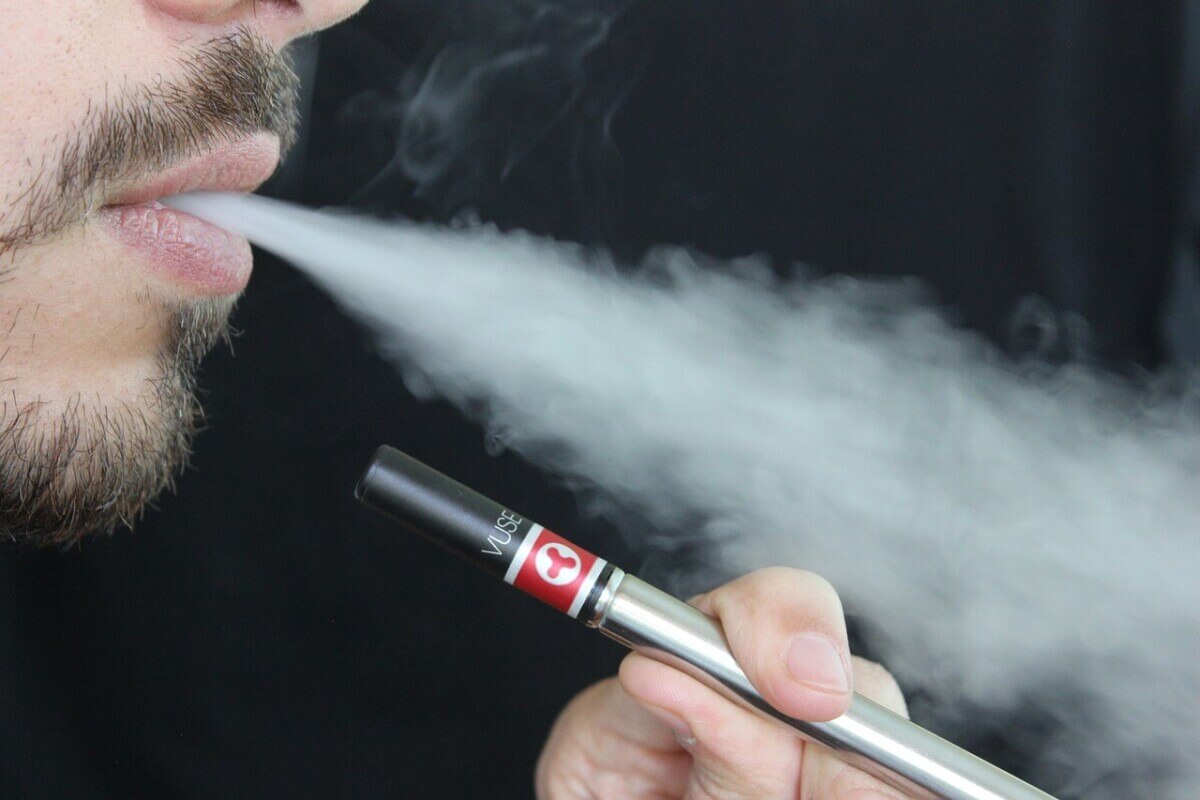
Photo by lindsayfox by Pixabay
Vaping, even without nicotine, can immediately drop your blood vessels’ ability to carry life-sustaining oxygen throughout the body.
Research presented at 2024’s annual meeting of the Radiological Society of North America showed that e-cigarettes interfere with blood flow and decrease the oxygen in the veins. That may mean that the vaper’s lungs are absorbing less oxygen. The study will need to be confirmed with corroborating research, but it could indicate that vaping regularly leads to blood vessel disease.
Electronic cigarettes are not a safer alternative to cigarette smoking, according to Dr. Marianne Nabbout, the study’s lead author from the University of Arkansas for Medical Sciences in Little Rock.
Even though vaping aerosols don’t have all the same cancer-causing toxins as tobacco smoking, vapers are still breathing chemicals and affecting their blood vessels. E-cigarettes work by turning a liquid into vapor which is inhaled by the user. That vapor may contain lead, formaldehyde, propylene glycol, glycerin, and other harmful substances.

The investigation included 31 vapers and smokers between the ages of 21 and 49. These people were compared to 10 abstainers. Each participant, in three separate sessions, got MRI scans before and after smoking tobacco, vaping with nicotine, and vaping without nicotine.
During the vaping sessions, a thigh cuff (a blood pressure device) restricted blood flow to the leg. After vaping or smoking, the thigh cuff was released, and researchers measured the speed of the return of blood to the leg. The researchers also measured the oxygen of the blood returning to the heart after flowing throughout the body, supplying oxygen to tissues.
After vaping or smoking, there was a significant drop in the rate of blood flow to the leg. Compared with the nonsmokers and smokers, vapers using nicotine products had the biggest drop in blood flow performance, followed by the vapes without nicotine, and then the smokers. There was also a decrease in oxygen in the blood returning to the heart in both vapers and smokers.
Good blood flow is essential for carrying oxygen and nutrients throughout the body and for removing waste products of metabolism. Poor blood flow can lead to blot clots, high blood pressure, and stroke.
In another study in the journal Arteriosclerosis, Thrombosis and Vascular Biology, researchers found that chronic e-cigarette users had impaired blood vessel function which may put them at risk for heart disease. Matthew E. Springer, PhD, a professor of medicine at the University of California-San Franscisco, stated that chronic users of e-cigarettes may experience a risk of vascular disease similar to that of chronic smokers.
Springer and his colleagues collected blood samples from a group of 120 volunteers that included those who were long-term e-cigarette users and long-term smokers, as well as people who didn’t smoke or vape.
The researchers found that blood from participants who used e-cigarettes and those who smoked responded to inhalation in three distinct ways that contribute to impairment of blood vessel function.
In addition, Springer and his team discovered that e-cigarettes inhalation had harmful cardiovascular effects that were different from those caused by cigarette smoke inhalation. The blood of people who used e-cigarettes had circulating biologic substances that were markers for cardiovascular disease. These substances were not in the blood of smokers.
Springer said that these findings suggest that using both e-cigarettes and tobacco, as many people do, carries greater health risks than just using one or the other.
The National Institutes of Health’s Division of Lung Diseases continues to research the effects of smoking and other airway irritants on blood vessel function.


