
The ocean is darkening because sunlight is unable to reach deeper levels beneath the surface. (divedog/Shutterstock)
Scientists Warn Of Underwater ‘Traffic Jam’ As Lack Of Light Threatens Species’ Habitats
In a nutshell
- Massive habitat loss is happening underwater. Ocean waters have darkened across an area larger than Africa over the past 20 years, shrinking the sunlit zones where 90% of marine life depends on for survival by more than 50 feet in the worst-affected areas.
- The darkening is occurring across vast stretches of open ocean, particularly in polar regions and the North Atlantic and Pacific, suggesting climate change and shifting ocean circulation patterns are major drivers beyond typical coastal runoff.
- As the ocean’s photic zone shrinks, sea creatures are being compressed into an increasingly narrow band of surface water, creating intense competition for resources and disrupting fundamental behaviors like the planet’s largest daily migration of zooplankton.
PLYMOUTH, England — Earth’s oceans are losing light, and it’s happening so fast that scientists are calling it one of the planet’s largest unnoticed habitat collapses. Over the past 20 years, an area of underwater real estate larger than the entire continent of Africa has significantly darkened, squeezing 90% of marine life into an ever-shrinking zone near the surface.
A new study published in Global Change Biology reveals that our planet’s oceans have been getting progressively darker over the past two decades, with light penetration dropping so dramatically that marine habitats have shrunk greatly. This isn’t just happening in murky coastal waters where you’d expect pollution and runoff to cloud things up; it’s occurring across vast stretches of the open ocean, from polar regions to the middle of the Pacific.
Marine life depends on light for everything from photosynthesis to navigation, mating, and avoiding predators. When that light disappears, entire underwater communities get squeezed into smaller and smaller spaces near the surface.
According to the researchers, this global darkening represents a widespread reduction in the depth where sunlight and moonlight can drive essential biological processes in marine ecosystems. They describe it as a form of habitat loss that has remained largely unmeasured until now.
Using satellite data spanning from 2003 to 2022, scientists from the University of Plymouth and Plymouth Marine Laboratory analyzed how much light penetrates ocean waters worldwide. They found that across more than 29 million square miles of ocean, about 21% of the global total, waters have become significantly darker.
Researchers used data from NASA’s MODIS Aqua satellite to track something called the “diffuse attenuation coefficient,” a measure of how quickly light fades as it travels deeper underwater. They focused on blue-green light at 490 nanometers, which is crucial for marine life and penetrates seawater better than other wavelengths.
Scientists analyzed nearly 10 million data points across the globe’s oceans, using a 9-kilometer resolution grid system. Instead of just looking at surface conditions, they calculated how deep biologically important light could reach; what scientists call the “photic zone.”
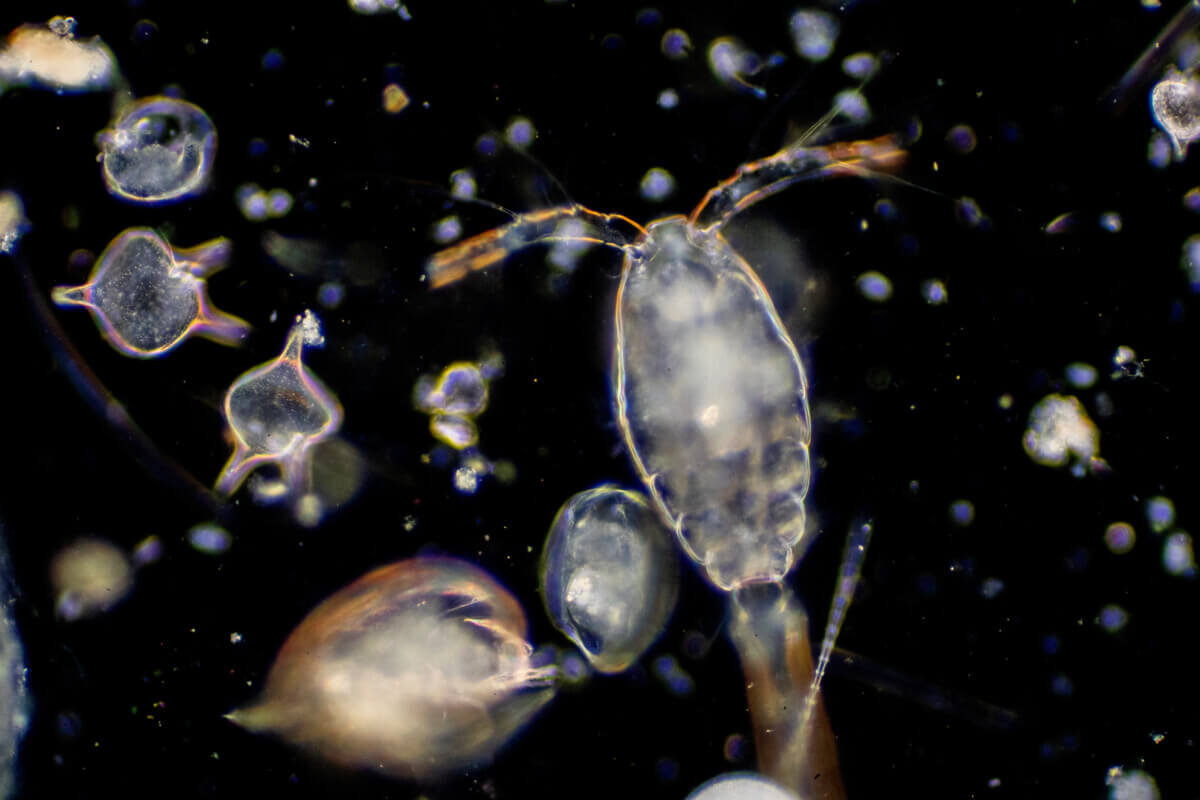
Rather than relying on arbitrary measurements, they based their calculations on the light sensitivity of Calanus copepods, tiny marine creatures that migrate up and down in the water column daily in response to changing light levels. These copepods are extremely sensitive to light, making them excellent biological indicators of where the underwater “lights out” zone begins.
Massive Habitat Loss in Numbers
In areas with the most dramatic darkening, the sunlit upper layer where most marine life thrives has shrunk by more than 160 feet. Across 12.5 million square miles of ocean, this vital habitat has contracted by at least 16 feet.
To put this in perspective, the researchers note that the total area of ocean experiencing significant habitat loss exceeds the amount of forest lost globally since the year 2000. While deforestation grabs headlines, this underwater habitat loss has been happening largely unnoticed.
Even moonlight-dependent marine activities are being affected, though to a lesser degree. Many sea creatures rely on lunar cycles for reproduction and migration patterns. Scientists found that nighttime photic zones have also shrunk, with about 800,000 square miles of ocean seeing reductions of more than 16 feet in moonlight penetration.
Why Oceans Are Getting Darker
Several factors appear to be driving this global darkening trend. Near coastlines, the usual suspects include nutrient runoff from agriculture, sediment from development, and organic matter that clouds the water. But the fact that darkening is occurring far from shore suggests larger forces are at work.
Climate change may be triggering massive shifts in ocean circulation patterns, stirring up nutrients and organic matter from deeper waters. Warming surface temperatures could also be boosting plankton growth, creating a kind of natural light filter. While plankton blooms might sound beneficial, too much of a good thing can block light from reaching the creatures below.

Researchers found darkening was particularly severe in polar regions, the North Atlantic, and the North Pacific—areas where climate change is already reshaping marine ecosystems in dramatic ways. Scientists believe that increased productivity from nutrients and organic materials near coasts, combined with changes in global ocean circulation, are likely reducing how far light can penetrate into surface waters.
Researchers point out that 90% of marine life lives in the photic zone. When this critical habitat shrinks, creatures get compressed into an increasingly crowded space near the surface, leading to more competition for food and higher predation risk.
The daily vertical migration of zooplankton is what the researchers describe as the largest daily migration of biomass on the planet. These tiny animals rise to surface waters at night to feed, then dive deep during the day to avoid predators. As waters darken, their safe spaces shrink, potentially disrupting this ocean rhythm.
Coral reefs, already under siege from warming and acidifying oceans, face another threat as reduced light penetration hampers the photosynthetic algae they depend on for survival. Fish that rely on visual cues for hunting, communication, and navigation may also struggle to adapt to dimmer conditions.
Ripple effects could extend to global fisheries and carbon storage. Phytoplankton near the ocean surface play a crucial role in absorbing carbon dioxide from the atmosphere. If changing light conditions disrupt these microscopic organisms, it could affect the ocean’s ability to moderate climate change.
Beyond basic survival needs, many marine organisms have evolved sophisticated behaviors that depend on precise light conditions. Synchronized spawning events in corals, navigation systems in fish, and predator-avoidance strategies in countless species all rely on the predictable patterns of light and darkness that have characterized ocean environments for millions of years.
Twenty years of data, while substantial, may not be enough to rule out natural long-term cycles in ocean conditions. Researchers acknowledge that some of the darkening trends could reflect natural variability rather than permanent changes.
Studies also assume uniform water conditions from surface to seafloor, while real oceans have complex layering and mixing patterns that could affect how light penetrates. Additionally, the measurements focus on one wavelength of light, though marine organisms respond to a full spectrum of colors.
Why We Should Pay More Attention to Ocean Health
We’ve been focused on visible signs of climate change like melting glaciers and extreme weather, but this study reveals that changes are happening beneath the waves, too. When you consider that the ocean produces more than half the oxygen we breathe and absorbs a quarter of our carbon emissions, this is also important for our own survival.
Scientists warn that without sufficient light for basic life processes, marine organisms will be forced to crowd into an increasingly narrow belt of well-lit surface waters. This creates intense competition for resources and exposes more creatures to predation.
Twenty years ago, marine life had the run of a much brighter ocean. Today, they’re crowded into an increasingly narrow band of sunlit water, competing for space in the ocean’s most productive layer. The lights are dimming beneath the waves, and we’re only just beginning to understand what that means.
Paper Summary
Methodology
Researchers analyzed 20 years (2003-2022) of satellite data from NASA’s MODIS Aqua sensor, examining light attenuation at 490 nanometers across 9.86 million ocean locations using a 9-kilometer resolution grid. They used quantile regression analysis to identify statistically significant trends in light penetration and calculated photic zone depths based on the light sensitivity thresholds of Calanus copepods, marine organisms that migrate vertically in response to light changes. The team modeled both sunlight and moonlight penetration to determine how darkening affects different aspects of marine photobiology.
Results
Ocean waters became darker across 75.3 million square kilometers (21% of global oceans) between 2003 and 2022. Photic zone depths decreased by more than 50 meters across 32.4 million square kilometers (9% of global oceans) under sunlight conditions. The study found that 68.4 million square kilometers of ocean experienced photic zone reductions of at least 10 meters. Darkening occurred not only in coastal regions but also across large areas of open ocean, particularly in polar regions, the North Atlantic, and North Pacific. Moonlight-dependent habitats also shrank, though less dramatically than daylight zones.
Limitations
The 20-year timeframe may be insufficient to distinguish permanent changes from natural multi-decadal cycles. The analysis assumes uniform water column properties and doesn’t account for complex ocean layering and circulation patterns. Satellite measurements may underestimate light attenuation in highly turbid coastal waters. The study focuses on a single wavelength (490nm) while marine organisms respond to full light spectra. Additionally, photosensitivity data for most marine species remains limited, making it difficult to assess species-specific impacts.
Funding and Disclosures
This research was supported by the Natural Environment Research Council (grant numbers NE/S003533/2, NE/S003568/1, and NE/X006271/1). The authors declared no conflicts of interest. Data and analysis code are openly available through Zenodo and various NASA and oceanographic databases.
Publication Information
The paper “Darkening of the Global Ocean” is authored by Davies, T.W. and Smyth, T. It was published in Global Change Biology (31, no. 5: e70227) in 2025 under Creative Commons Attribution License.


