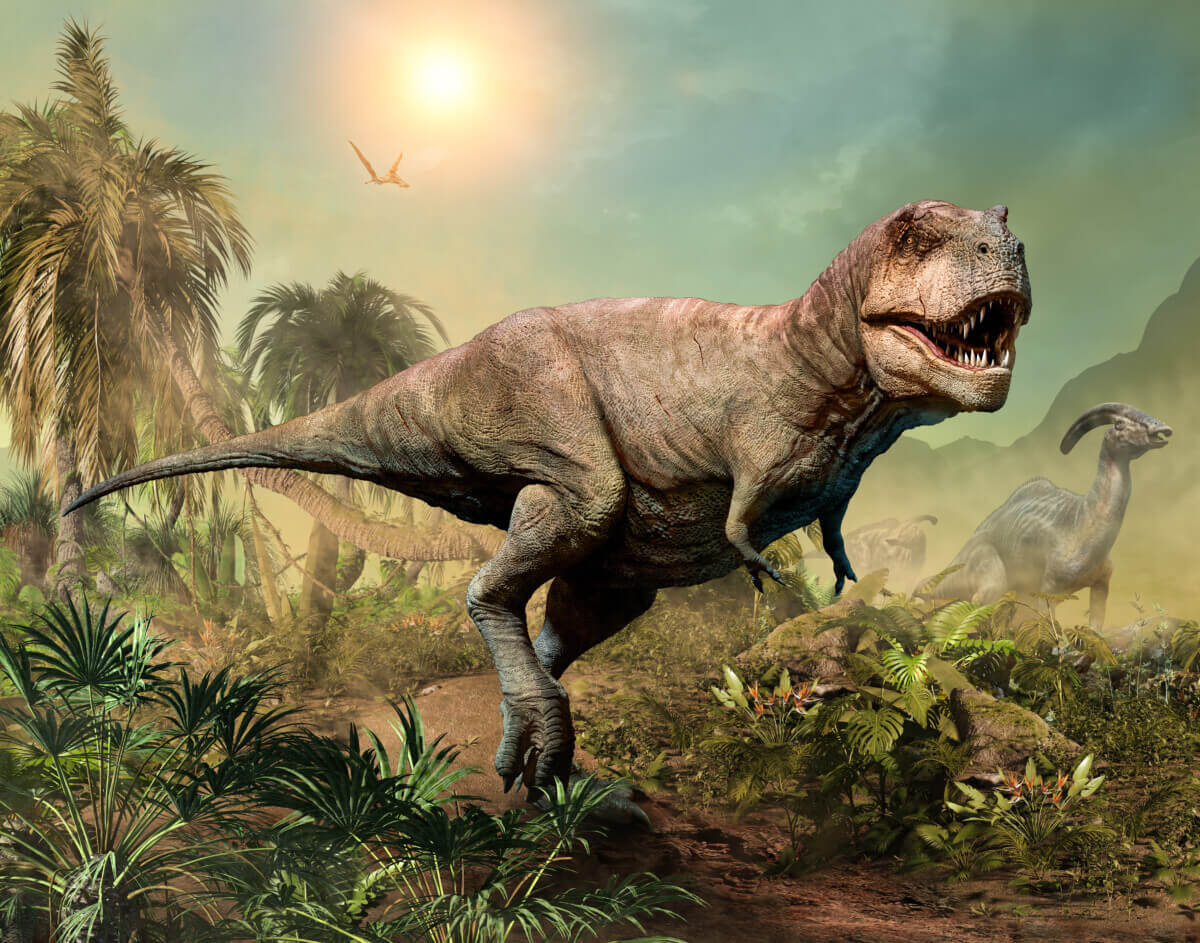
(© warpaintcobra - stock.adobe.com)
OTTAWA, Ontario — In the world of dinosaurs, few names spark as much excitement as Tyrannosaurus rex. This iconic predator, which roamed North America around 66 to 68 million years ago, has long captivated both scientists and the public with its massive size and fearsome reputation. But just how big could T. rex really get? A new study suggests that the largest T. rex we’ve discovered so far may actually be on the smaller side of this species. In fact, researchers believe the largest T. rex may have been nearly twice as massive as the fossils found to date!
Researchers Jordan Mallon and David Hone took a fresh look at the question of T. rex’s maximum size, using statistical models and comparisons with modern animals. Their findings, published in the journal Ecology and Evolution, paint a picture of a dinosaur that could potentially dwarf even our most impressive fossil specimens.
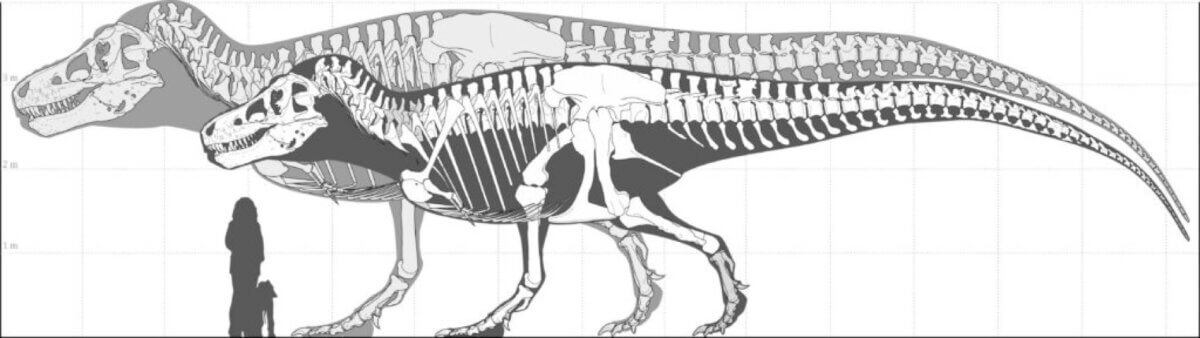
Currently, the largest known T. rex skeleton, nicknamed “Scotty,” is estimated to have weighed about 19,555 pounds when alive. However, Mallon and Hone’s research suggests that the biggest T. rex individuals could have tipped the scales at a staggering 15,000 kilograms (33,069 pounds) – that’s about 70% heavier than Scotty!
To put this in perspective, imagine a T. rex the weight of two adult African elephants combined. Such an animal would have been truly colossal, potentially stretching more than 49 feet from nose to tail. For comparison, the famous T. rex “Sue” at Chicago’s Field Museum is about 40 feet long.
“Some isolated bones and pieces certainly hint at still larger individuals than for which we currently have skeletons,” says Hone in a media release.
However, if these super-sized T. rex existed, why haven’t we found their fossils? The answer lies in the rarity of such extreme individuals and the limitations of the fossil record. The researchers estimate that out of all the T. rex that ever lived – possibly around 2.5 billion individuals over 2.4 million years – we’ve only found fossils from a tiny fraction. Finding the remains of the very largest specimens is even less likely.
“Our study suggests that, for big fossil animals like T. rex, we really have no idea from the fossil record about the absolute sizes they might have reached,” adds Mallon. “It’s fun to think about a 15 tonne T. rex, but the implications are also interesting from a biomechanical or ecological perspective.”
This study doesn’t just tell us about T. rex – it highlights the challenges of understanding extinct animals based on limited fossil evidence. For every dinosaur skeleton we unearth, there were likely millions of individuals who never fossilized or remain undiscovered. This means our understanding of prehistoric life is always based on an incomplete picture.
The idea of an even larger T. rex is thrilling, but it also raises questions about how such a massive predator would have lived. Would it have been able to move quickly? How much food would it have needed each day? These questions open up new avenues for research and speculation about one of history’s most famous carnivores.
“It’s important to stress that this isn’t really about T. rex, which is the basis of our study, but this issue would apply to all dinosaurs, and lots of other fossil species. Arguing about ‘which is the biggest?’ based on a handful of skeletons really isn’t very meaningful,” explains Hone.
Paper Summary
Methodology
The researchers used a combination of statistical modeling and comparisons with modern animals to estimate T. rex’s maximum size. They started by creating a growth curve for T. rex based on known fossils, showing how the dinosaurs increased in size as they aged. Then, they modeled a population of 140 million T. rex (a conservative estimate of how many might have lived over time) and applied variations in size based on patterns seen in modern alligators.
They also factored in survival rates and fossil preservation biases. By sampling this modeled population many times, they could estimate how likely we are to find T. rex fossils of different sizes.
Key Results
The study found that given our current fossil discoveries (about 84 reasonably complete T. rex specimens), we’ve likely already found individuals in the 99th percentile of T. rex size. However, the absolute largest T. rex could have been much bigger. The model suggests a maximum weight of around 15,000 kg, compared to the largest known specimen at about 8,870 kg. This theoretical maximum-sized T. rex could have been over 15 meters long.
Study Limitations
The growth curve and population model are based on limited fossil data and comparisons with modern animals, which may not perfectly reflect T. rex biology. The assumption of size variation based on alligator data might not accurately represent T. rex. Additionally, the study doesn’t account for potential mechanical or ecological limits on T. rex size, which could have prevented them from reaching the theoretical maximum.
Discussion & Takeaways
This study highlights the challenges of understanding extinct species from limited fossil evidence. It suggests that simply comparing the largest known fossils may not give an accurate picture of a species’ size range. The researchers argue for using statistical methods and considering factors like sampling bias when studying prehistoric animals.
The findings also open up new questions about T. rex ecology and physiology, such as how such large individuals might have moved or how much they needed to eat. Ultimately, while we may never find fossils of the largest possible T. rex, this research provides a new perspective on how we think about and study dinosaur size.


