(Photo by Casimiro PT on Shutterstock)
There is an alarming outbreak of active tuberculosis (TB) cases in the Kansas City, Kansas area. At least 69 people have been sickened, including two deaths, since the outbreak was first reported in January 2024.
“The outbreak is still ongoing, which means that there could be more cases,” said Jill Bronaugh, a spokesperson for the Kansas Department of Health and Environment, in an email to CNN on January 28.
There have been at least 79 confirmed latent (inactive) cases, in which TB is in the body but not making the person sick. People with latent cases cannot spread the TB bacteria to others.
The source of the outbreak is unknown. Local health departments and staff from the Centers for Disease Control and Prevention (CDC) are on site, responding to the outbreak, including tracing contacts, doing free testing, and screening for active disease.

People who test positive will be screened to determine if they have active or latent disease, which will determine appropriate treatment. The disease is curable with antibiotics; usually, patients require several months of treatment.
“TB is an infectious disease that most often affects the lungs and is caused by a type of bacteria. It spreads through the air when infected people cough, speak, or sing,” Bronaugh said. “While there is a very low risk of infection to the general public in these communities, KDHE is working to ensure that patients are receiving appropriate treatment, which will limit the ability to spread this disease and prevent additional cases from occurring.”
TB is one of the world’s leading fatal infectious diseases. The CDC estimates that up to 13 million people in the U.S. live with inactive TB. Without treatment, 1 in 10 people with inactive disease will convert to active disease and can spread it to others. In 2023, there were 9,633 cases of TB reported in the United States.
Navigating tuberculosis
Tuberculosis is caused by a bacterium called Mycobacterium tuberculosis. TB usually affects the lungs but can also affect the brain, kidneys, or the spine. It can affect multiple parts of the body simultaneously. If not treated properly it can be fatal.
TB becomes an active infection if the immune system can’t stop the bacteria from growing.
Symptoms:
- A cough that lasts three weeks of longer
- Chest pain
- Coughing up blood or sputum
- Weakness or fatigue
- Weight loss
- Loss of appetite
- Chills
- Fever
- Night sweats
People with inactive TB do not have symptoms.
Risk Factors:
- Being born in or frequent travel to countries where TB is common, including some countries in Asia, Africa, and Latin America
- Living in large group settings such as homeless shelters or prisons
- Recently spending time with someone who has active TB
- Having a weaker-than-normal immune system due to drugs or disease
- Working in places where TB is likely to spread, such as hospitals and nursing homes
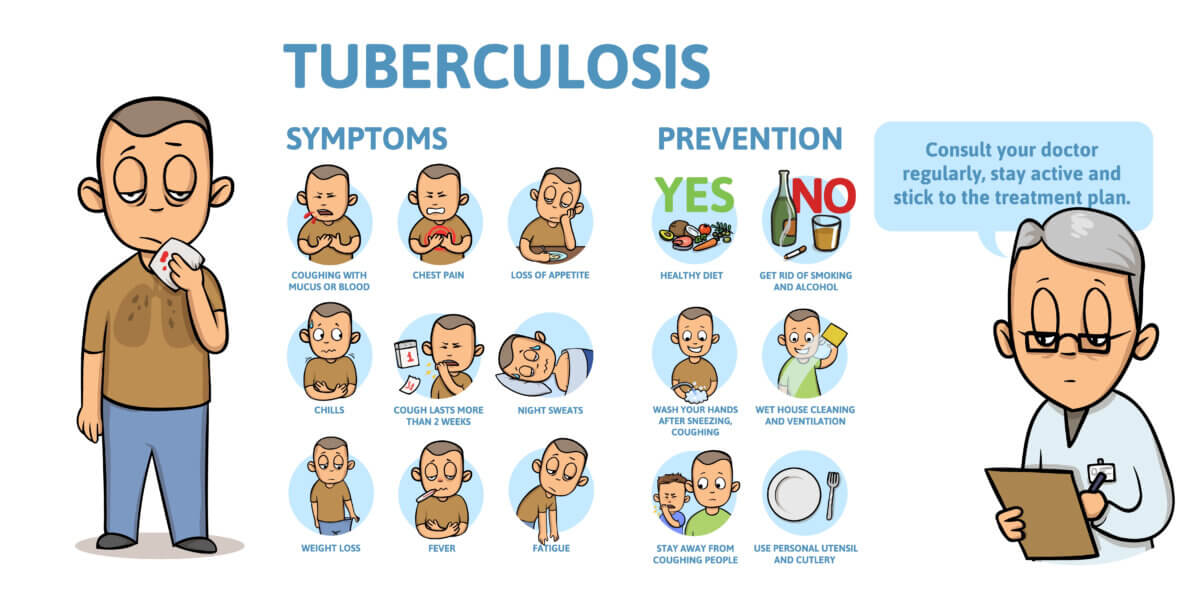
Tuberculosis spread can occur when someone with active TB disease coughs, speaks, or releases germs in some way. TB can stay in the air for several hours and is more likely to spread indoors or in areas with poor air circulation. People who inhale the air become infected.
If you are diagnosed with inactive disease, there are treatments to protect you from conversion to active disease.
TB tests come in two forms: a blood test or a skin test. If you test is positive it means you have TB germs in your body. Other tests can determine if the disease is active or inactive. These include a chest x-ray, and a test of sputum.
Treatment, if you have inactive disease, consists of taking medicine prescribed by your healthcare provider. If you have active TB, there are also medications, usually taken for several months.
The vaccine for TB is not usually used in the United States. It is given to infants and small children in countries where TB is common. It protects children from getting severe forms of active TB disease, such as meningitis.
If you received the vaccine, it can cause a false positive skin test. A blood test is needed to determine if you have active disease. You can read more about TB on the CDC website.


