(Credit: Gregory Reed/Shutterstock)
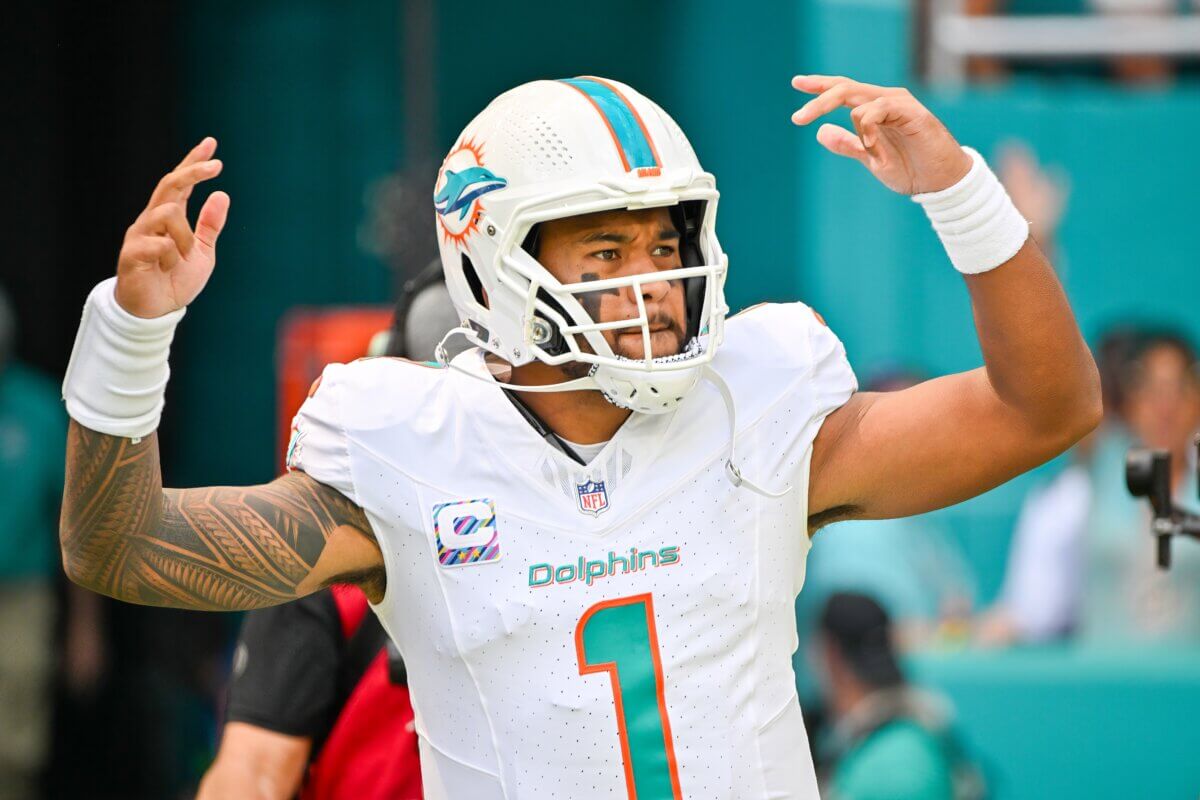
Miami Dolphins quarterback Tua Tagovailoa sustained the third concussion of his young NFL career during Week 2 against the Buffalo Bills. Tagovailoa ran head-first into the chest of the Bills’ Damar Hamlin, resulting in a violent collision. The 26-year-old fell to the ground, his right arm displaying the fencing posture, a neurologic sign of a concussion. According to the NFL’s new, more cautious concussion protocol, the star QB could be sidelined for at least 8 to 12 weeks if doctors declare that his head injury was “severe.”
Tagovailoa’s previous two concussions during his NFL career occurred in 2022, only four days apart, after which he considered retirement. It would seem inevitable that he would again consider retirement, although, in July of 2024, he signed a contract for the next four years for $212.4 million.
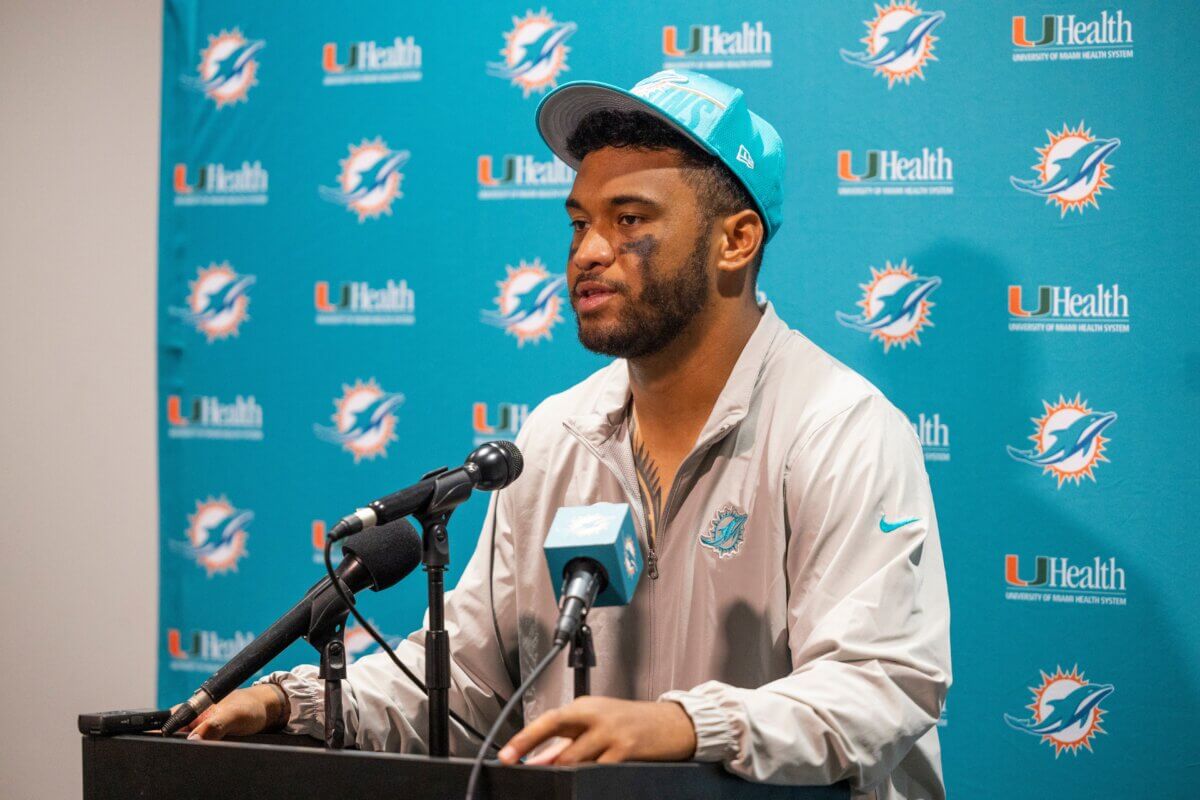
As of now, Tagovailoa has declared that he will not retire. It remains to be seen if he will be allowed to play.
The concern now is how will this latest health scare affect this young man, both now and in the future? When it comes to concussions, one of the greatest fears is the development of chronic traumatic encephalopathy (CTE). Let’s examine this condition closely and the threat that athletes in multiple sports currently face.
What is chronic traumatic encephalopathy?
Blows to the head during contact sports like football, soccer, and boxing can cause injury to the brain, called traumatic brain injury (TBI). Chronic traumatic encephalopathy is a serious consequence of repeated TBI.
Tangles, consisting of a protein called tau, build up in the brain. The brain damage is like that of Alzheimer’s disease. Crucially, CTE can lead to dementia and eventually death.
Scientists are investigating the types of head impacts that pose the greatest risk for chronic, disabling damage. An NIH-funded research team led by Dr. Daniel Daneshvar from Massachusetts General Hospital and Dr. Jesse Mez from Boston University set out to better understand the relationship between head impacts and CTE.
The research team collected data from 34 previous studies of helmet accelerometers – devices that measure the number, speed, and direction of impacts to the head during play. They are used for youth, high school and college football players. The data was used to develop a positional exposure matrix (PEM) that estimated the average number and types of blows to the head a person would experience during a season. The study considered an athlete’s defensive or offensive position and the intensity of play, including that of professional athletes.
The team also examined the relationships between these estimated impacts and CTE in 631 male brain donors who had previously played football. Prior to 2020, the only way CTE could be diagnosed was on autopsy. In November 2019, however, scientists could detect CTE on brain imaging in a living person for the first time.
On average, the brain donors had played an average of 12 years of football and died at age 60. About 28% had no evidence of CTE in their brains. Roughly 26% had low-stage CTE, and another 46% had high-stage CTE. Every additional year playing football was associated with 15% increased odds of a CTE diagnosis and, for those with CTE, 14% increased odds of severe CTE. Every 1,000 additional estimated blows to the head conferred 21% increased odds of a CTE diagnosis, and 13% increased odds of developing severe CTE.
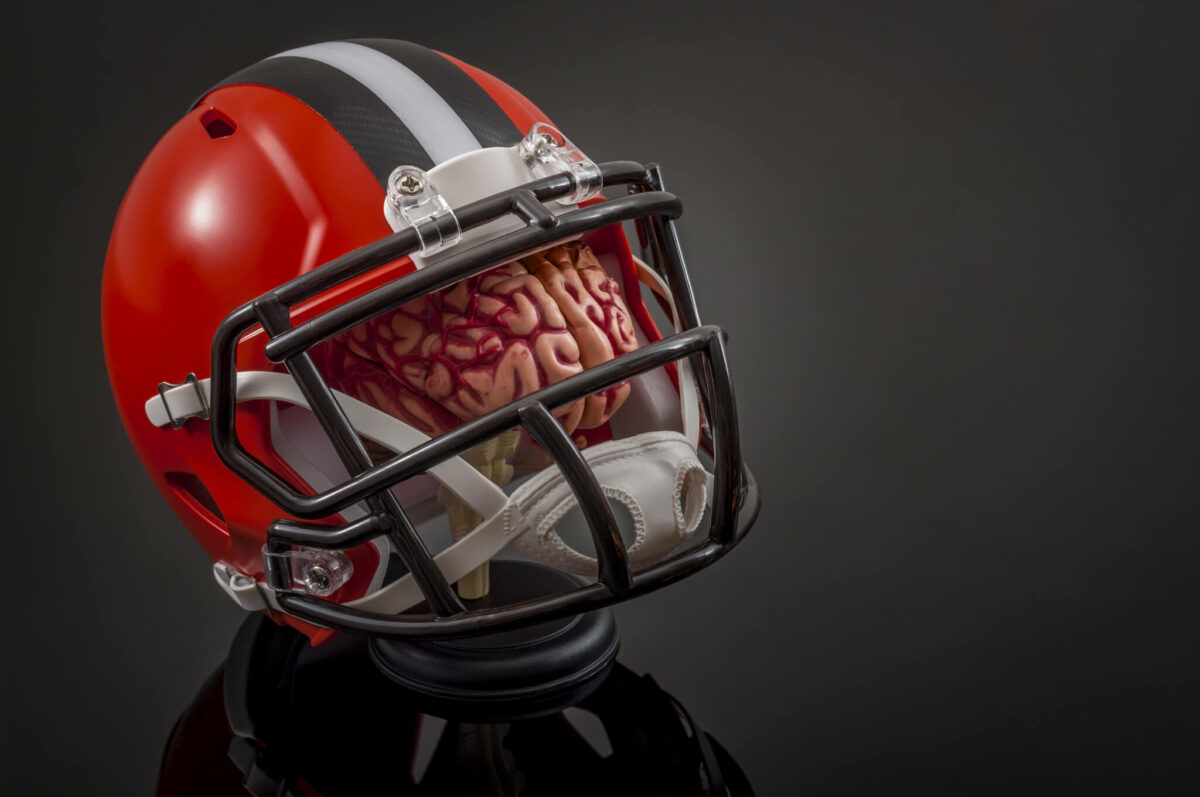
In a 2017 study published in JAMA, CTE was found in 99% of deceased NFL players’ brains that were donated to scientific research. Doctors believe CTE contributed to behavioral and medical issues players have suffered after experiencing repeated head trauma while playing football.
In April 2020, ex-New England Patriots tight end Aaron Hernandez was serving a life sentence in jail for first-degree murder when he was found dead in his cell by hanging. After an autopsy, he was diagnosed with severe CTE. The condition can cause aggressive, impulsive behavior.
What this means for Tua Tagovailoa right now is still uncertain. However, the confirmed risk of CTE due to repeated concussions provides a stark warning for the young quarterback and all other players in the NFL.


